
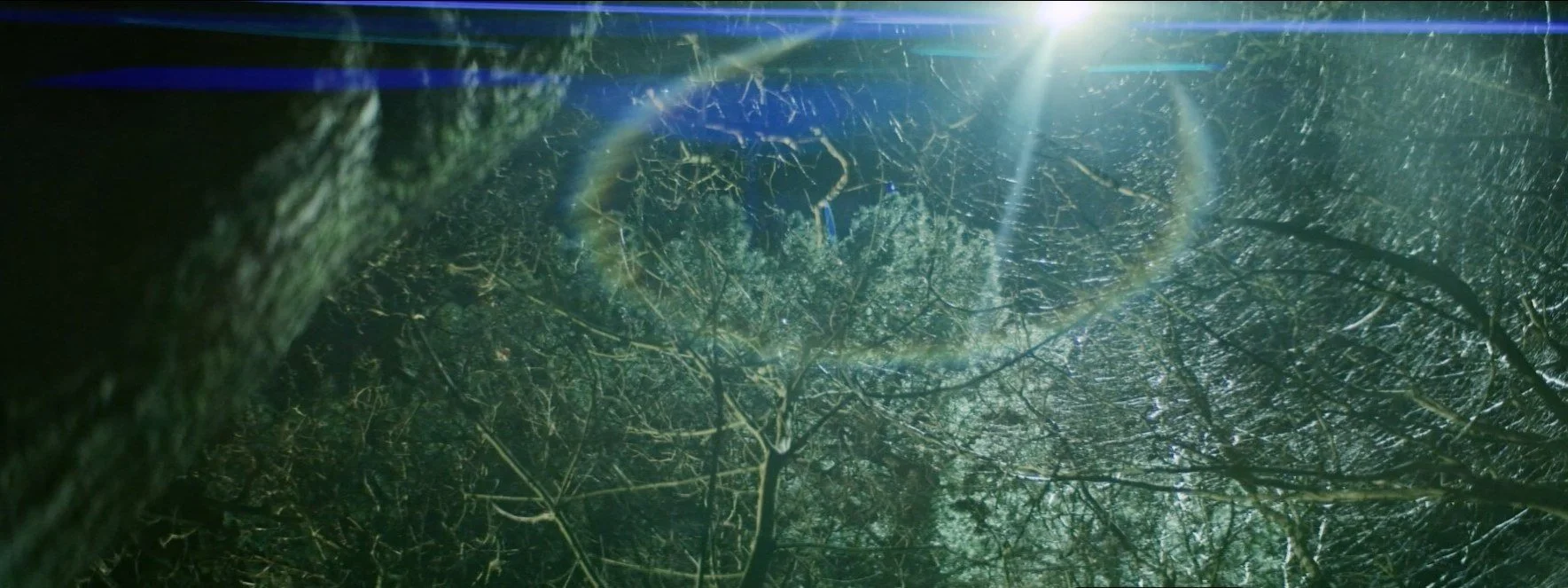
Drone lighting
Drone lighting for film and TV
High-brightness LED lights flown on heavy-lift drones. Light a whole location from the air, or put the light in shot as a searchlight. Aimed live from the ground, from Cornwall, across the UK.
Light from the air
A drone puts a powerful hard light exactly where you need it, at height, with no crane, cherry picker or lighting tower to rig. And it can move during the take, which is where it really comes alive.
On screen
Feature the light itself: searchlights, a helicopter sweep, a beam cutting through the dark
Lighting a location
Creative night exteriors. It's not a 20x20, so it needs a purpose suited to what it does best
Moves with the shot
Follow a car, boat or actor and keep them lit as they travel, with unique moving shadows
Aimed live
On, off, dimmed, panned and tilted during the flight
Shape the light
Add cones or diffusion and change the white balance. We've also played with prisms for some interesting effects
Perfect for re-creating searchlights, from wartime night skies to a search across open ground.
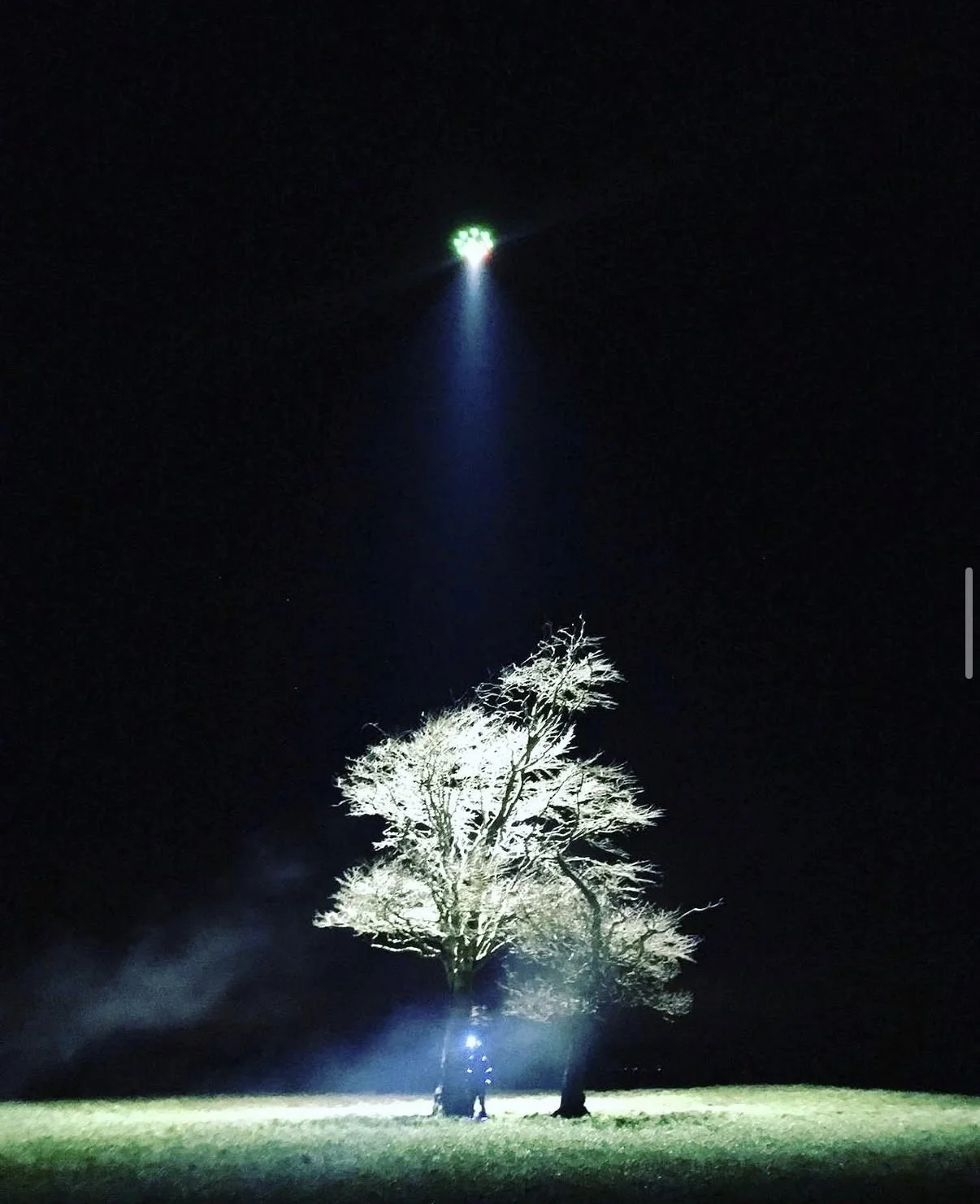
Three lights
From a 100,000-lumen array on our heavy-lift drones to a beam that flies through gaps.
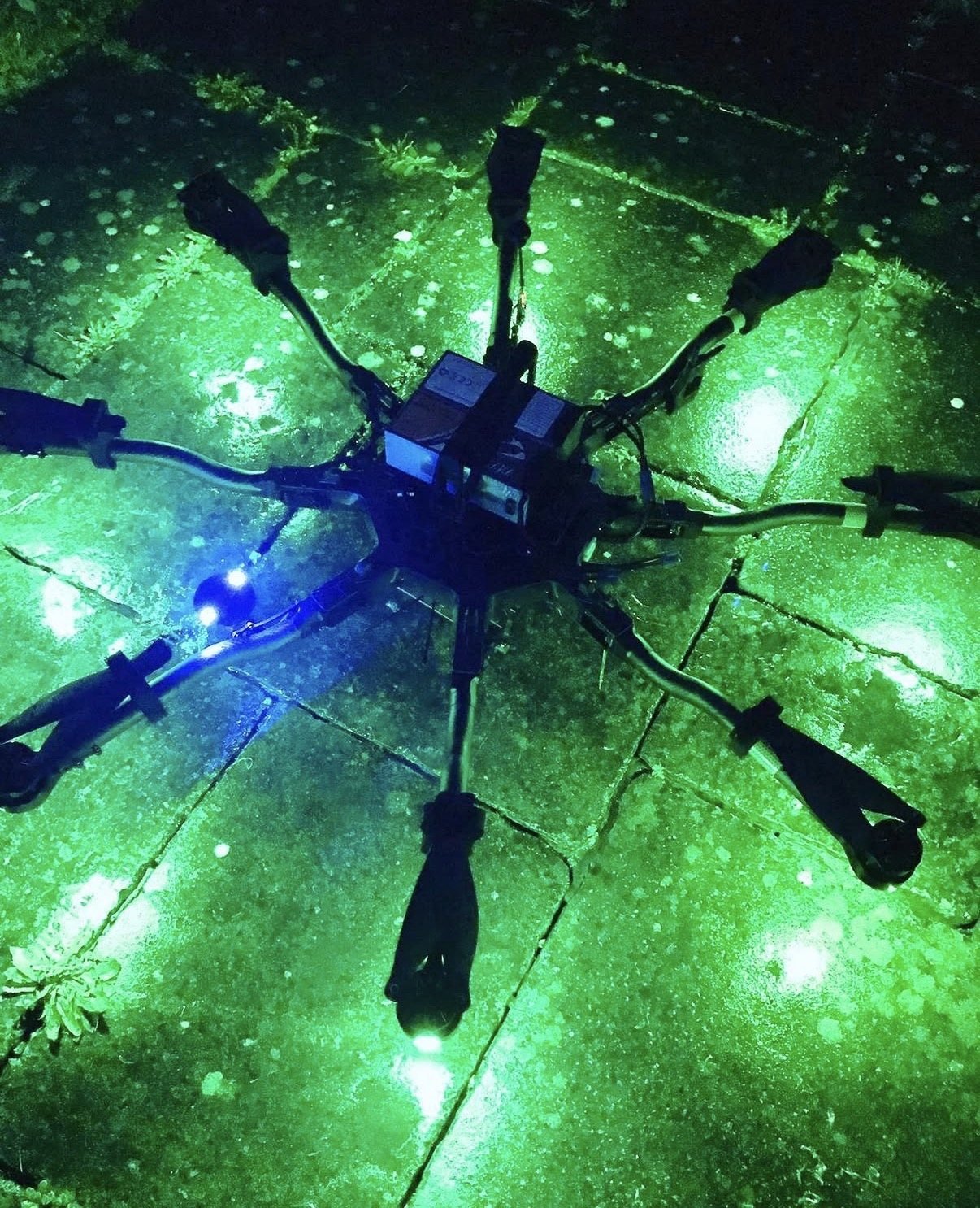
Alta 8 or Alta X
LED array
100,000 lumens
Four 150W LED emitters. 5500K daylight (4600K or 4200K with swapped glass), with gels for colour. Mounted on our adapted Movi Pro so it can be panned and tilted in flight.
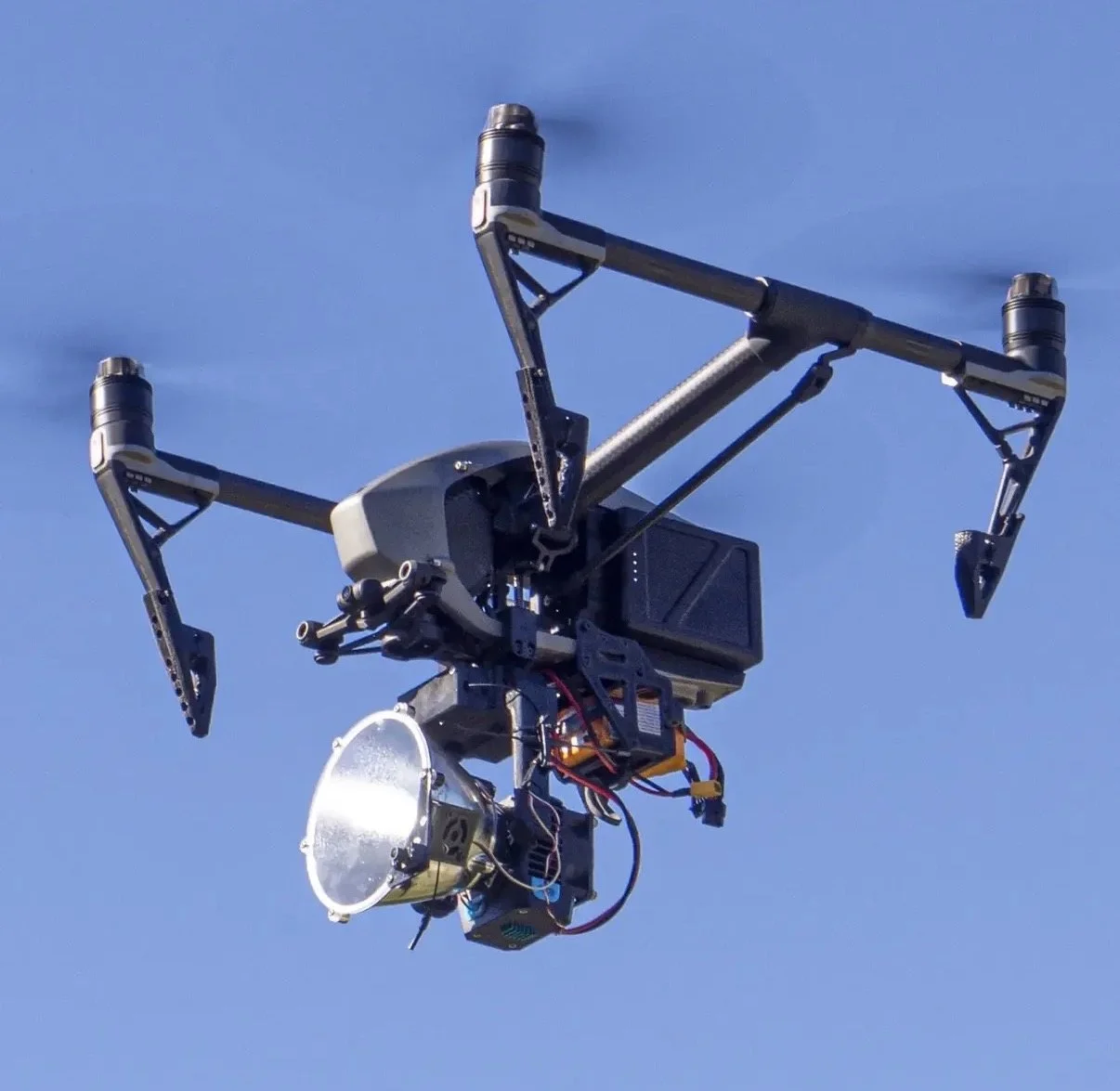
DJI Inspire 2 or Inspire 3
Compact light
24,750 lumens
A 150W, 5500K light module, comparable to a 2000W tungsten. Flown on a tilting gimbal under an Inspire 2 or Inspire 3, so another Inspire can film the scene at the same time.
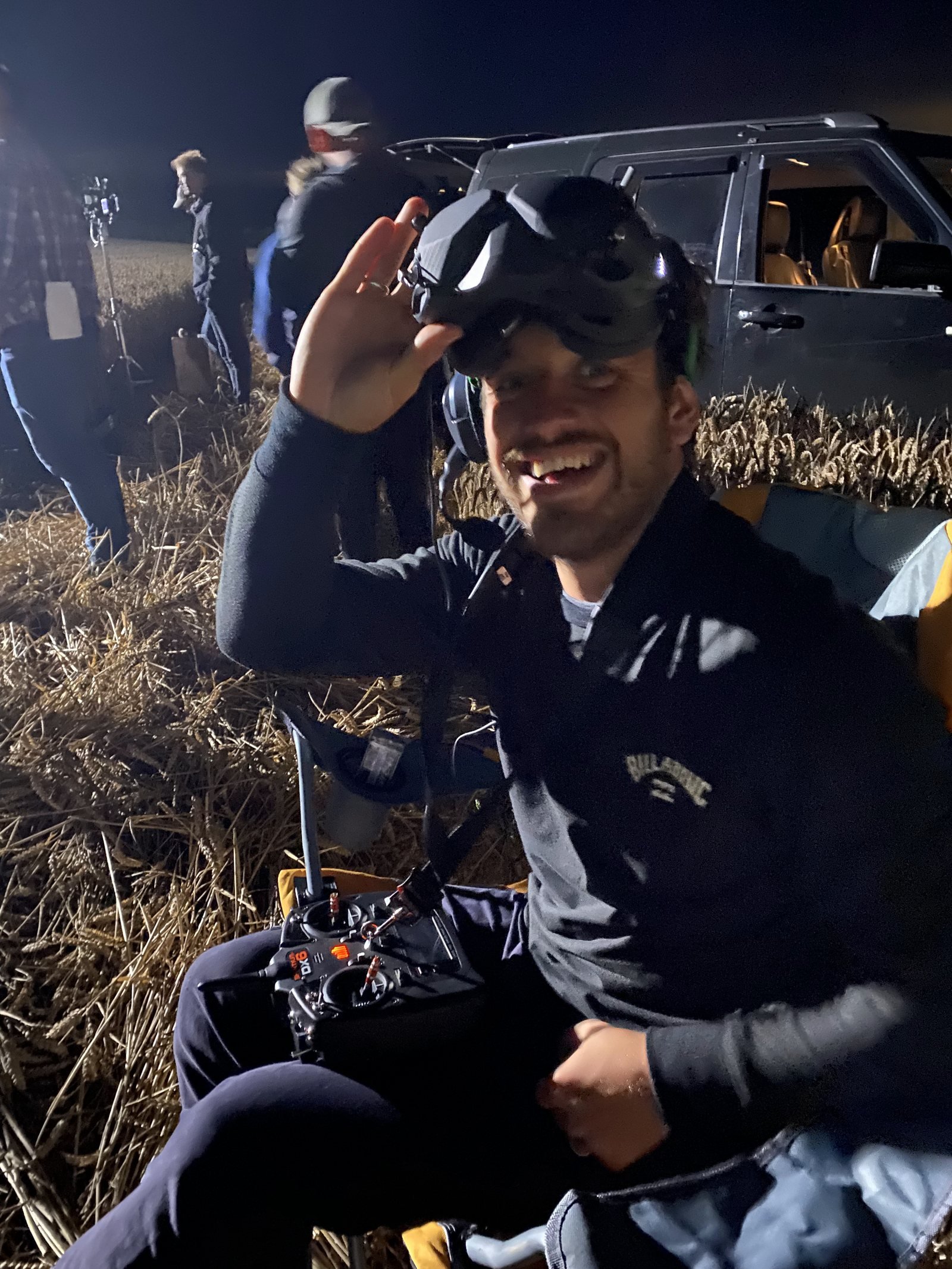
FPV
FPV light
14,000 lumens
A 120W light, about a 1kW tungsten, on an FPV drone. Sends a beam through tight spaces and narrow gaps at speed.
On screen
The drone light at work
From Zariot, a brand film lit with our drone light (Watch on YouTube →), to BBC's Beyond Paradise series 1 (read how we lit it →).
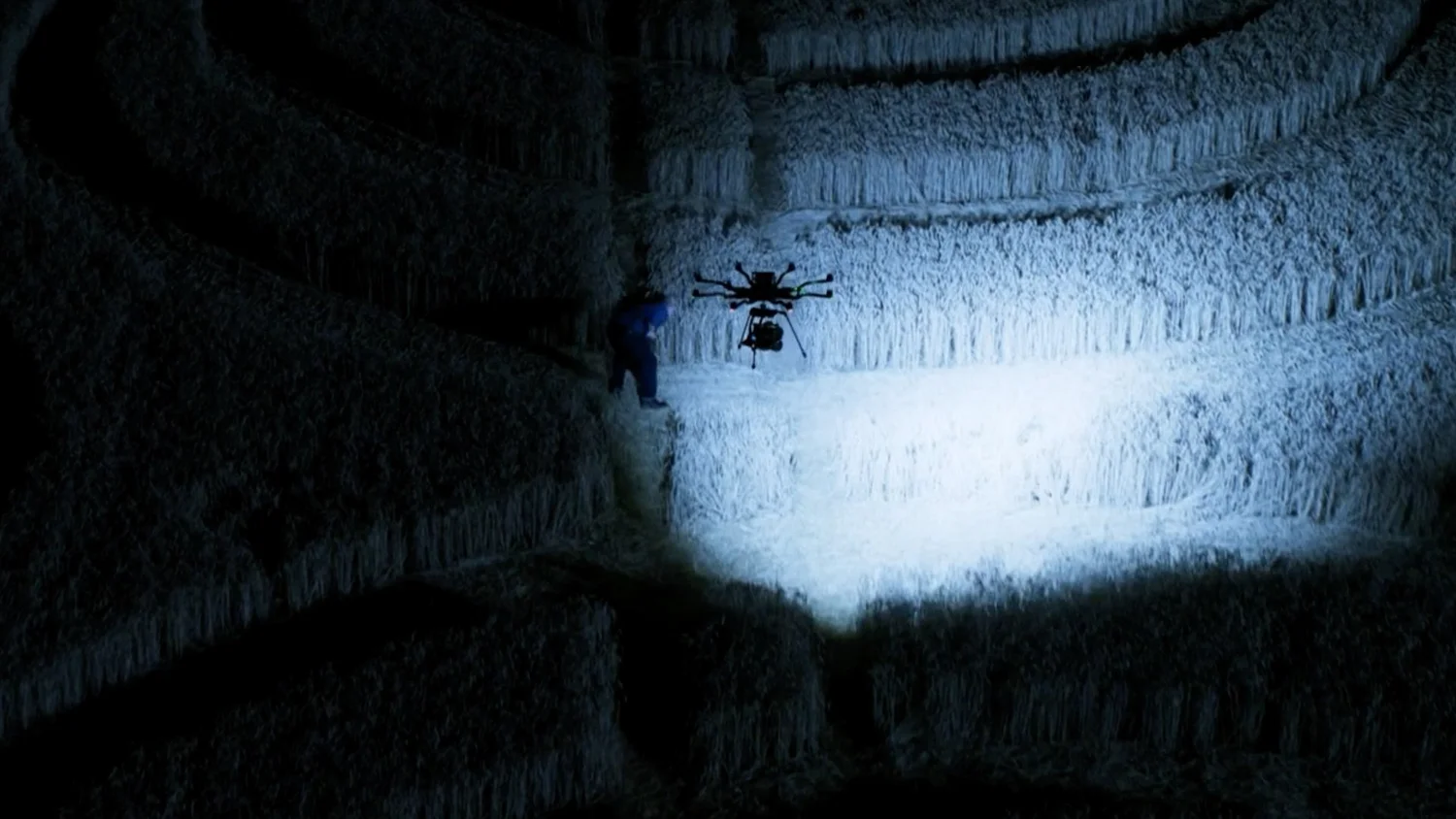
Case studies and how it works
The light flies like a camera. The Movi Pro is adapted to carry the LED array, with an FPV camera fitted alongside it for aiming the light.
Aimed from the ground
A gimbal operator watches the FPV feed and points the beam, so the subject stays lit as the drone and the action move. The light can be switched, dimmed and redirected mid-flight.
Same crew, same standards
Flights, pilots, permissions and paperwork are the same as our Alta 8 and Alta X camera jobs, with a risk assessment and flight plan for every job.
Planned with your gaffer
We work with your DOP and gaffer on position, height, colour and intensity before we fly, and stay in direct comms during the flight.
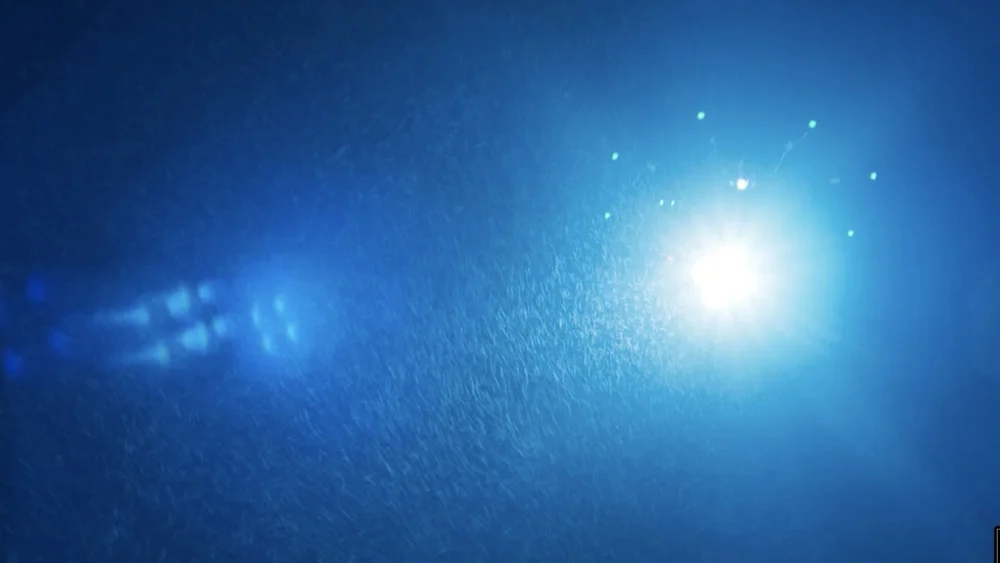 Check out our blog: lighting a UFO on BBC's Beyond Paradise, series 1 episode 4 →
Good to know
How bright is it?
The Alta array puts out 100,000 lumens. At full beam it lands somewhere between a Joker 800 and a 1.2K HMI, and it dims down from there. The Inspire light gives 24,750 lumens, comparable to a 2000W tungsten, and the FPV light 14,000.
Can it change colour?
The lights are 5500K daylight. On some units we can swap the protective glass to get 4600K or 4200K, and gels can be added for other colours.
Can you film and light at the same time with another drone?
Yes. We can fly a number of drones at the same time, working with other operators or freelancers. An Inspire 3 films, and the Alta light can work alongside any of our camera drones, for example. We bring the extra crew required, and in some cases we plan and test a detailed aerial choreography in daylight.
How do you point the lights?
On the Alta, the Movi has an FPV camera fitted and an operator controls the angle of the light, and the light itself is stabilised. On the Inspire 2 light unit, the FPV camera is used to aim the light, and the light has tilt control.
How much does it cost?
Every lighting job is different, so we quote each one. Tell us the shot, the location and the timings.
Where do you work?
We're based in Cornwall and work across the UK and Europe.
More on permissions, insurance, weather and booking: Production FAQs.