
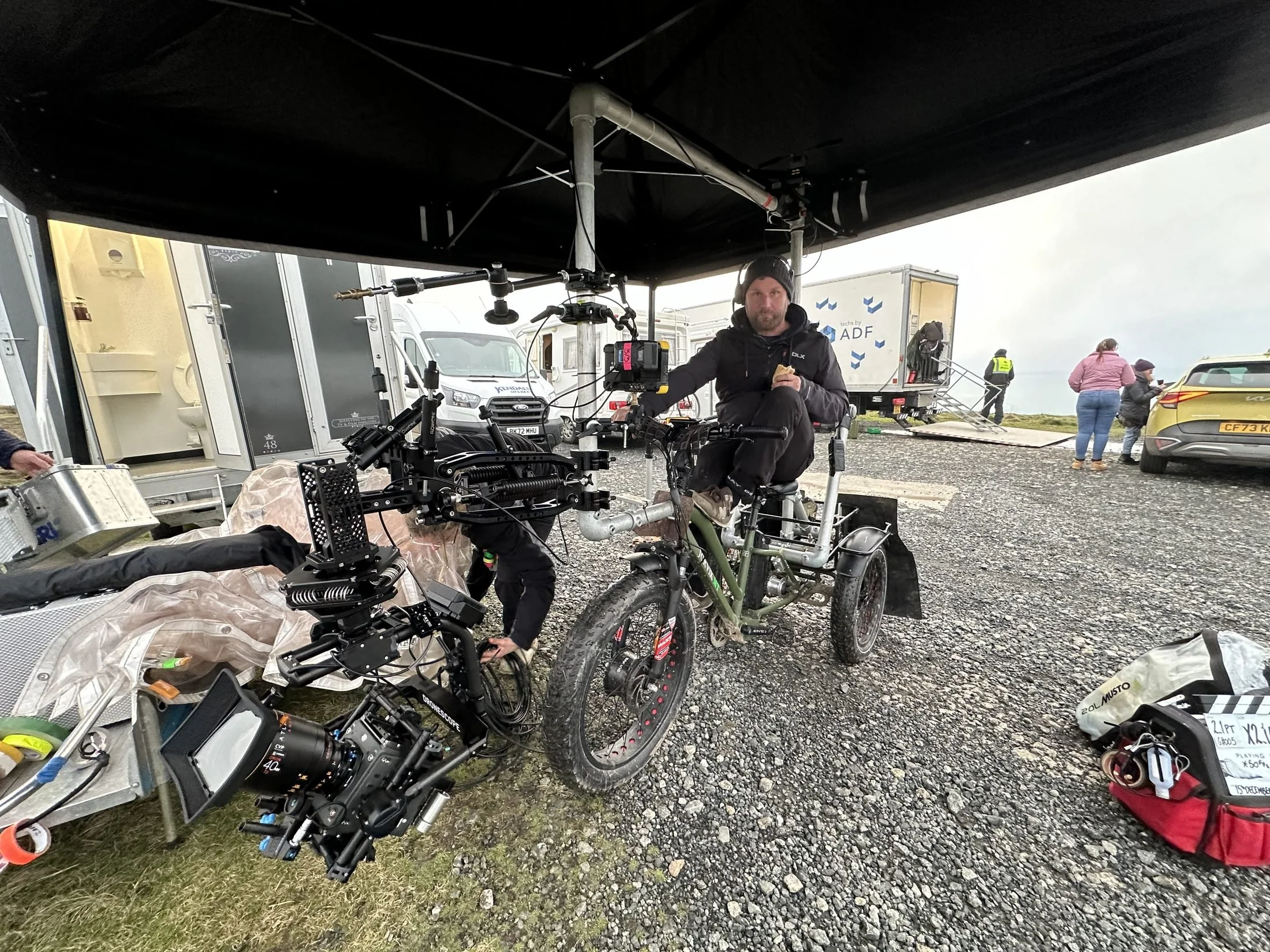
Camera tracking vehicles
Electric cine-trike: near-silent camera tracking
A precision-ridden electric tracking vehicle that carries anything from a handheld operator to a Ronin 2 on a Flowcine Black Arm. Quiet enough to keep the set calm, narrow enough for paths, promenades and stages that a car or quad can't reach.
Why a trike?
The trike is the tool for shots that move at running or riding pace and need to get close. Its electric motor is near-silent, so it doesn't fill the set with engine noise, and at 84 cm wide it slips through gaps and along paths where a quad or a tracking car won't fit.
Running and chase scenes
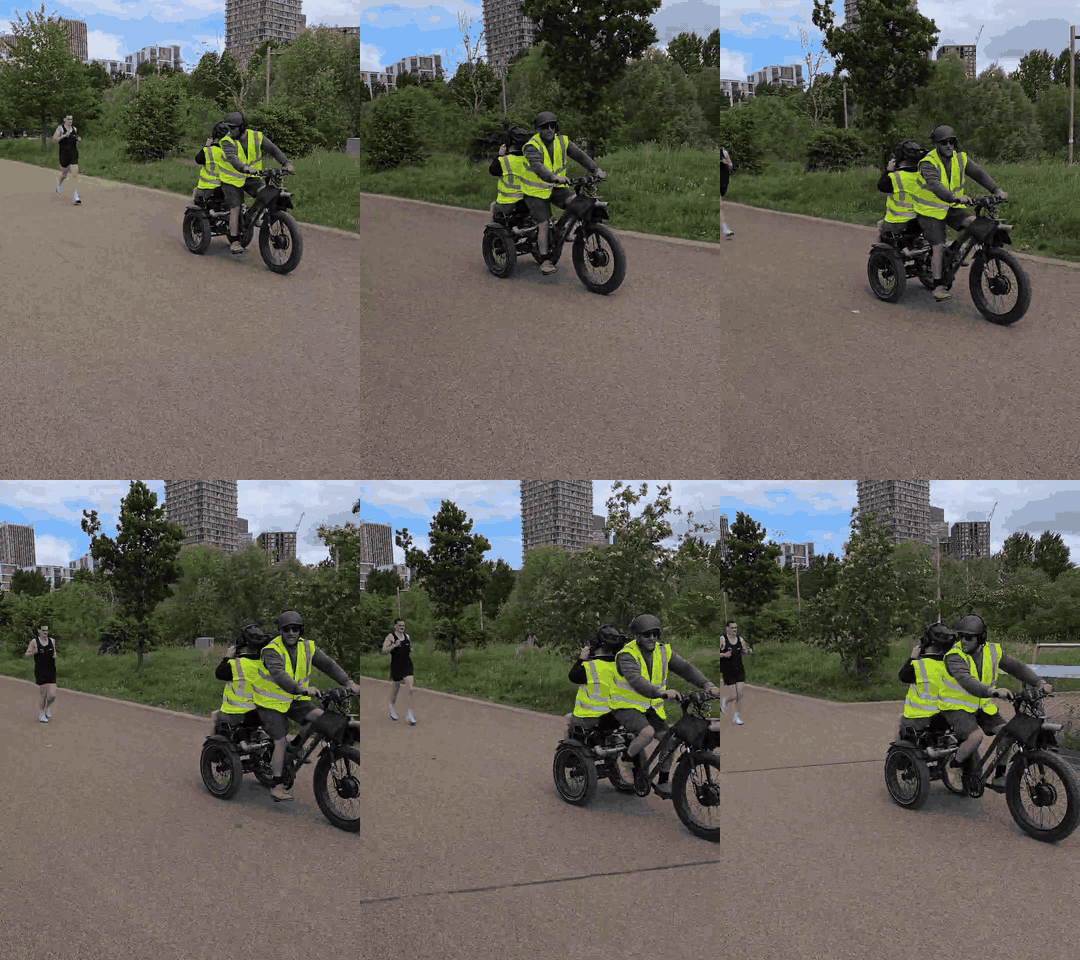
Running tracks, races and actor chase scenes, alongside or ahead of the action
Front and rear tracking
Rigs mount facing forwards or backwards, for leading or following shots
Low to high
Low-angle shots near the ground up to high positions on the arm
Paths, stages and sand
Promenades, beaches, interiors and stages where vehicles can't go
We started tracking on electric bikes, then moved to an electric trike as soon as frames strong enough to carry a full cinema rig became available, building our own custom mounts and parts along the way.
Every run is ridden by one of our experienced precision riders, who has the final say on speed and route.
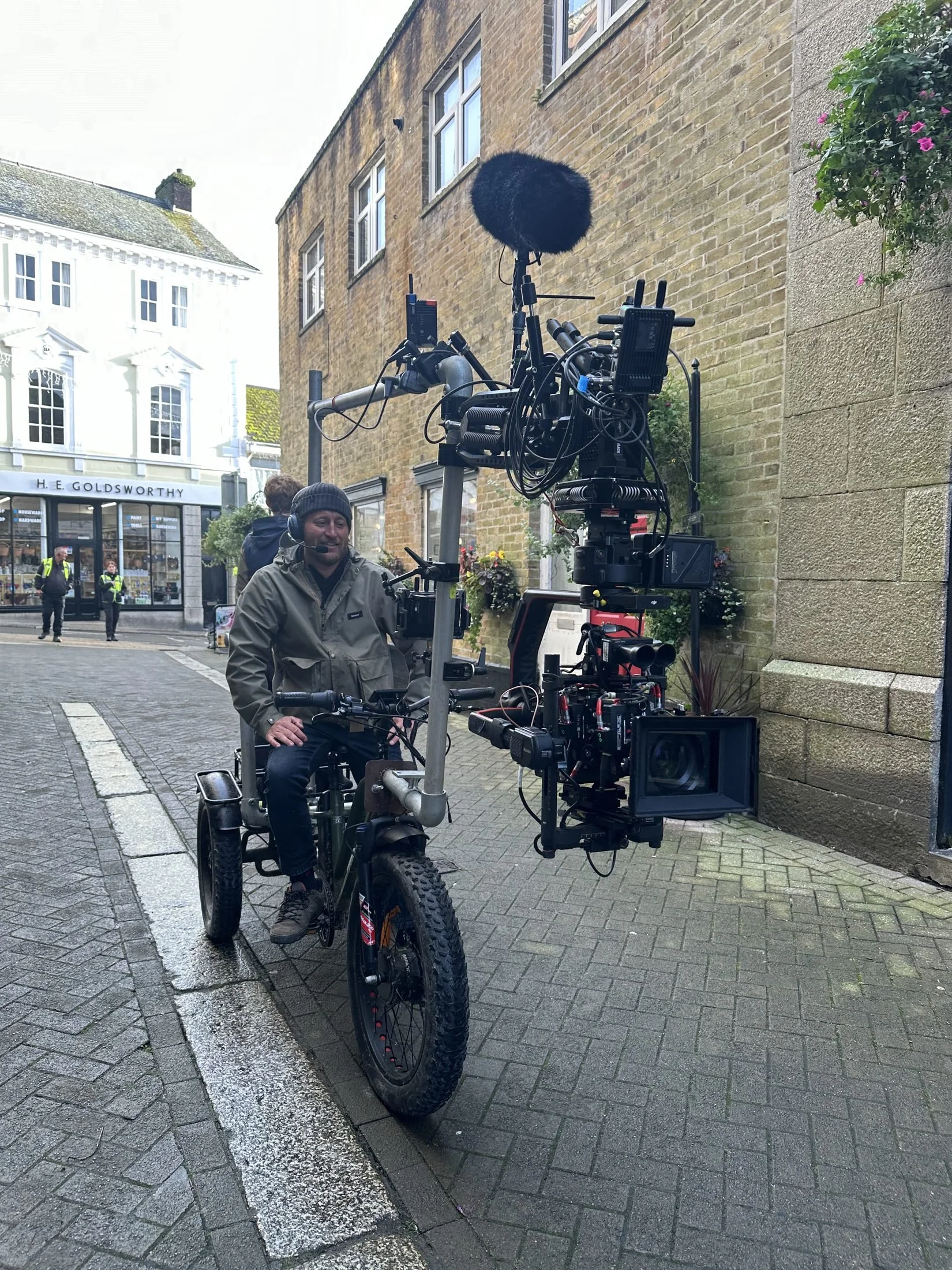
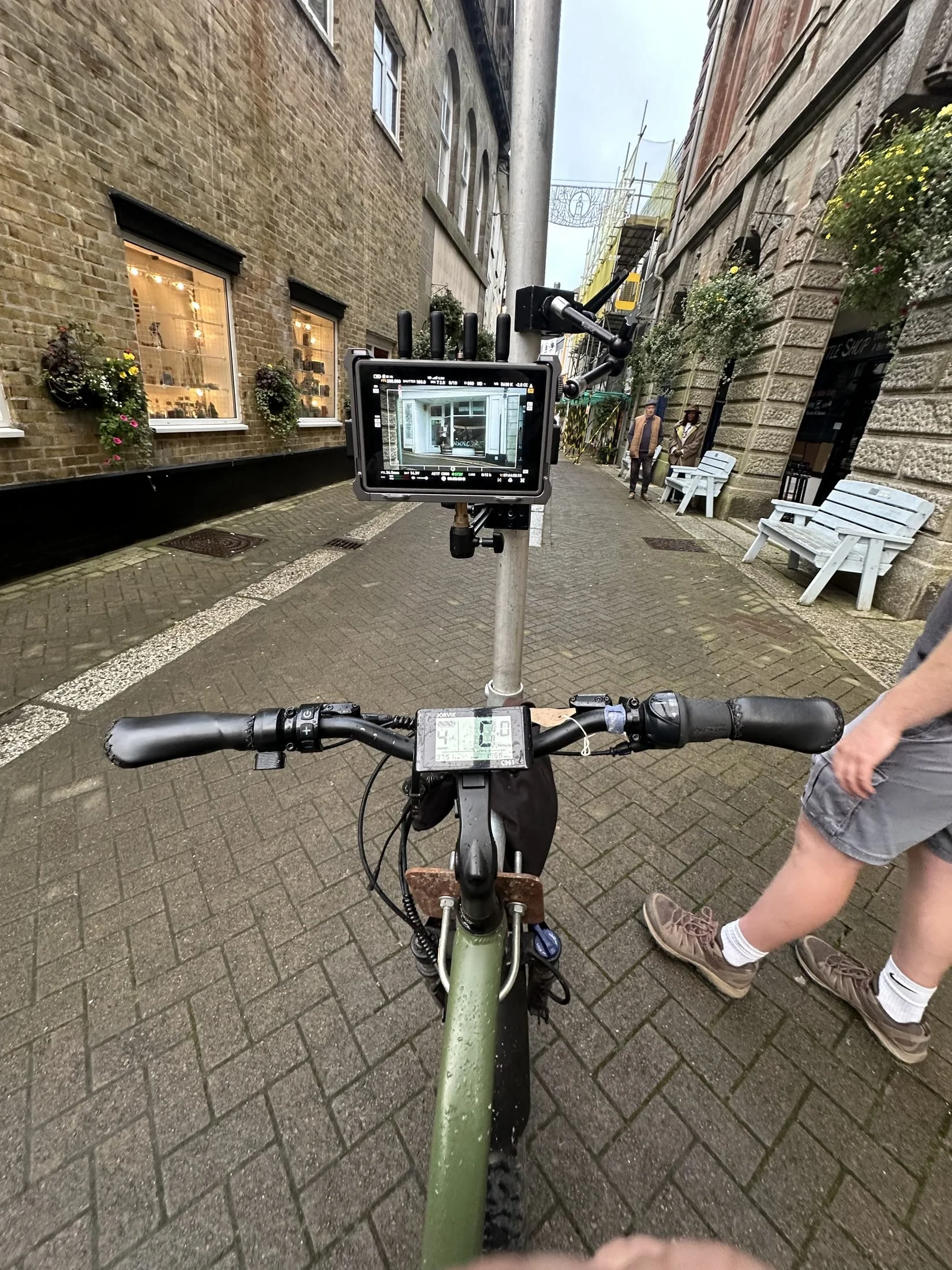
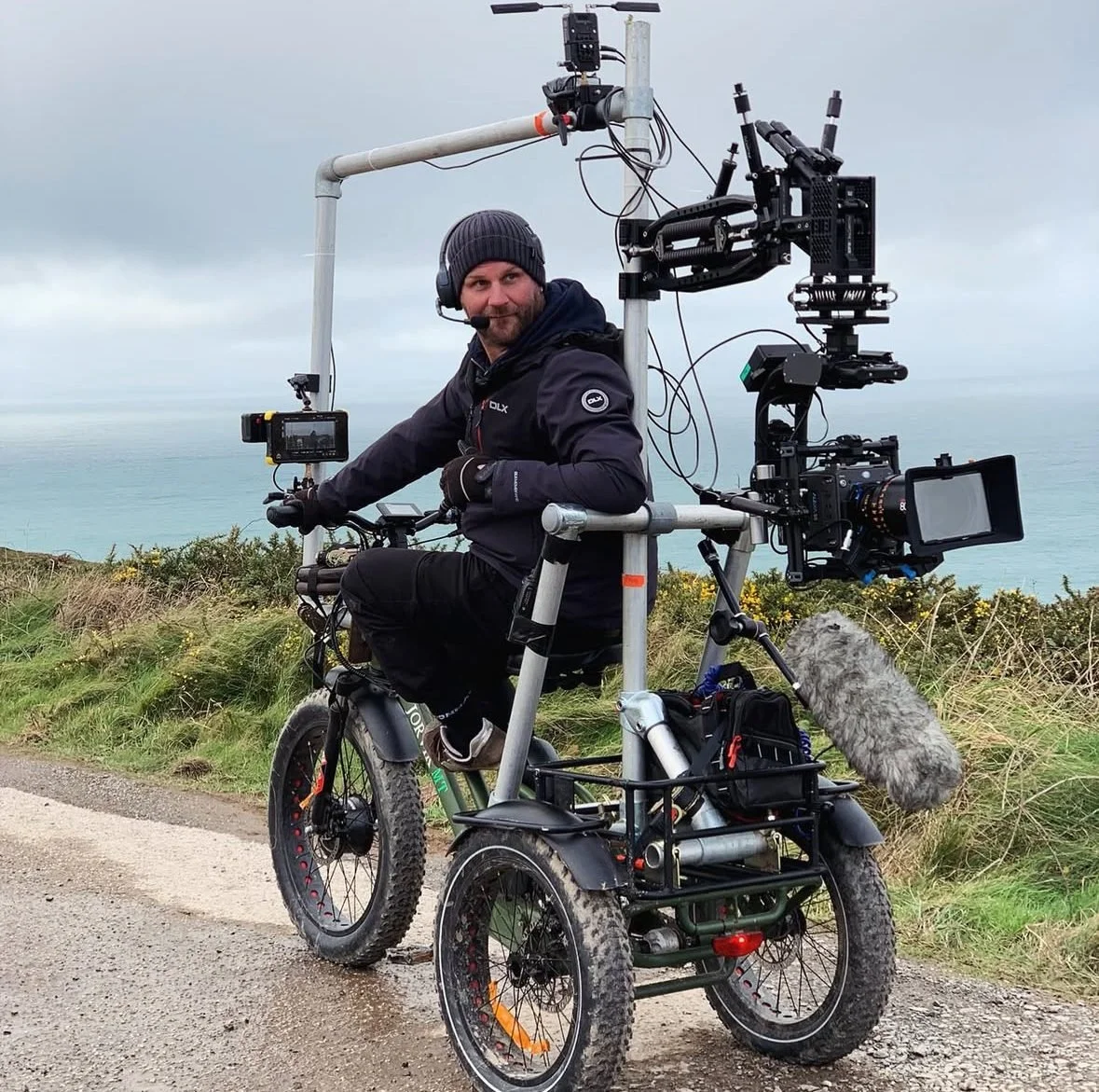
Three set-ups, one trike
Every option comes with the trike and a precision rider. Choose the rig to suit the shot.
Basic: operator on board
A camera operator rides on the rear seat or frame, shooting handheld or on a gimbal. Ideal for walking and running shots with talent on foot or on bikes.
Medium: Ronin 4D on a Tilta arm
A DJI Ronin 4D or RS4 rig on a Tilta Alien arm, for agile front and rear tracking on paths, promenades and beaches.
XL: Black Arm and cinema camera
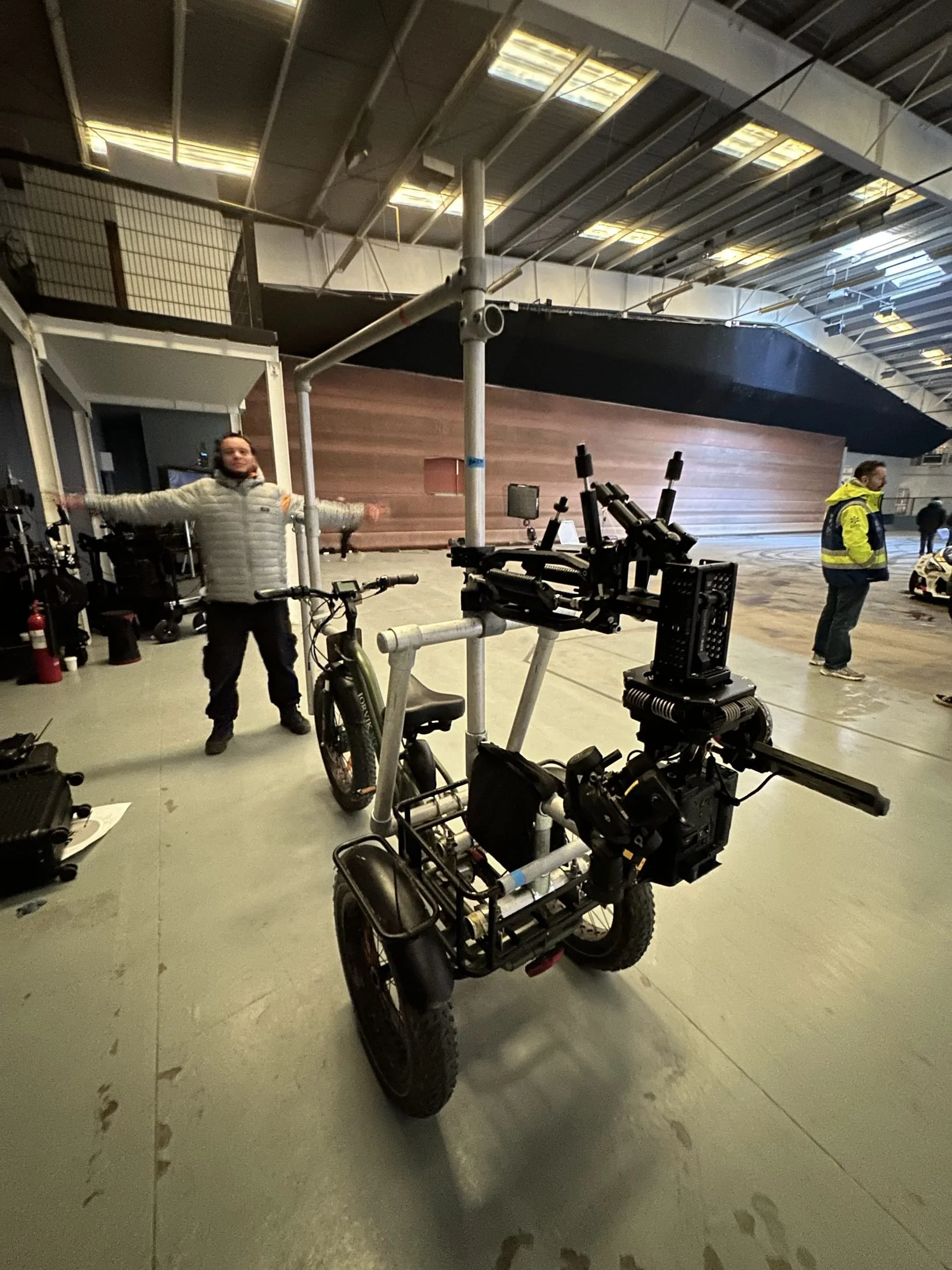
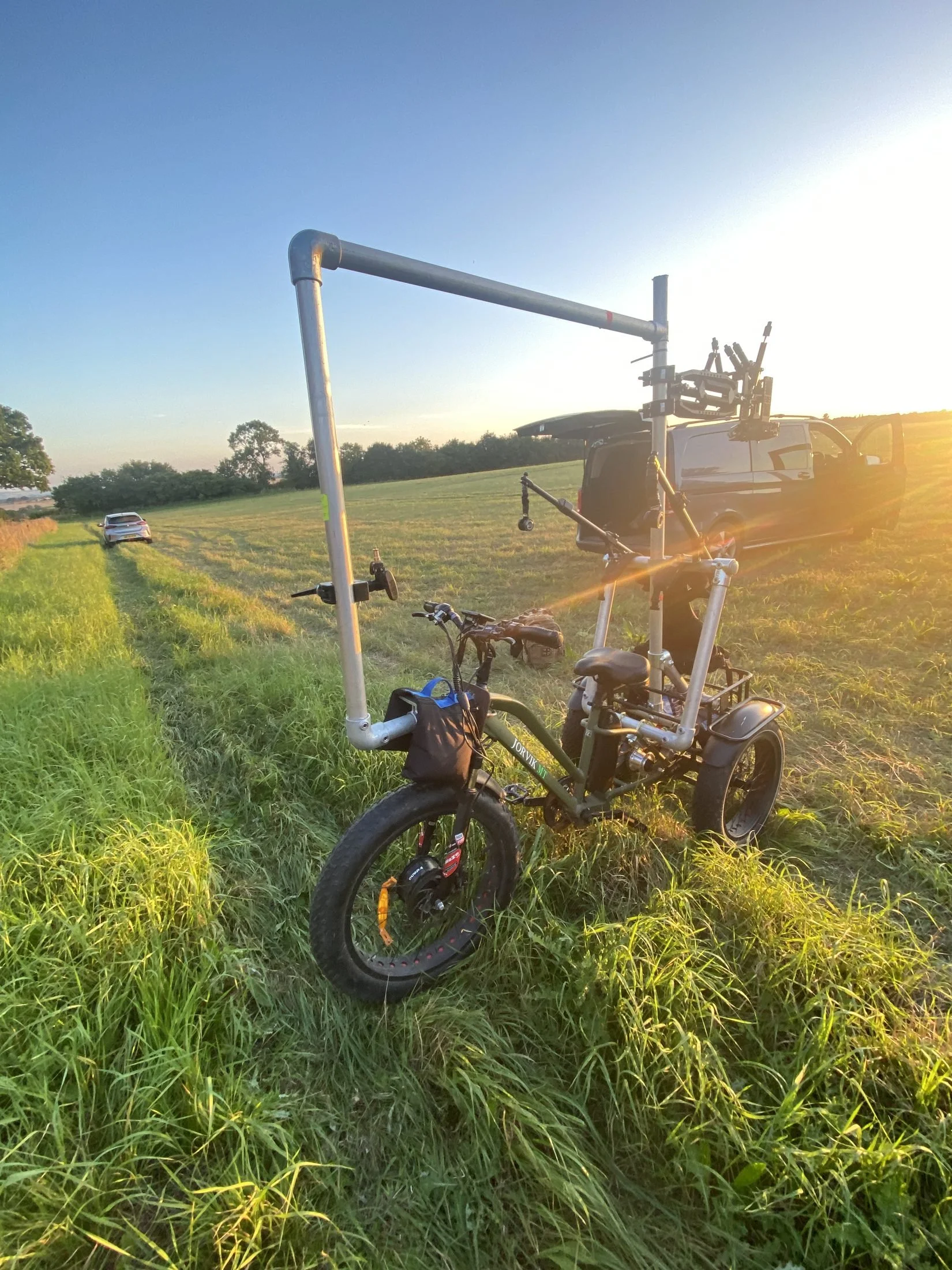
A Flowcine Black Arm with a DJI Ronin 2 or Movi Pro carrying a full cinema camera such as RED or ARRI, for high-end front and rear tracking.
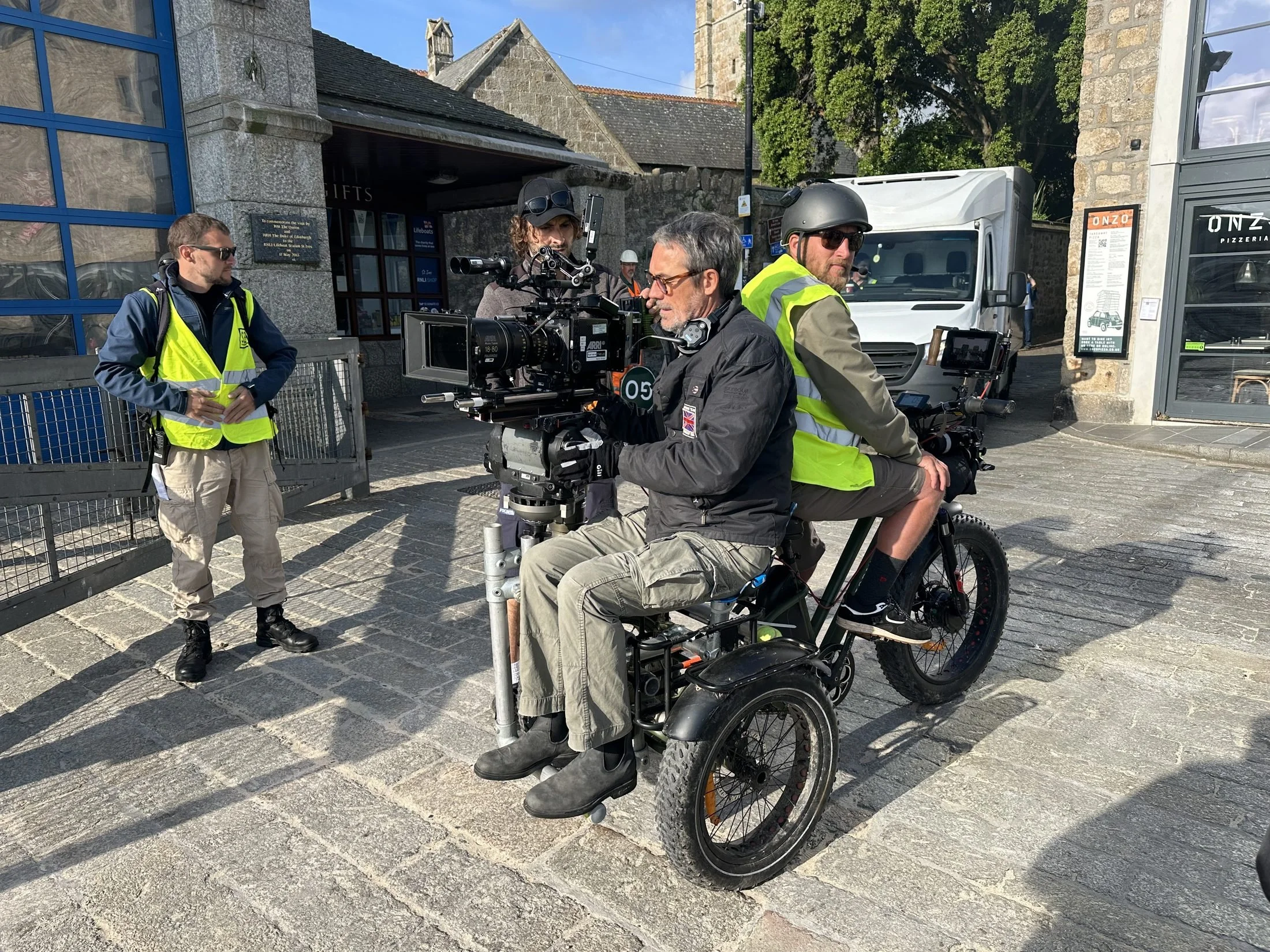
Ridden safely, every run
Tracking is choreographed and rehearsed. We supply a risk assessment and method statement for every job and work with your 1st AD on the run plan.
Rehearsed at walking pace
Every run is walked through slowly before it's done at speed, and the rider can stop a run at any time.
Speed set by the surface
Up to 15.5 mph on public roads and shared paths. On private land or closed sets, up to 20 mph on smooth, flat ground, slower on bumpy or uneven surfaces.
Distance from talent
We keep at least 2 metres from actors while tracking. Closer work only with a stunt coordinator involved.
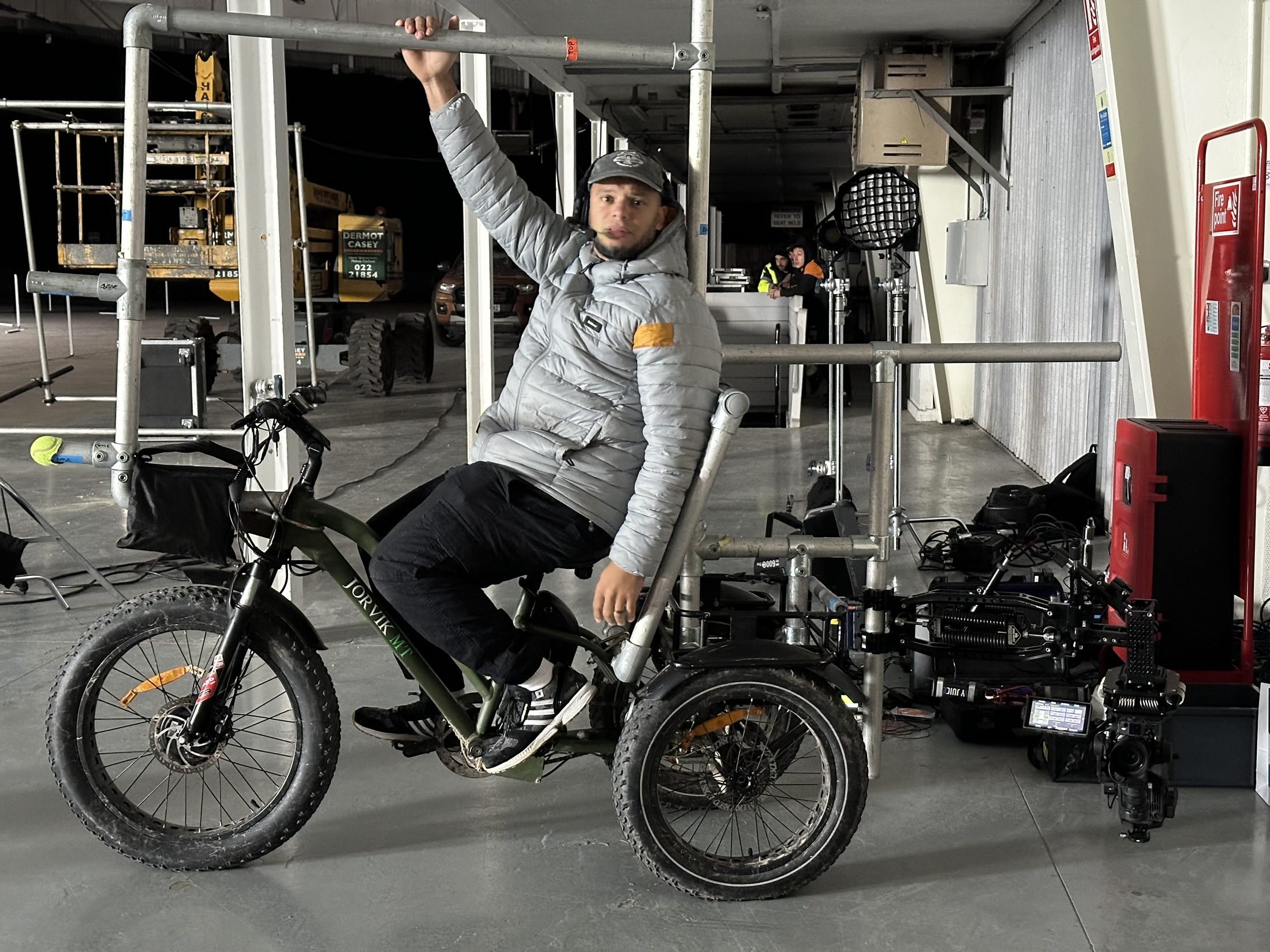
Quiet, narrow and quick to rig. The trike gets the camera alongside runners, riders and actors where a car or quad simply won't fit.
On screen
The trike at work
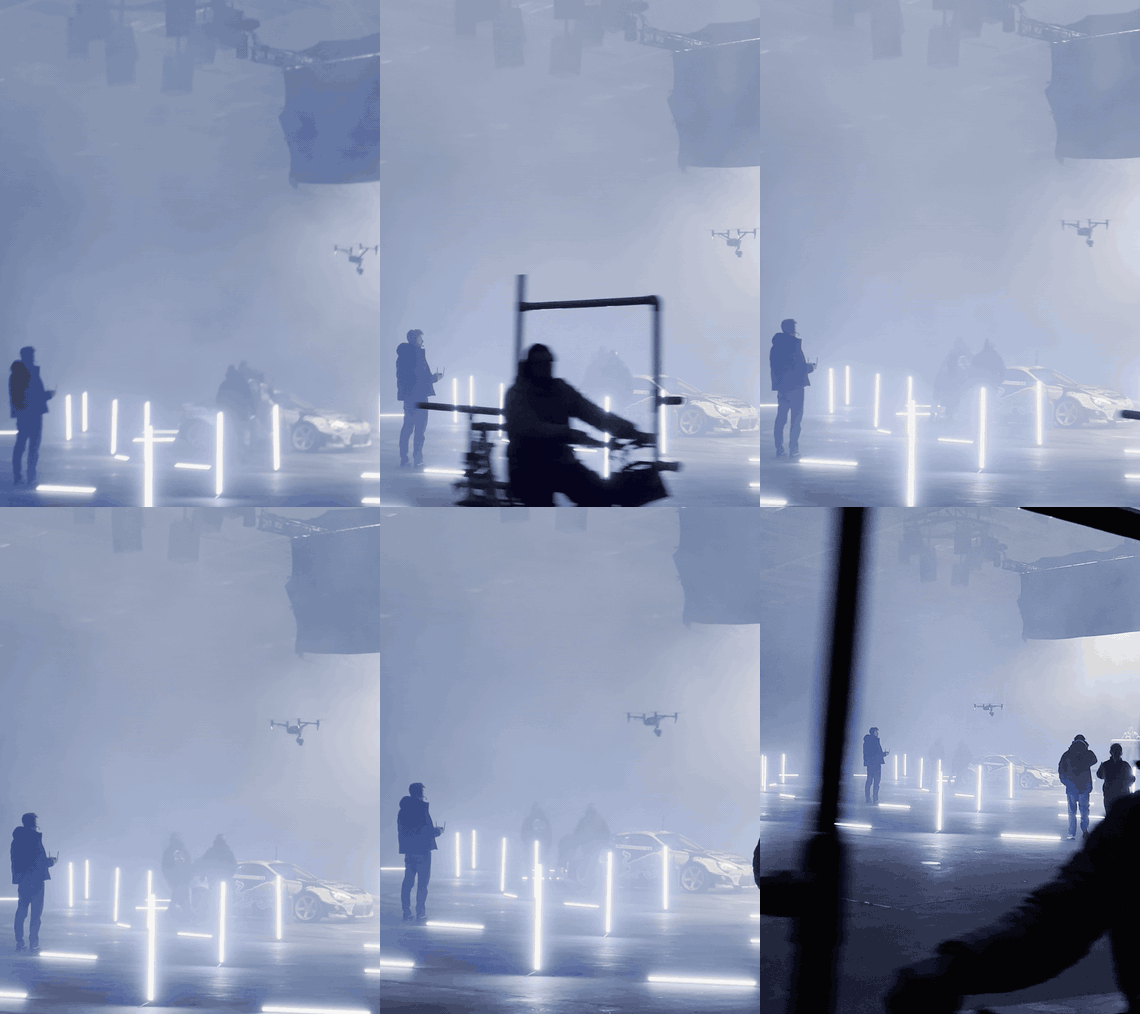
Red Bull: Beauty in Chaos
Tracking a bike through the lights, with a drifting car and its beams in shot.
BBC One
Beyond Paradise
Tracking scenes across several series of the BBC drama.
Trike, quad or tracking car?
The trike is the right choice when the shot moves at running or cycling pace, when the route is a path, a promenade, a beach or a stage, or when engine noise would get in the way.
For higher speeds on closed roads, or when the camera needs to keep up with cars, we rig our Flowcine Black Arm to quads and tracking vehicles instead. Tell us the shot and the location, and we'll advise the best option.
For aerials on the same shoot, see our Inspire 3 and Alta X pages.
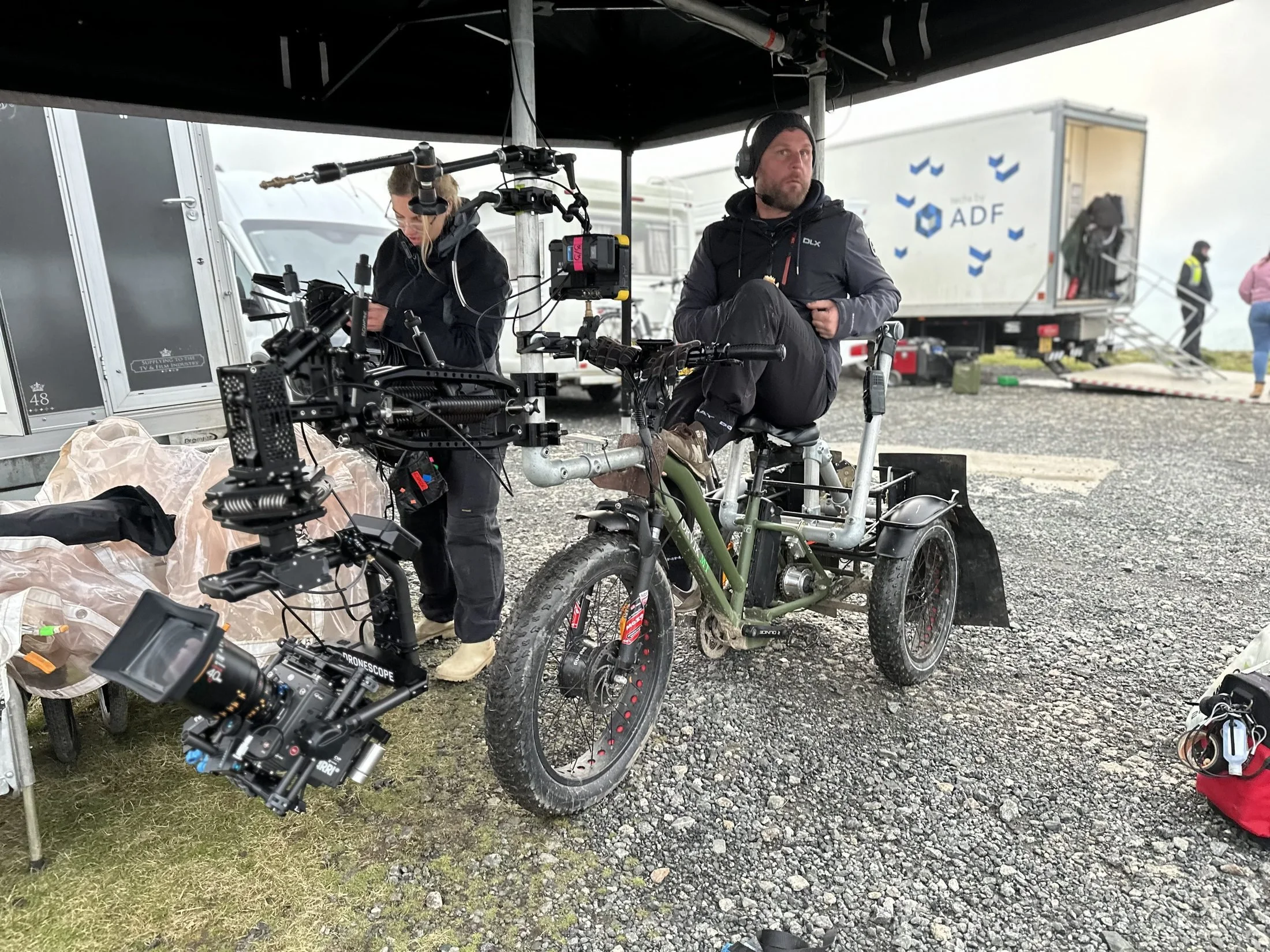
The trike
Vehicle
Jorvik electric trike
Size
195 cm long (174 cm with the front wheel turned), 84 cm wide, 38 kg
Motor
750 W, with a 250 W road mode
Speed
Up to 15.5 mph on public roads and paths; up to 20 mph on private land or closed sets
Battery
About 4 hours non-stop at full power, with spare batteries
Brakes
Dual hydraulic disc brakes, rear brake light
Rigs
Rear seat or frame, Tilta Alien arm, Flowcine Black Arm
Gimbals
DJI Ronin 4D, RS4, Ronin 2, Freefly Movi Pro
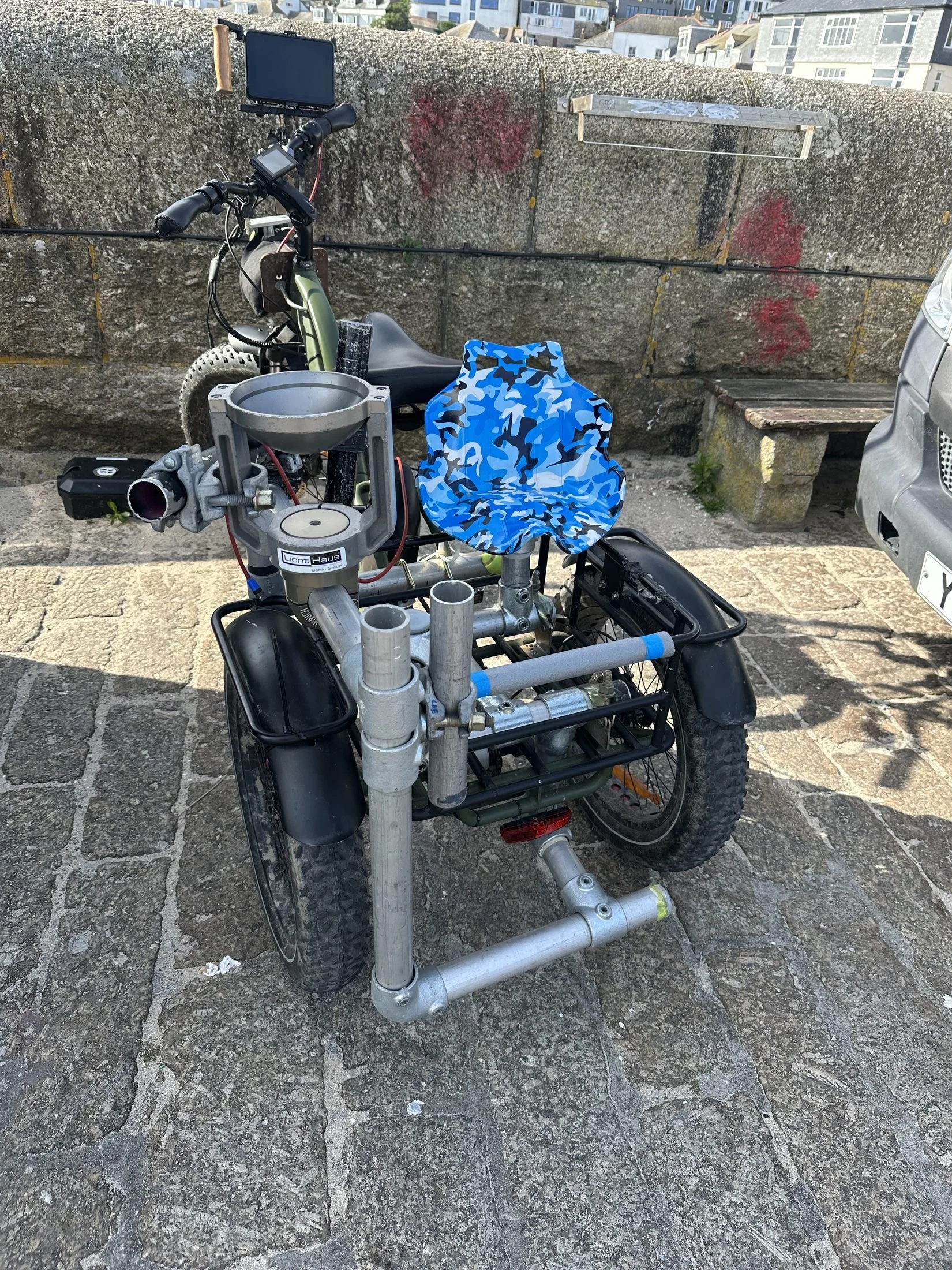
Day rates
Every option includes the trike and a precision rider.
Basic: trike, rider and seat or frame grip
from £850
Medium: Ronin 4D or RS4 on a Tilta Alien arm, front and rear tracking
from £1,100
XL: Flowcine Black Arm with Ronin 2 or Movi Pro, front and rear tracking
from £1,250
Dry hire to grip departments from £325 a day. Prices exclude VAT. Camera and lenses from the production or supplied on request. Day length, overtime, travel and cancellation follow our rate card.
Get the full rate card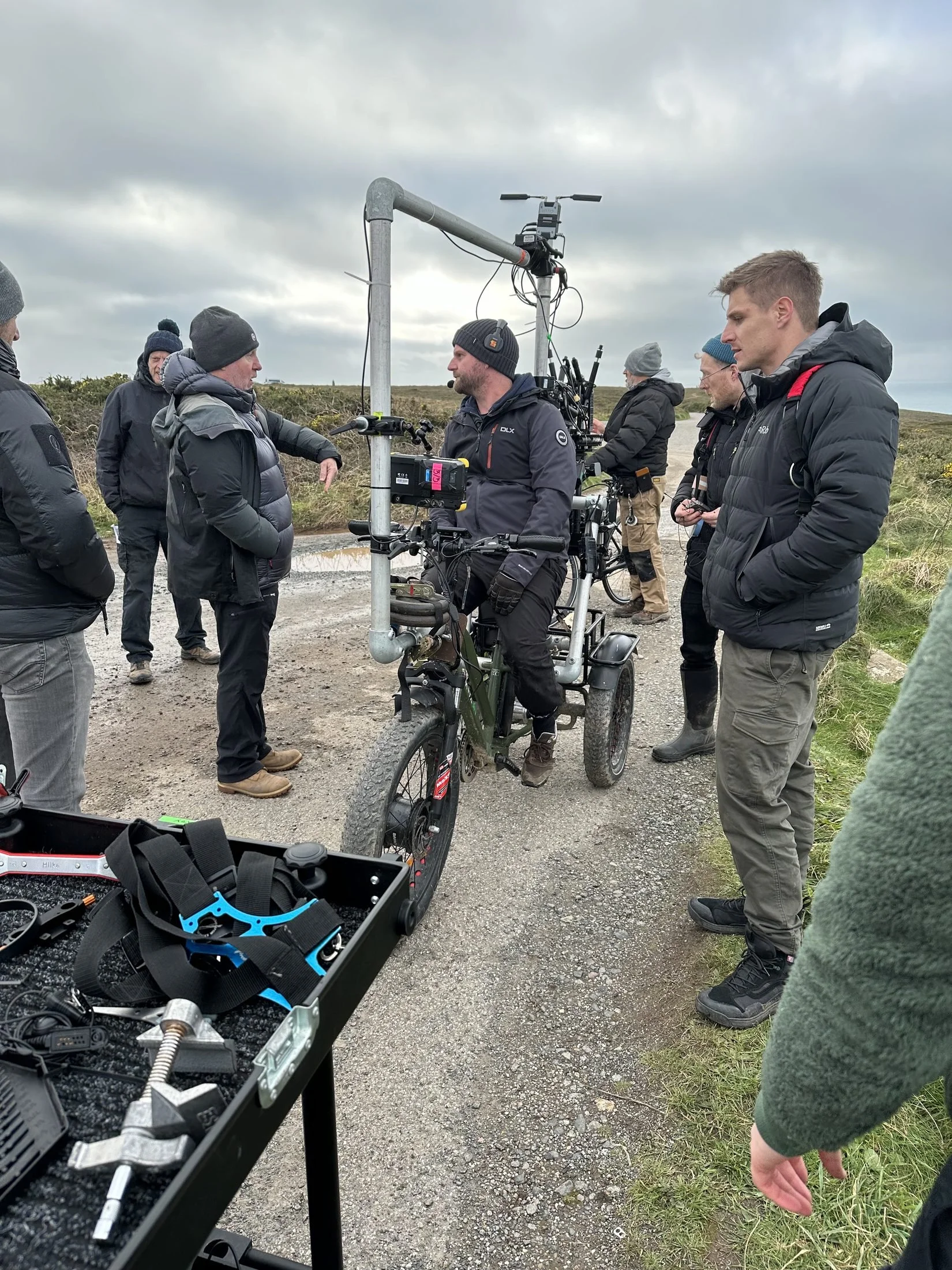
For producers
Can it be used on public roads? Yes, in its 250 W road mode, where it follows electrically assisted pedal cycle rules and the Highway Code, at up to 15.5 mph. Higher power and speeds are only used on private land or closed sets. Any tracking that needs a road or lane closed needs a filming permit and traffic management arranged by the production.
Is it quiet enough to record sound? The electric motor is near-silent, so it's far quieter than a petrol quad or tracking car. Talk to your sound team about the shot, and we'll plan the run with them.
How long does the battery last? About 4 hours non-stop at full power, and we bring spare batteries for a full day.
Can a camera operator ride on it? Yes. In the Basic set-up an operator rides on the rear seat or frame, handheld or with a gimbal.
Can we dry hire it? Yes, to grip departments from £325 a day, subject to approval.
What paperwork do you supply? A risk assessment and method statement for every job, covering the route, speeds, rigging, weather limits and emergency procedures.
Where do you work? We're based in Cornwall and work across the UK.
Tell us the shot
We'll tell you straight whether it's the trike, a tracking vehicle or a drone, and what it'll cost.
Check availability