
Cinematic drones
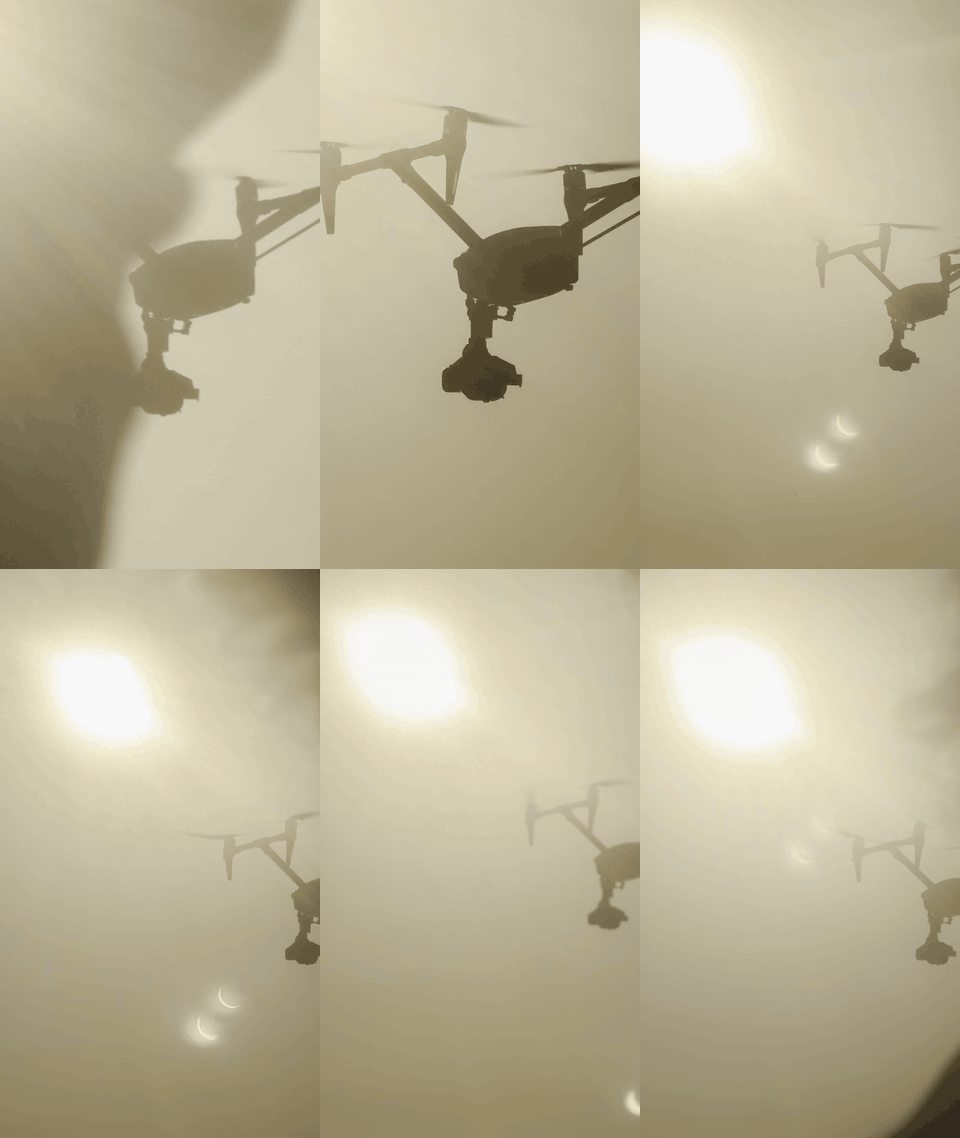
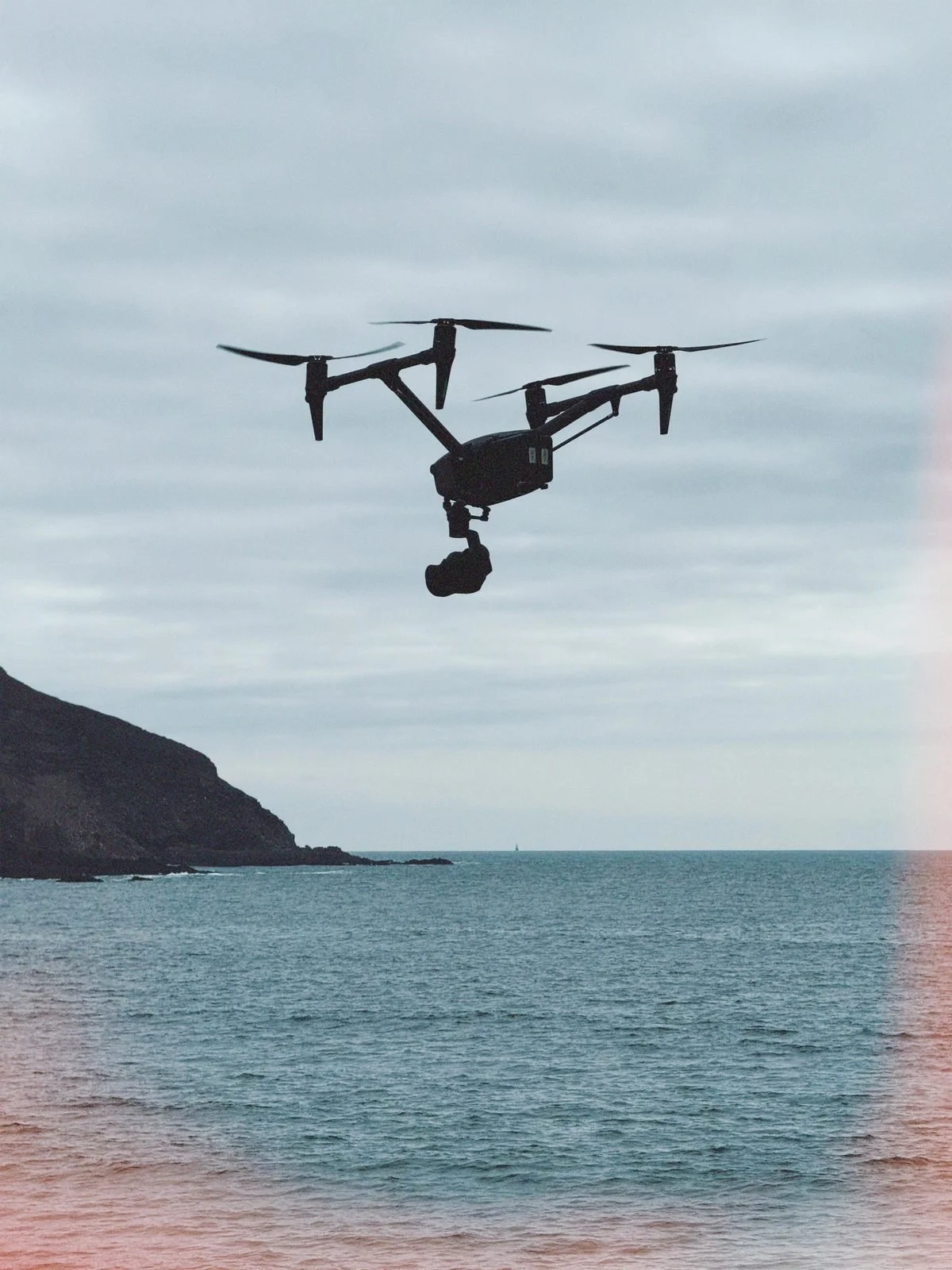
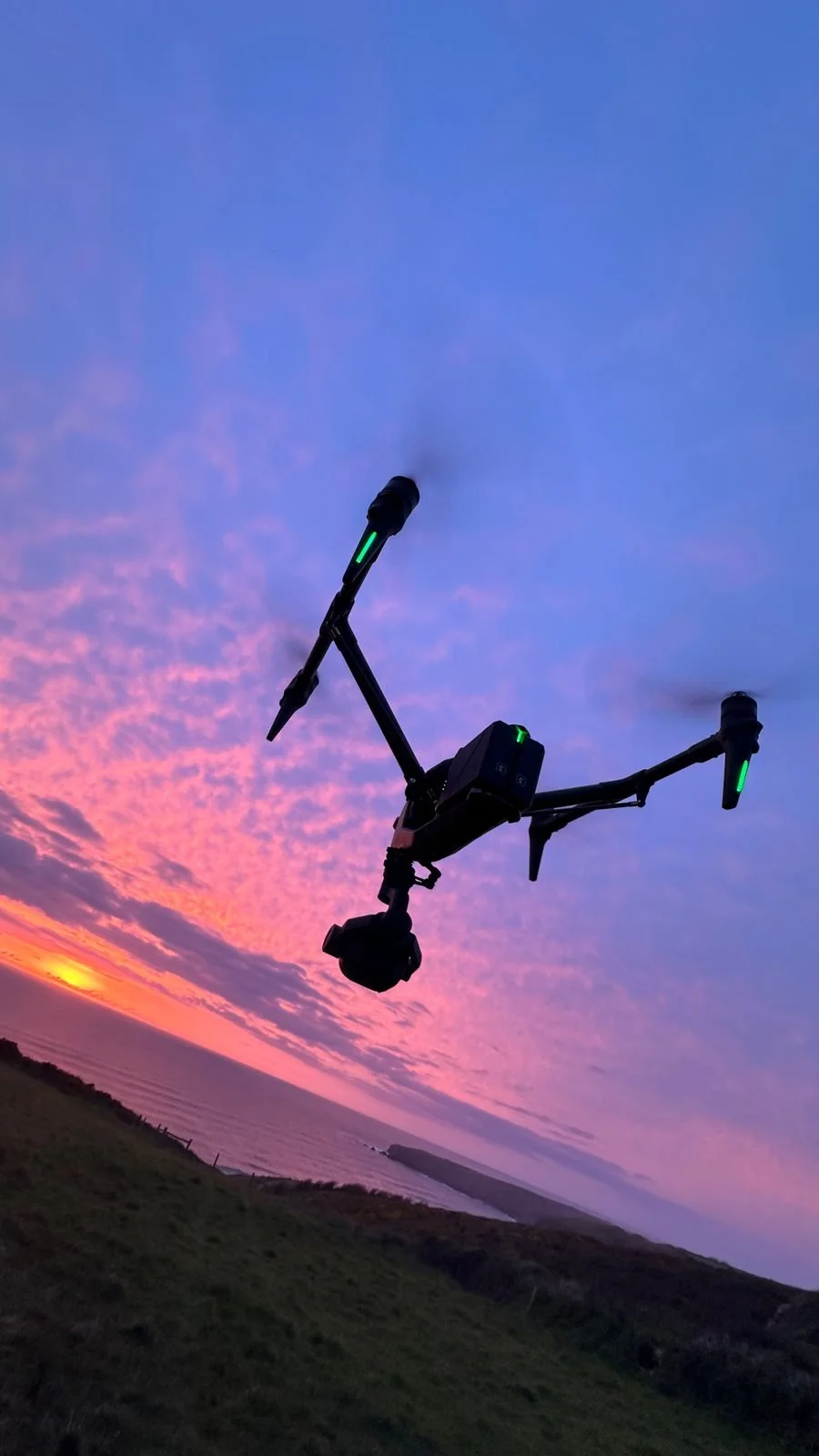
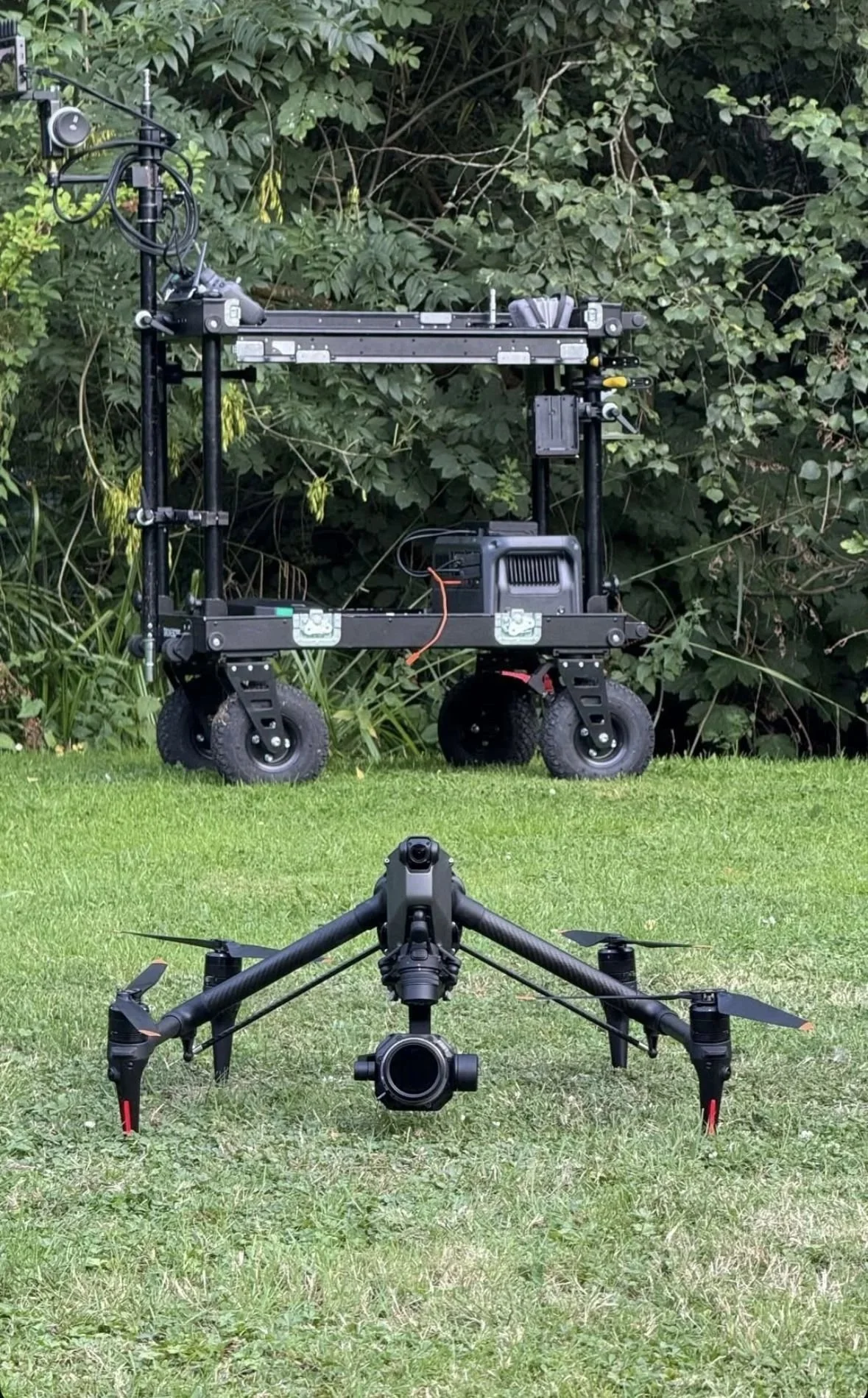
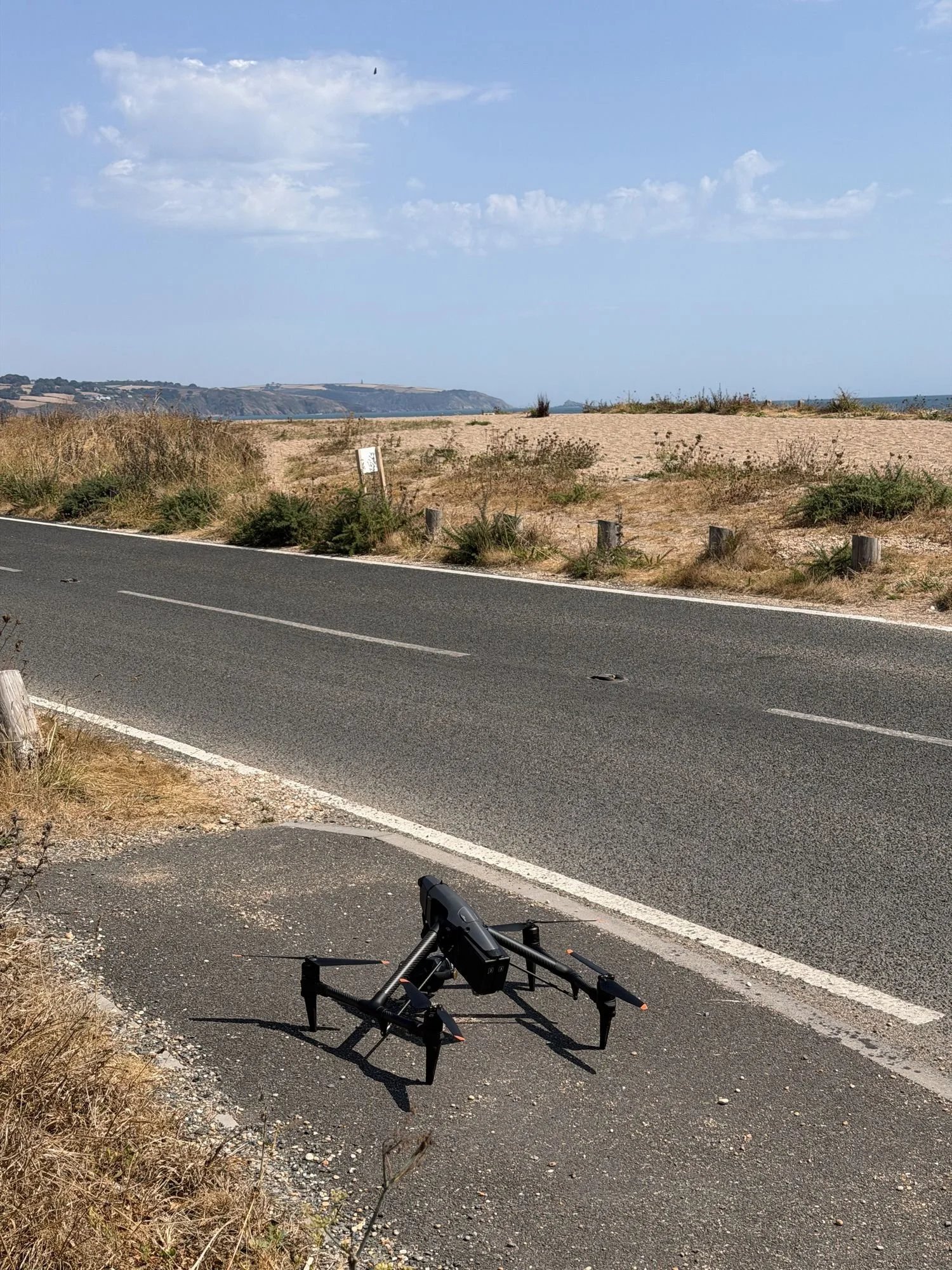
DJI Inspire 3: the industry workhorse
Netflix-approved, full-frame 8K and crewed for TV, film and commercials. Flown by a team that's been in the air since 2012.
Why it's on every big production
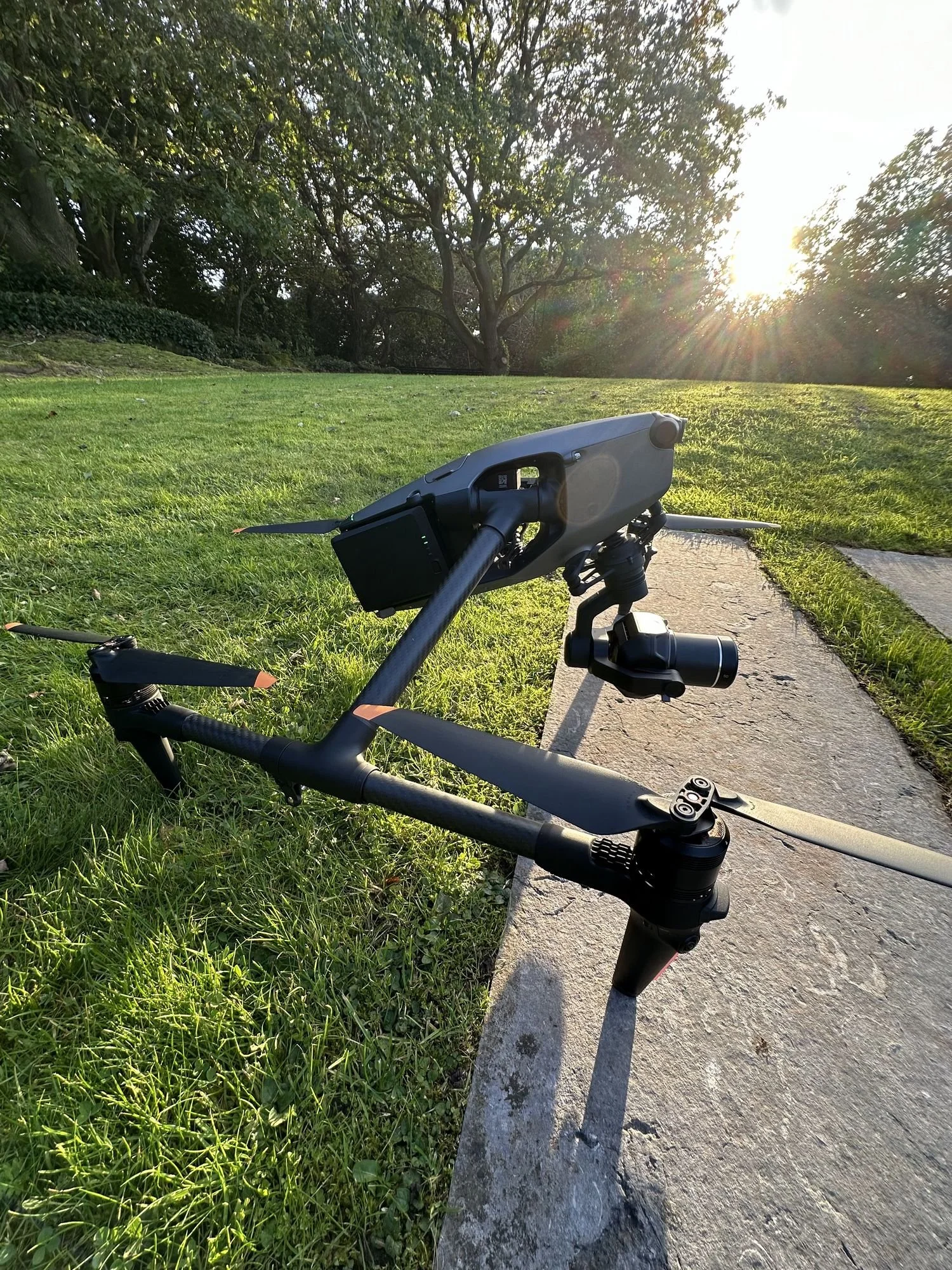
The Inspire 3 took over from the Inspire 2, a drone that did six years of hard work on film sets. It's fast, efficient and small enough to work almost anywhere, and with a great lens selection it makes stunning images. Its price point, and how well it cuts with ARRI and Sony main cameras, have made it the flagship drone for UK television and film.
Netflix approved. In 2025 the Inspire 3 and its X9-8K Air camera became the first drone on Netflix's approved camera list for 4K Originals. Its footage counts as primary-camera footage on Netflix productions, not just B-roll. What Netflix approval means for your production.
For producers, it comes down to three things: safety, reliability and price. We can be out of the van and shooting in five minutes. That means more takes when the light is right, and less time with the cast and crew standing around.
From the pilot's seat, it's a drone we trust. A dedicated high-quality FPV camera means the pilot flies on a clear forward view while the main camera is framed independently. The full-frame camera can also be focused remotely, so we can get close for shallow depth of field, or pull wide to see everything, in seconds.
Single or dual operator
Dual operator
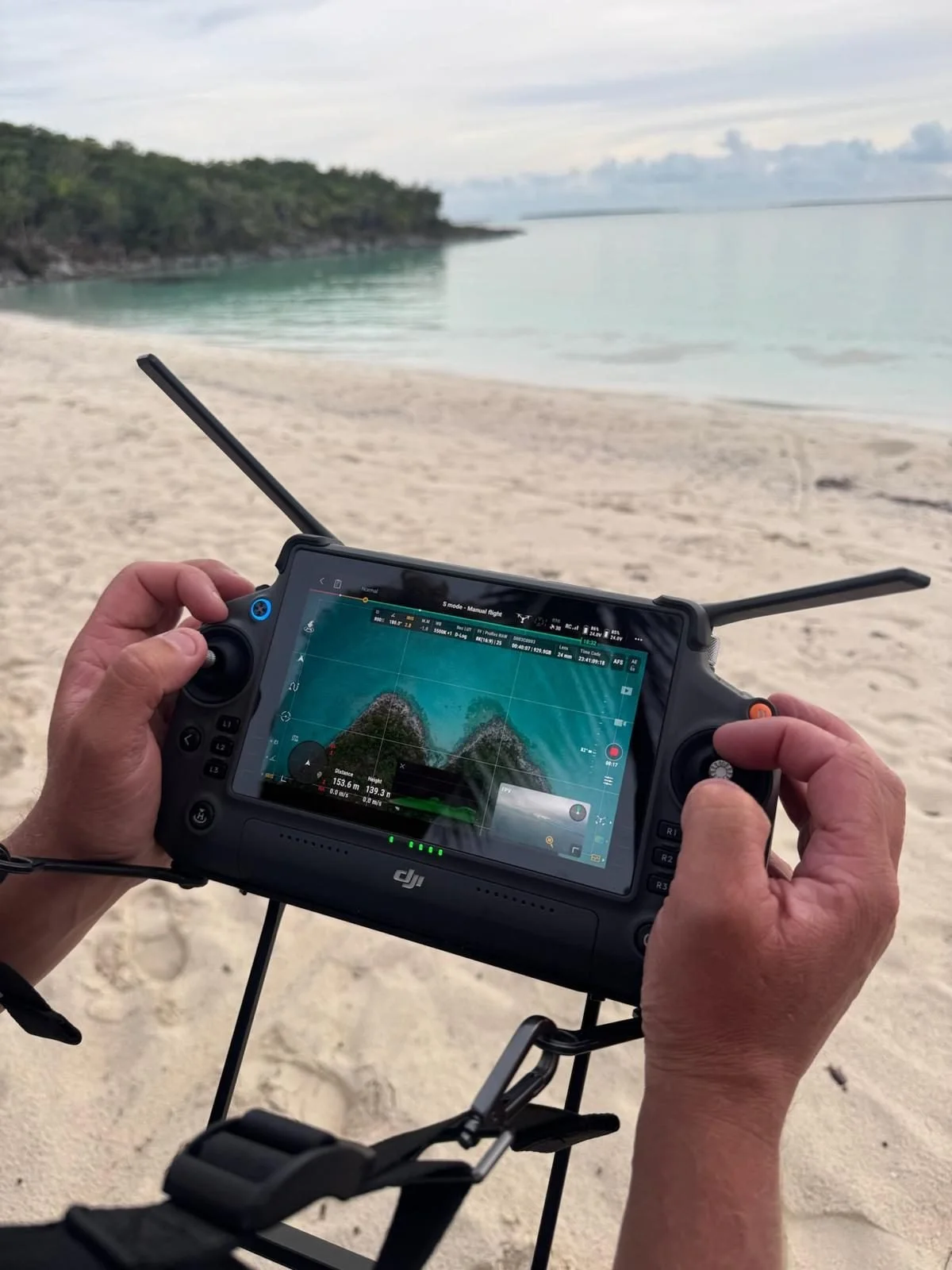
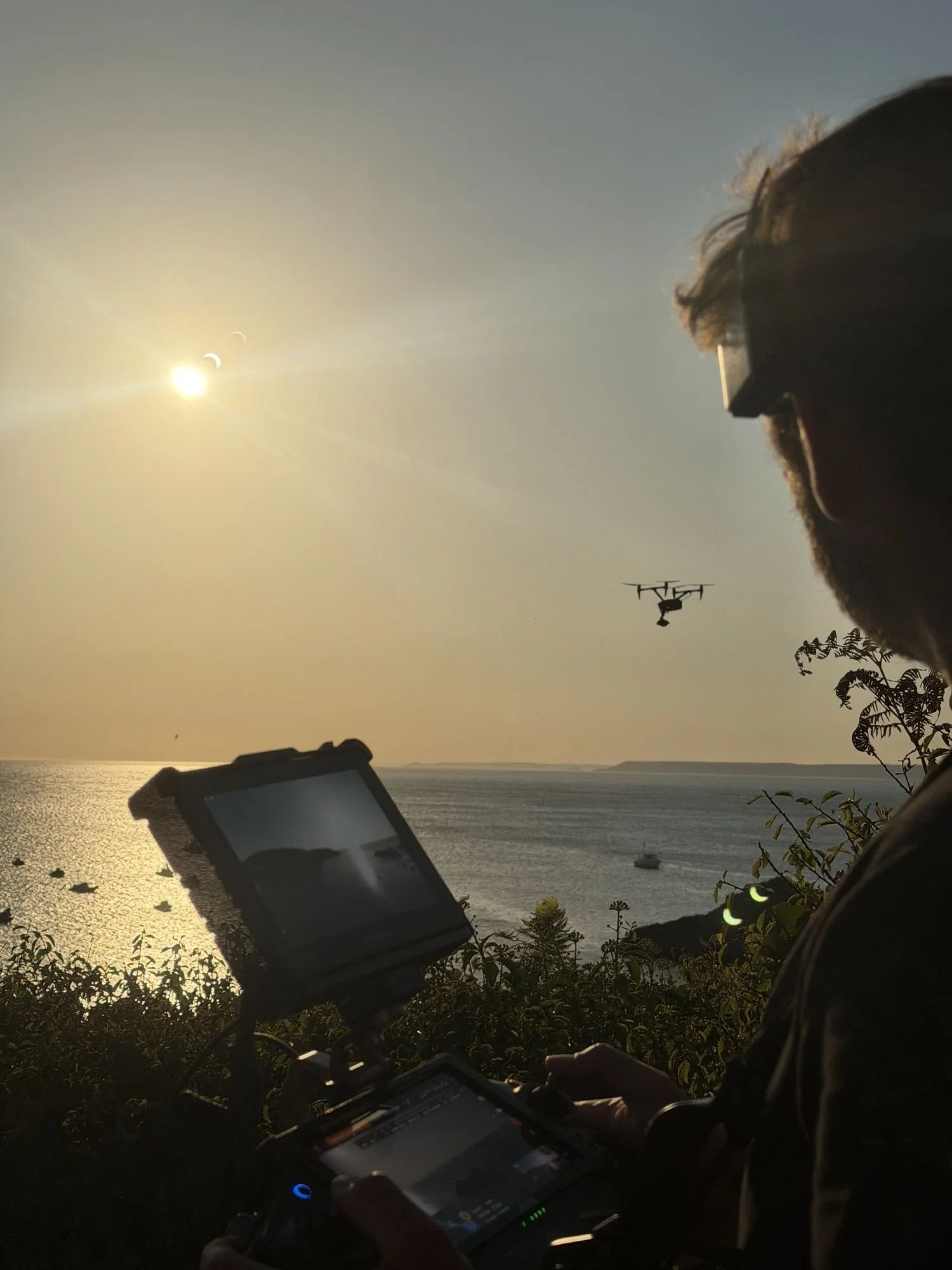
This is where we've built our name. One person flies while another frames the shot, working as a team with more than a decade's instinct for where the aircraft needs to be and where the light is about to land. We started flying when this was the only way to do it, and our heavy lift Alta X and Alta 8 still require it. Directors who've worked with us know the standard: we'd put it up against anyone in the country. We recommend dual operator for:
- Long-lens work, or tight framing on a moving subject.
- Complex moves where the flight path and the frame change at once.
- Choreographed action with vehicles, boats or stunt teams.
- When the director or DOP wants a live operator to talk to.
Single operator
The pilot flies the drone as if it's the camera. On smaller drones the camera faces forward, but the Inspire 3 also gives a single pilot pan control and active tracking, which we use when it's the right tool for the job. The Inspire 3 can also work as a hybrid of the two. We recommend single operator for:
- GVs and landscapes.
- Aerial opening and closing shots for scenes, used like a jib.
- Property shoots.
Not sure which you need? Tell us the shot and we'll give you a straight answer.
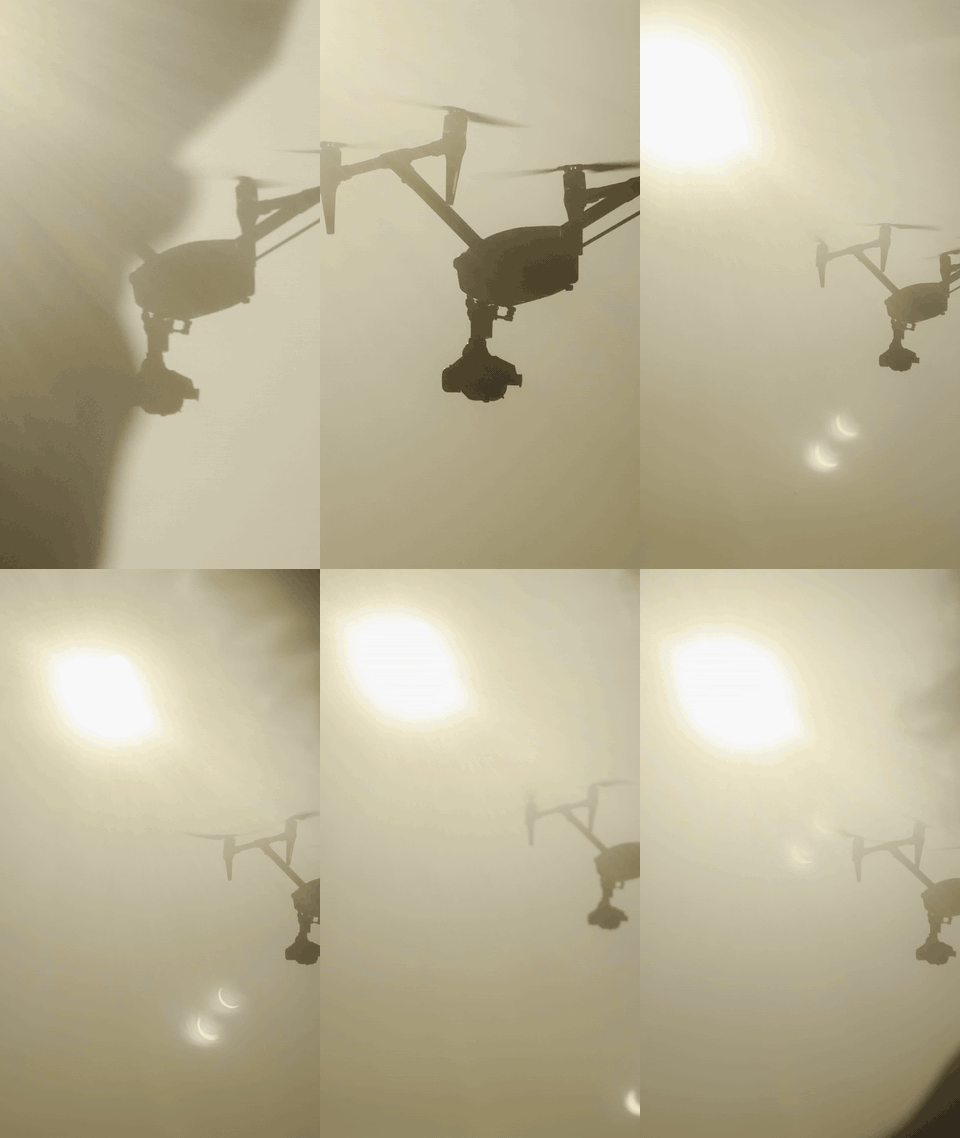
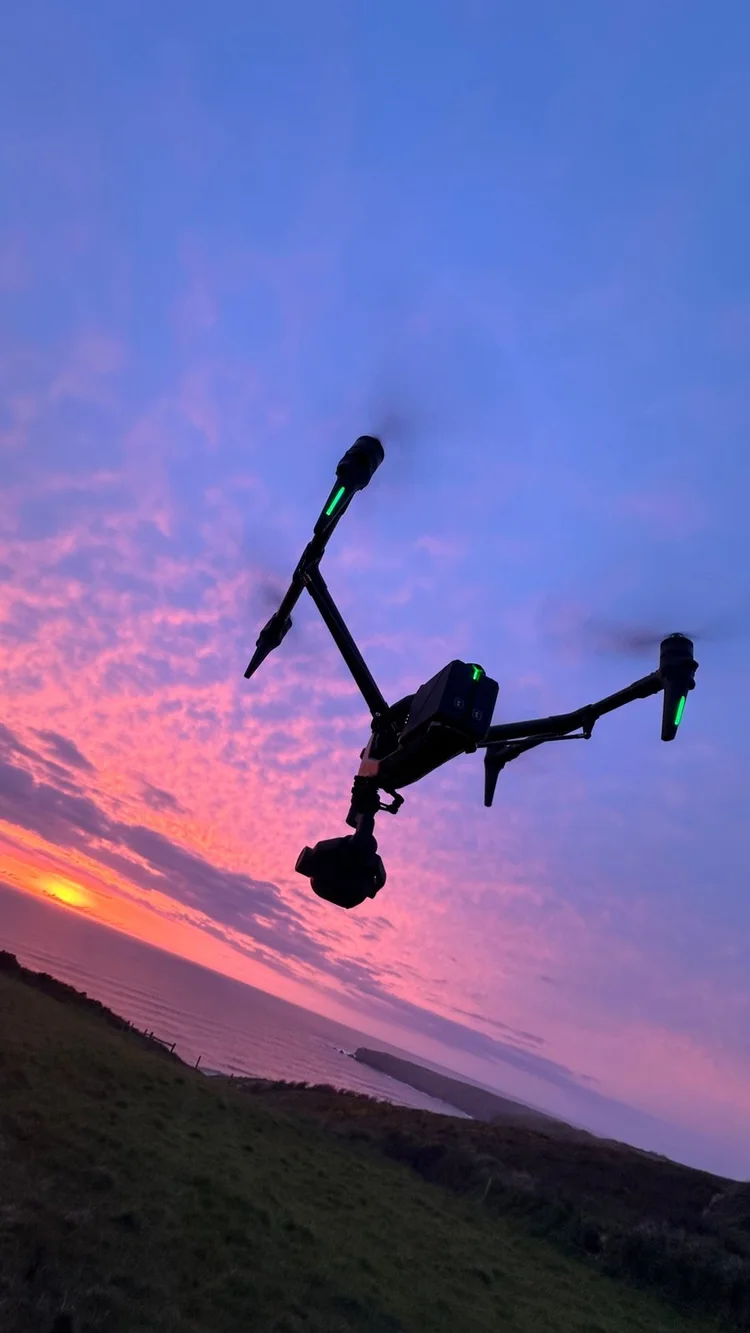
“On a recent UKTV shoot, flying single operator against the clock, we went up at dawn over a beautiful Devon location, straight into the sun. We gave the director several options in one go, and they were stunned by the flares coming through on the monitor. That's the Inspire 3 at its best.”
Lenses
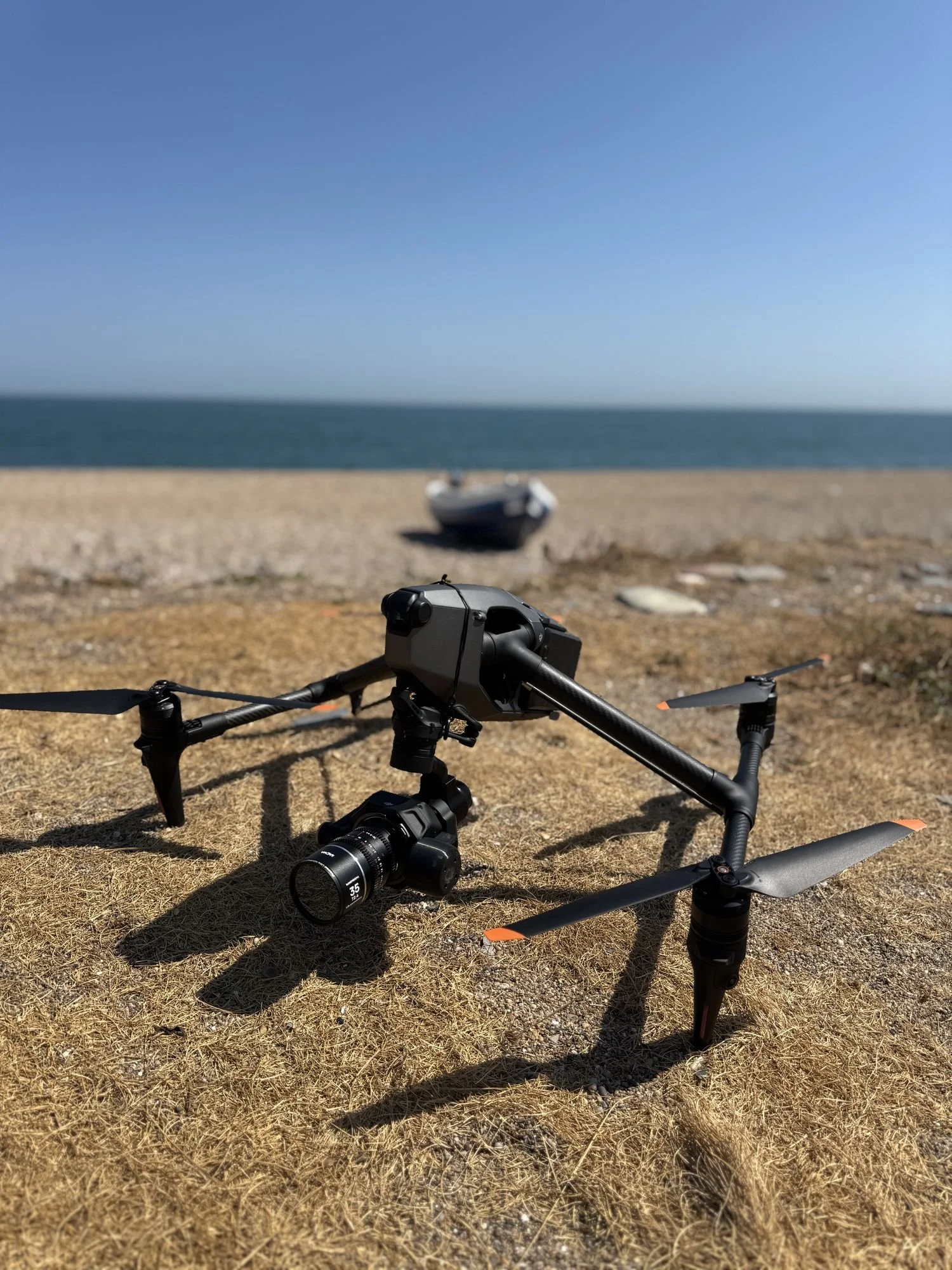
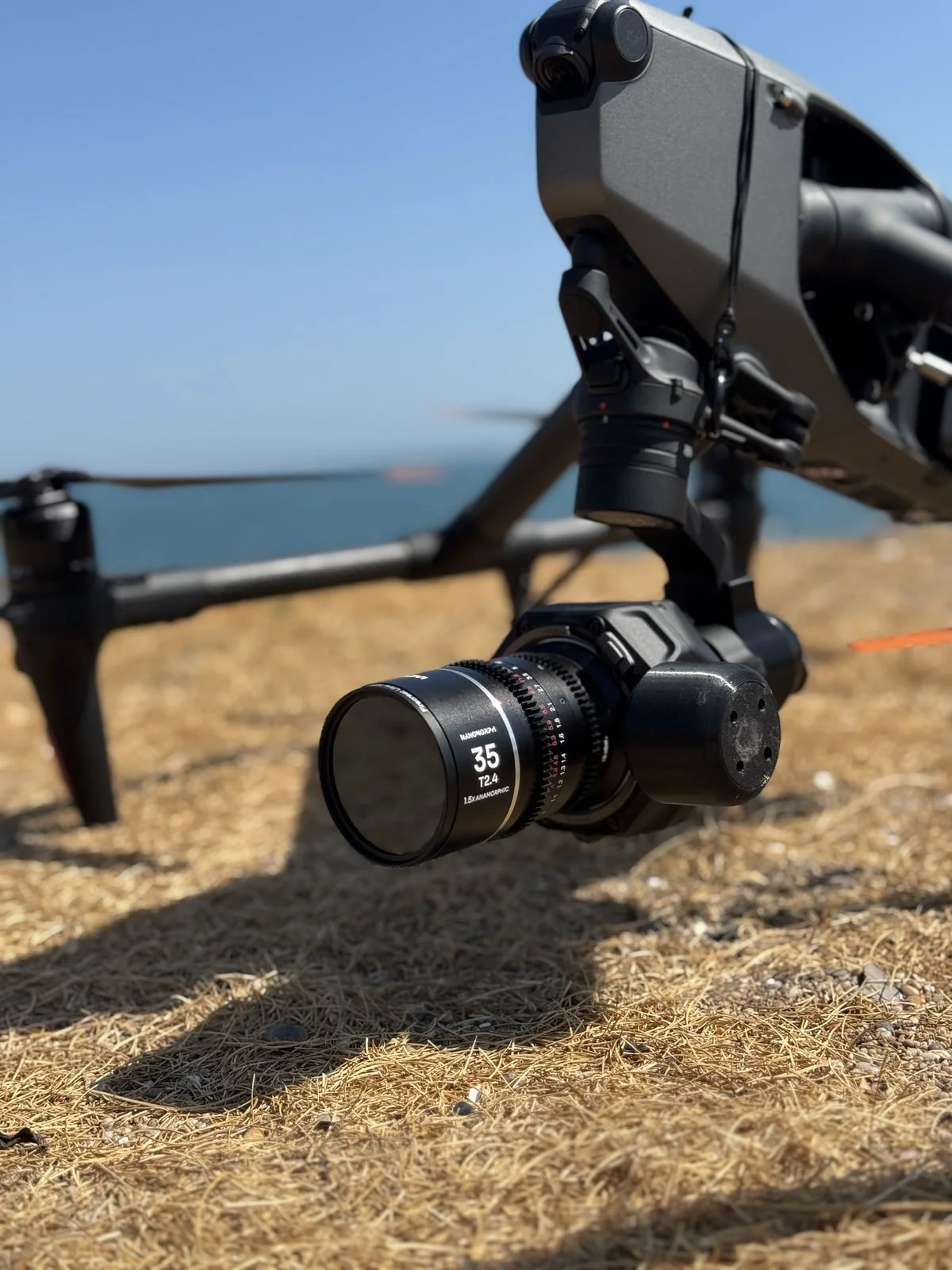
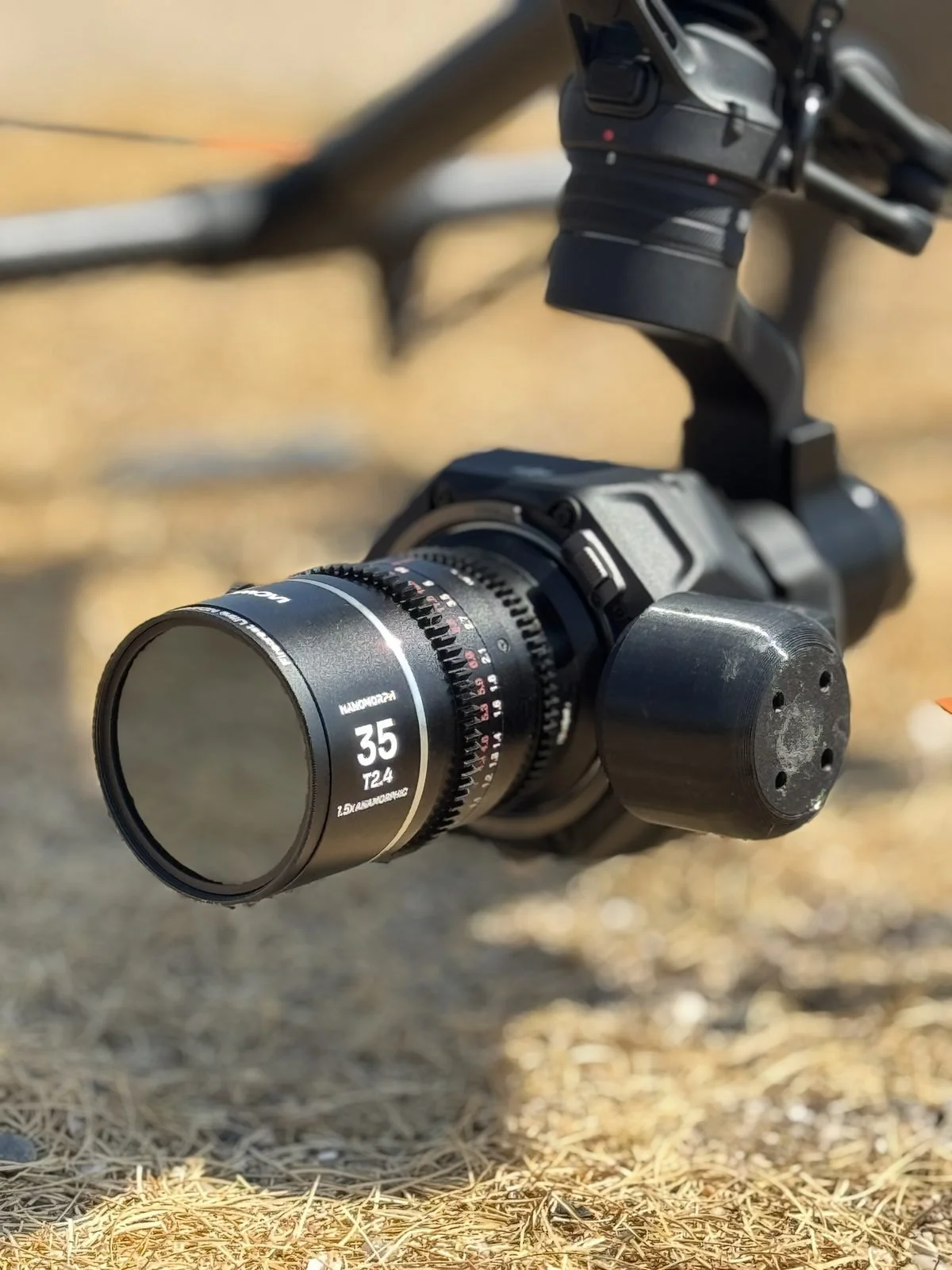
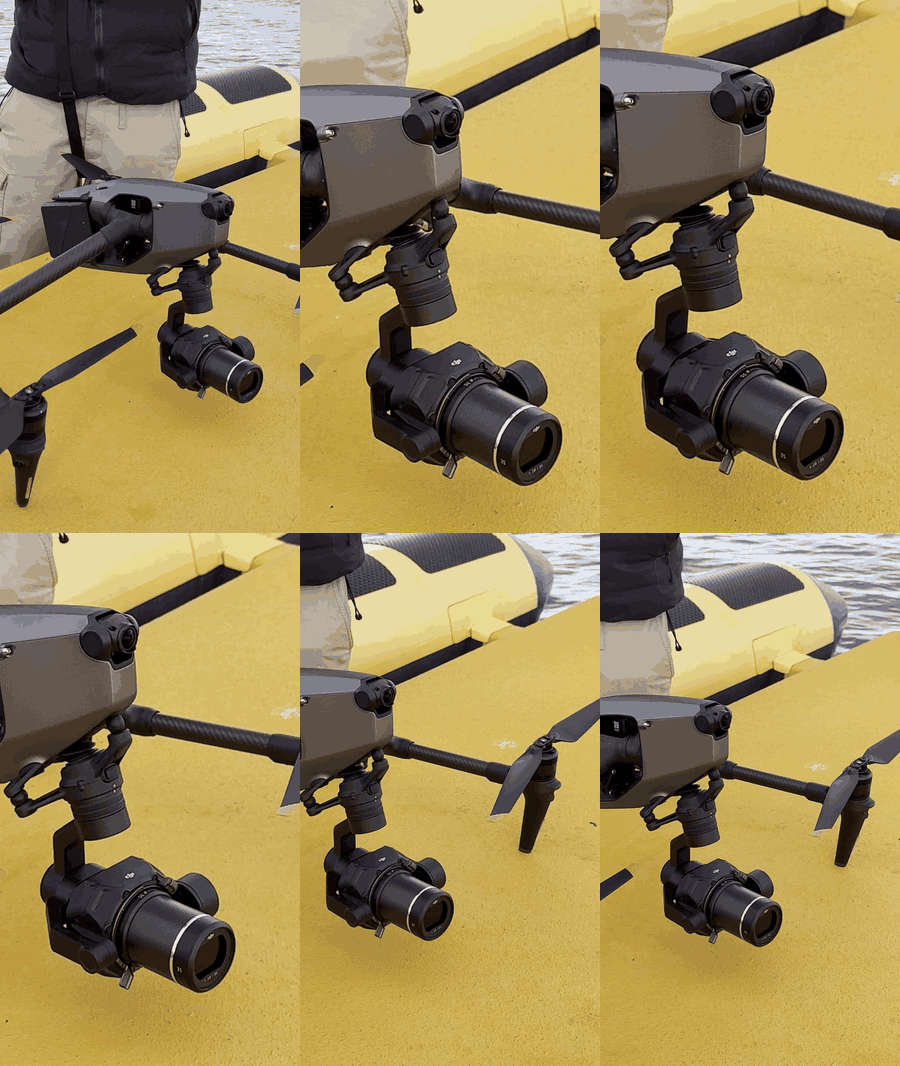
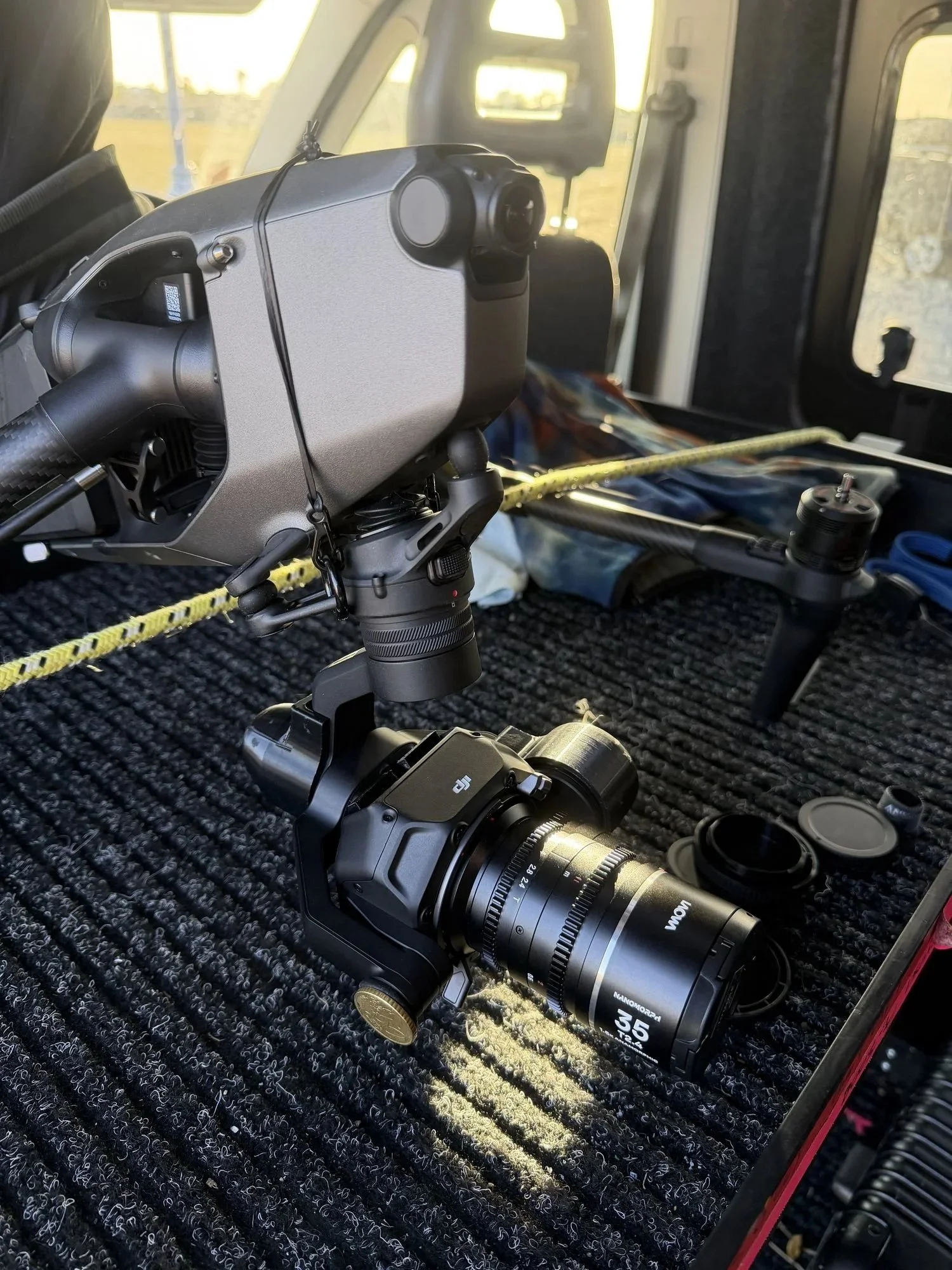
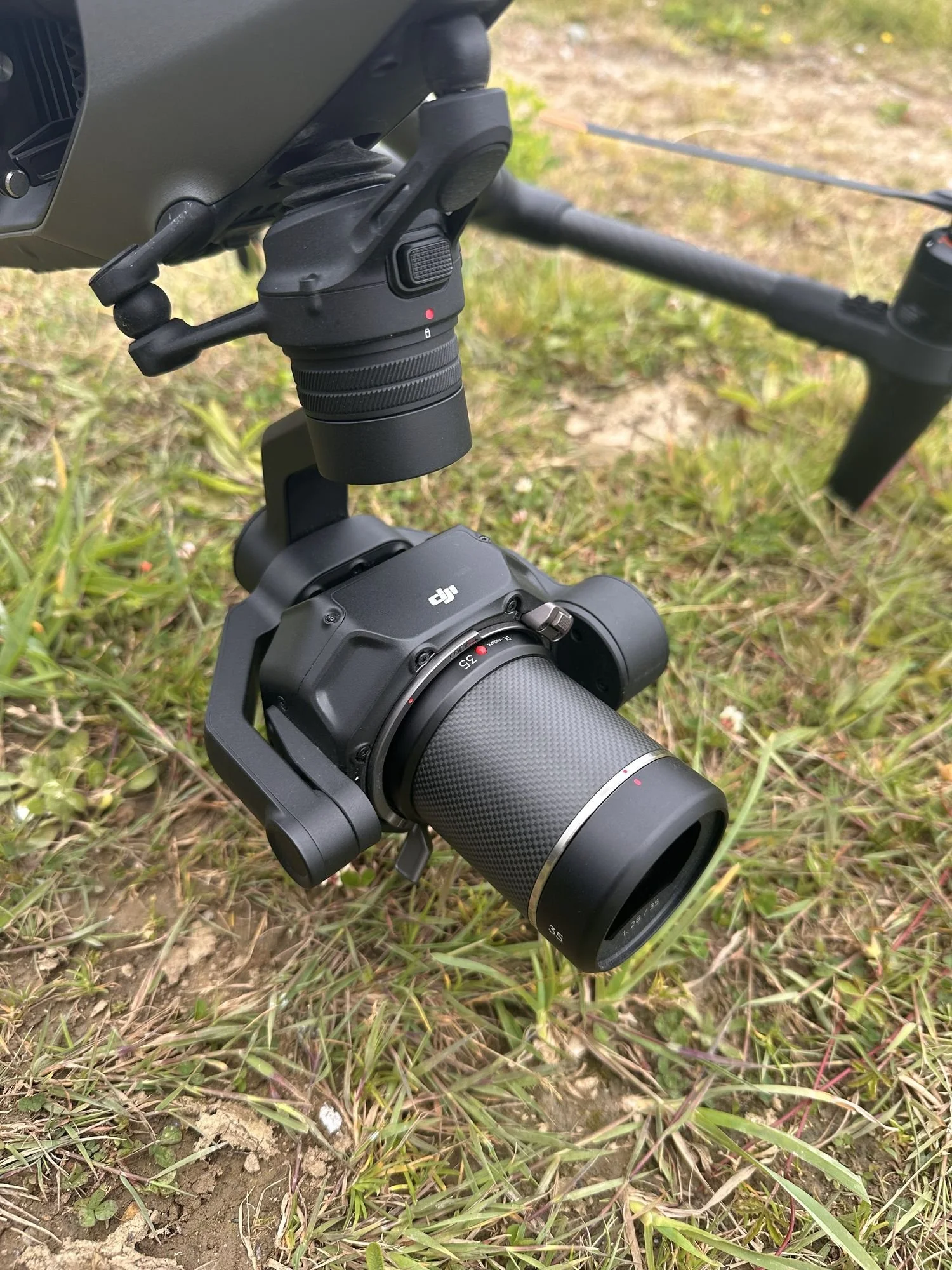
We fly the Zenmuse X9-8K Air full-frame camera with the DJI DL lens set (18, 24, 35, 50, 75 and 90mm). Anamorphic and vintage glass are available on request. We come from the camera department, so we understand lenses from a DP's point of view, and we'll talk you through matching the look of your main unit.
On set now
The Inspire 3 flies with us year round on:
- Beyond Paradise (BBC)
- Bergerac (UKTV)
- Rosamunde Pilcher (ZDF, German television)
There's also cinema work we can't name yet.
What DJI built into it
Camera
Zenmuse X9-8K Air, 35mm full-frame sensor
Recording
Up to 8K CinemaDNG RAW and Apple ProRes RAW, internal
Gimbal
360° pan, with Tilt Boost for steep upward shots
Pilot view
Separate 1080p FPV camera with a 161° view
Wind
Flies in winds up to 14 m/s (about 31 mph)
Temperature
Works from −20°C to 40°C
Positioning
Centimetre-level RTK and Waypoint Pro for repeatable moves
Flight time
About 25 minutes a battery. We cycle 12 batteries through the day
Top speed
94 km/h (58 mph)
Day rates
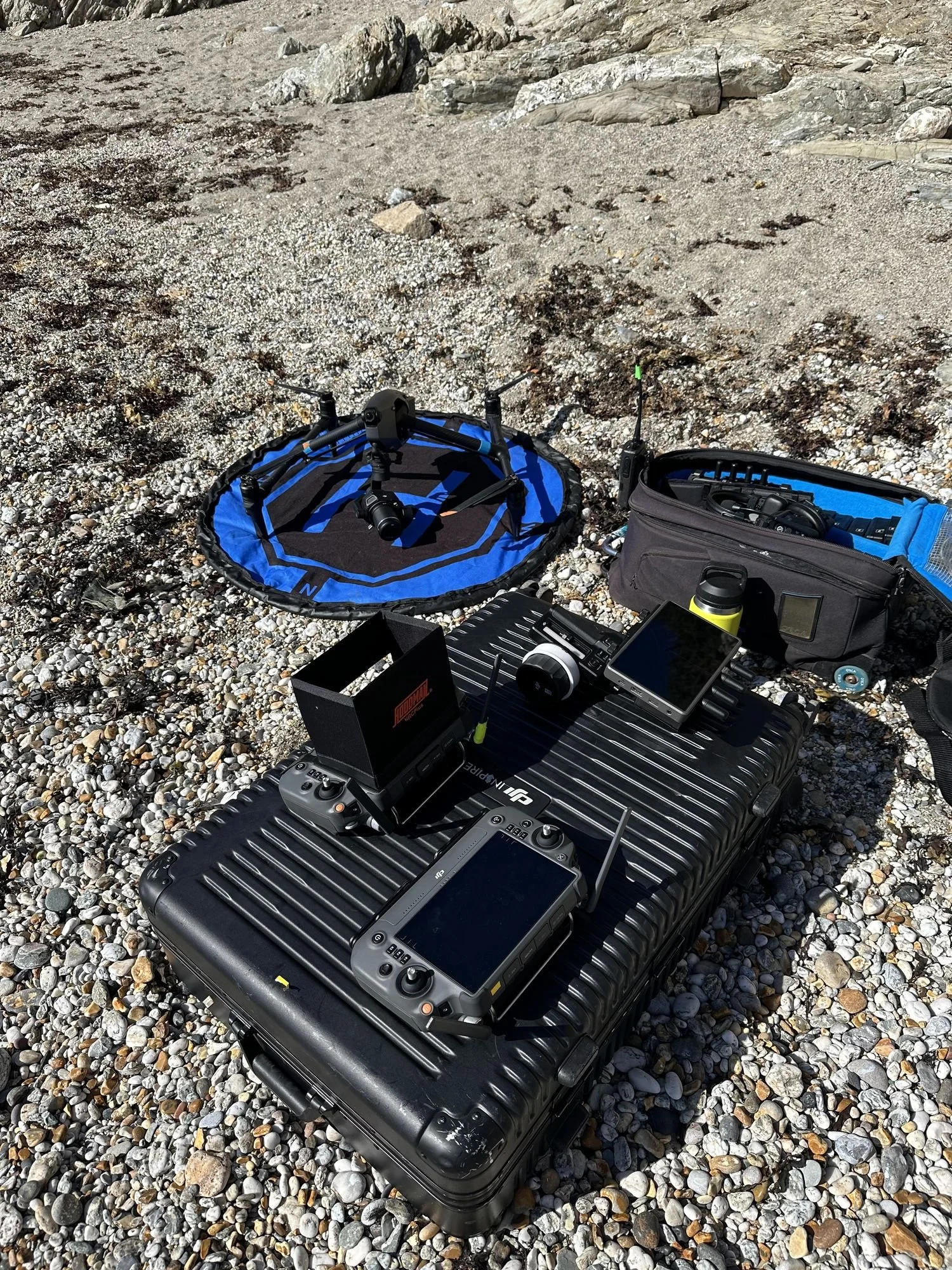
Full crewed rates, including the pilot, aircraft, X9-8K camera, DL lens set and batteries for the day.
Single operator
from £1,520
Single operator, at sea
from £1,675
Dual operator
from £2,150
Dual operator, full spec
from £2,350
Prices exclude VAT. Day length, overtime, travel and cancellation follow our rate card.
Get the full rate cardSeen on screen
At sea for Beyond Paradise
Inspire 3 aerials at sea for BBC One's Beyond Paradise, Series 4, Episode 1.
Watch the clip on the BBC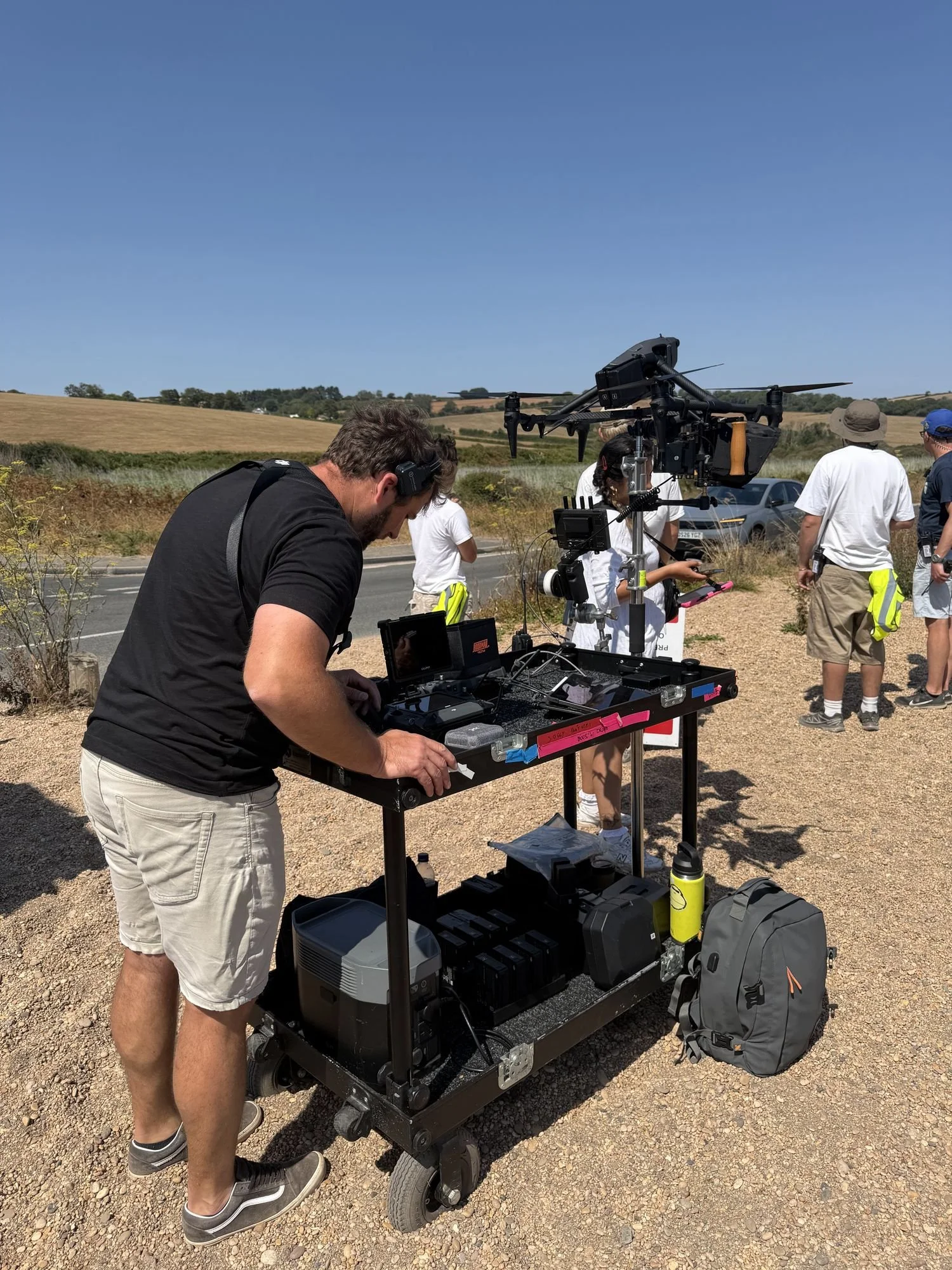
For producers
Are you CAA authorised and insured?
Yes. We hold a CAA Operational Authorisation (PDRA01) and £5m drone public liability insurance. Flights under an Operating Safety Case (OSC) are available as an upgrade.
Do you handle location and airspace permissions?
Yes. See our Production FAQs for permissions, insurance and weather.
What about the weather?
The Inspire 3 handles wind and cold better than most. We check the forecast with you beforehand and make the call early, so you're not paying for a wasted day. We don't control the weather, so see our terms (on request with our rate card) for the detail.
How quickly can you set up?
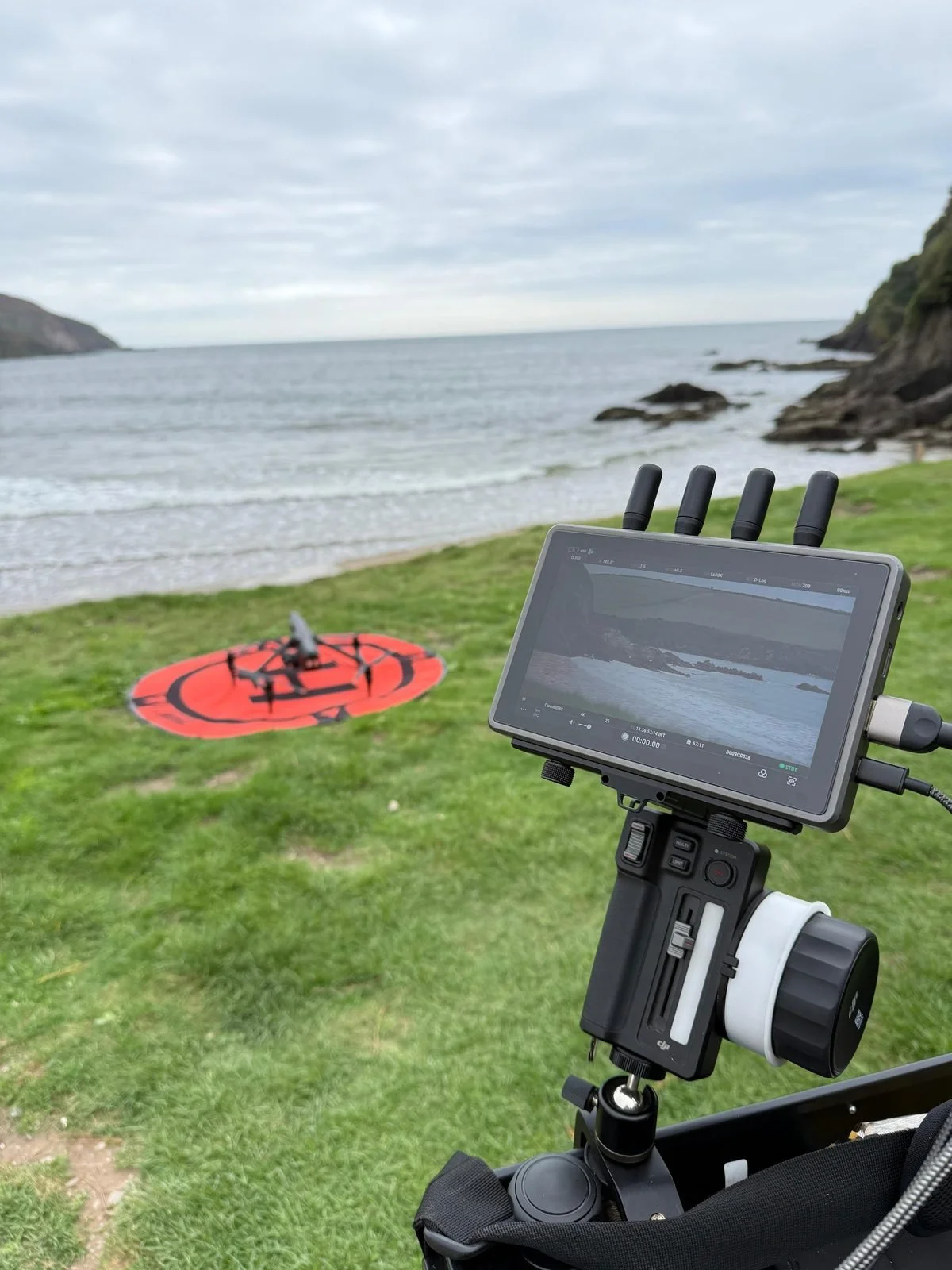
With a pre-call, or when we're not first up, we can wheel the rigged magliner out of the van and be shooting in 5 minutes or less. From cases to basic flying takes 5–7 minutes. From cases to a fully rigged magliner, with director's monitor, focus monitor and charging station set and standing by, takes 15–20 minutes.
Will it match our main camera?
It shoots full-frame 8K RAW, and colourists tell us it grades well alongside ARRI and Sony cinema cameras. Tell us what the main unit is shooting on and we'll set up to match.
Do you travel?
Yes. We're based in Cornwall, with crew in London, and work UK-wide all the time. We've filmed in more than 30 countries, and have often been the first drone operators given permission to fly in a new country.
Is the Inspire 3 Netflix-approved?
Yes. The Inspire 3 with the Zenmuse X9-8K Air is on Netflix's approved camera list.
Single or dual operator?
Treat dual operator as the baseline for a day's shooting where any idea is possible: a pilot and a separate camera operator for complex moves. Single operator suits GVs, master wides and scene reveals. That said, many of our single-operator shots play on TV dramas across the UK, from car chases to acted scenes. If it's possible single operator, we can do it.
Can the Inspire 3 run anamorphic lenses?
Yes. The X9 camera can be adapted to run Laowa Nanomorph lenses in DL mount. The 27mm and 35mm work best; the 50mm is a little long, which restricts performance at speed and in wind.
Can the Inspire 3 run other lenses?
Yes. We have adapters for FD and M42 mount lenses, and own a number of interesting Canon FD, Carl Zeiss Jena, Super-Takumar and Yashinon DS lenses. If you want a different look to your drone footage, vintage lenses are the way forward. We lose iris and focus control, but we have a lot of experience working that way.
What is the flight time on the Inspire 3?
It depends on the wind: 22 minutes maximum, 13–15 minutes normally and about 10 minutes on windy days. Flights at sea land at 50% battery by default, so flight times are shorter.
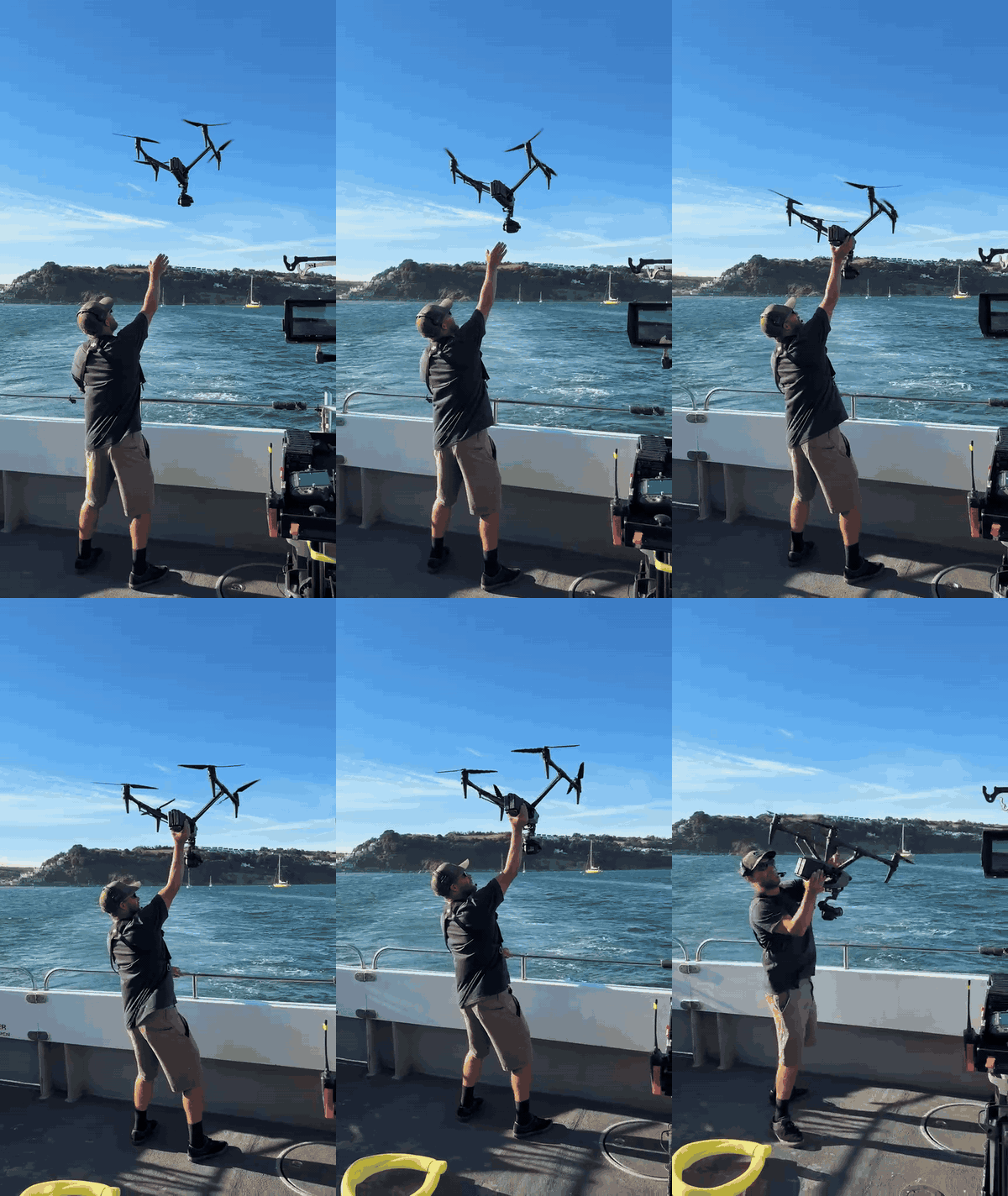
Can you fly the Inspire 3 from a boat?
Yes. We do it regularly and have various boat options locally in Cornwall and Devon.
Can you fly the Inspire 3 from a moving vehicle?
Yes. We often base the pilot and camera operator inside vehicles for chase scenes and for covering distance, such as at race tracks. This lets the drone fly further than 500 m from its original take-off point.
What does the director see?
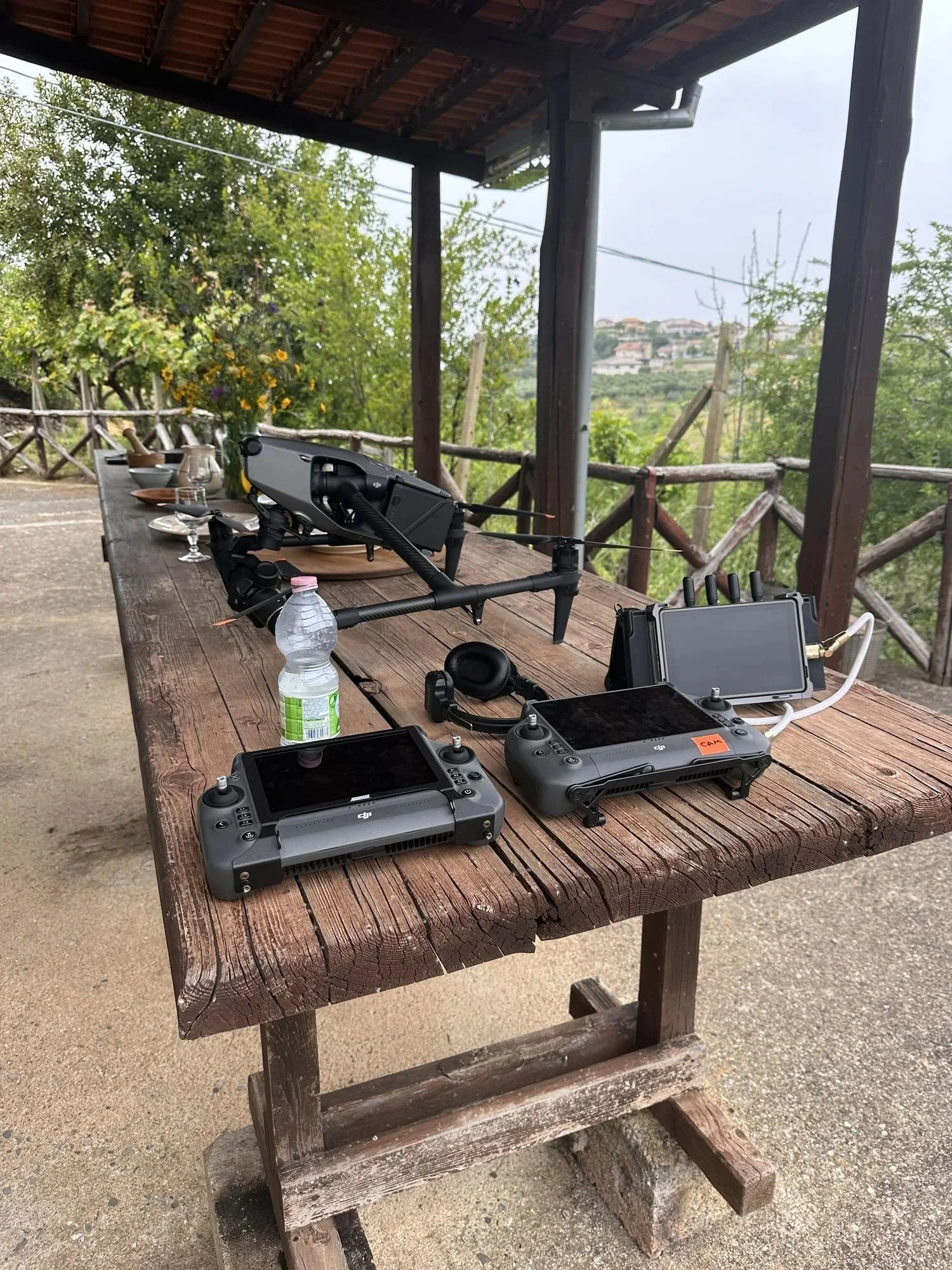
We provide a 7" director's monitor, a 7" focus puller's monitor and 2 SDI outputs, and often connect to video village via Teradek or Vaxis.
How do we communicate on set?
The pilot, camera operator and spotter run direct headsets. Two more headsets can be added for the director and DOP.
More on permissions, insurance, weather and booking: Production FAQs.
Tell us the shot
We'll tell you straight whether it's single or dual, and what it'll cost.
Check availability