
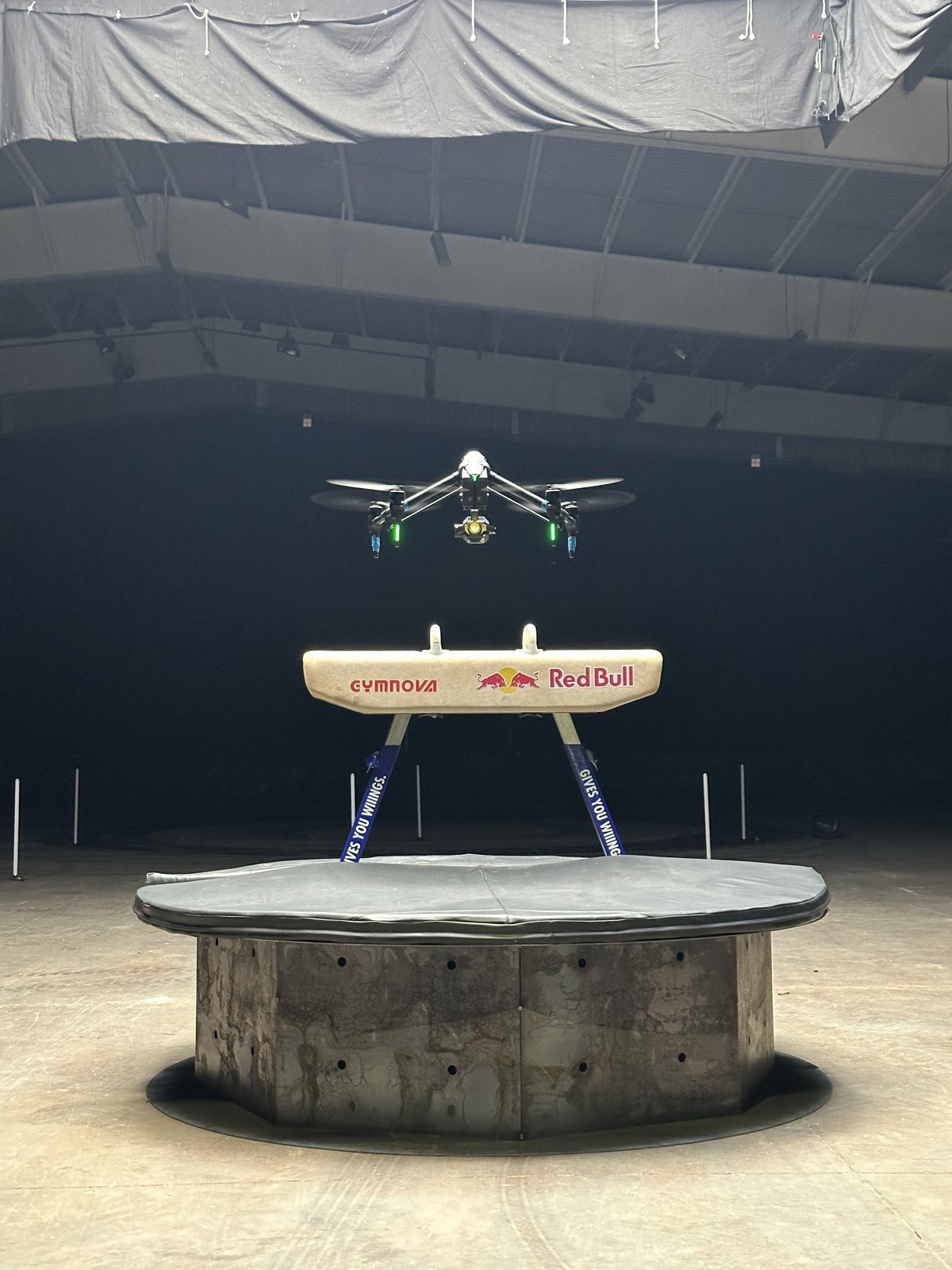
Our Inspire 3 over Rhys McClenaghan's pommel horse at Green Glens Arena.
Red Bull's Beauty in Chaos was nominated at the 2026 International Motor Film Awards, and we're proud to have been part of the team that made it. Directed by legend Oisin Tymon for Red Bull Ireland, the film was shot over two days (prep, then shoot) at Green Glens Arena in Millstreet, Co. Cork. Here's the kit we brought to it, and why.
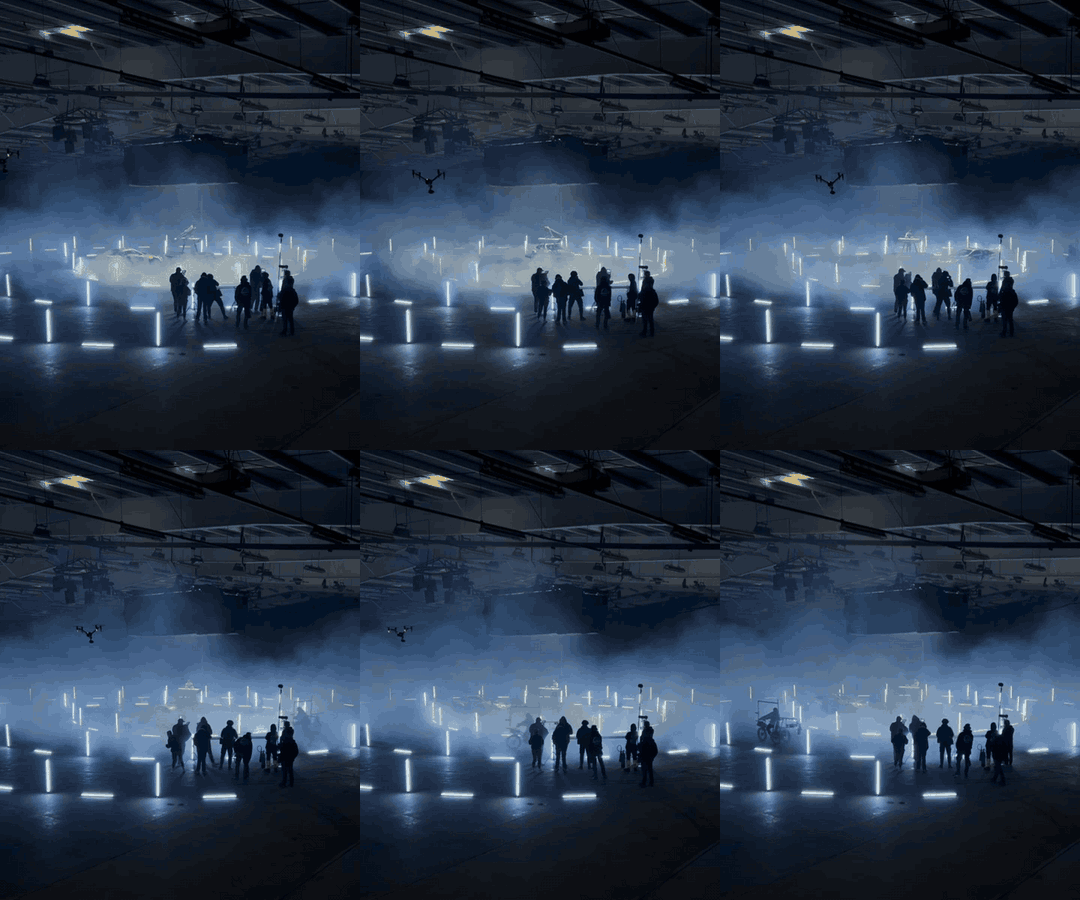
The whole set from behind the crew: the Inspire 3 flies through the smoke as the Cine-Trike rolls past.
The brief
The film brings together two Irish Red Bull athletes, Olympic pommel horse champion Rhys McClenaghan and Cork drift driver Conor Shanahan, in an arena built for speed, noise and dirt. Oisin's creative idea was to find the beauty inside the chaos. Due to the nature of the action, remote cameras were a necessity: pinpoint accuracy in an environment that begged for full attention.
Oisin was after moving shots that could keep pace, aerials that showed the scale of the arena, and cameras placed right in the middle of the action. We came in as one specialist camera unit to cover all three, working alongside DOP Ignas Laugalis.
The Cine-Trike
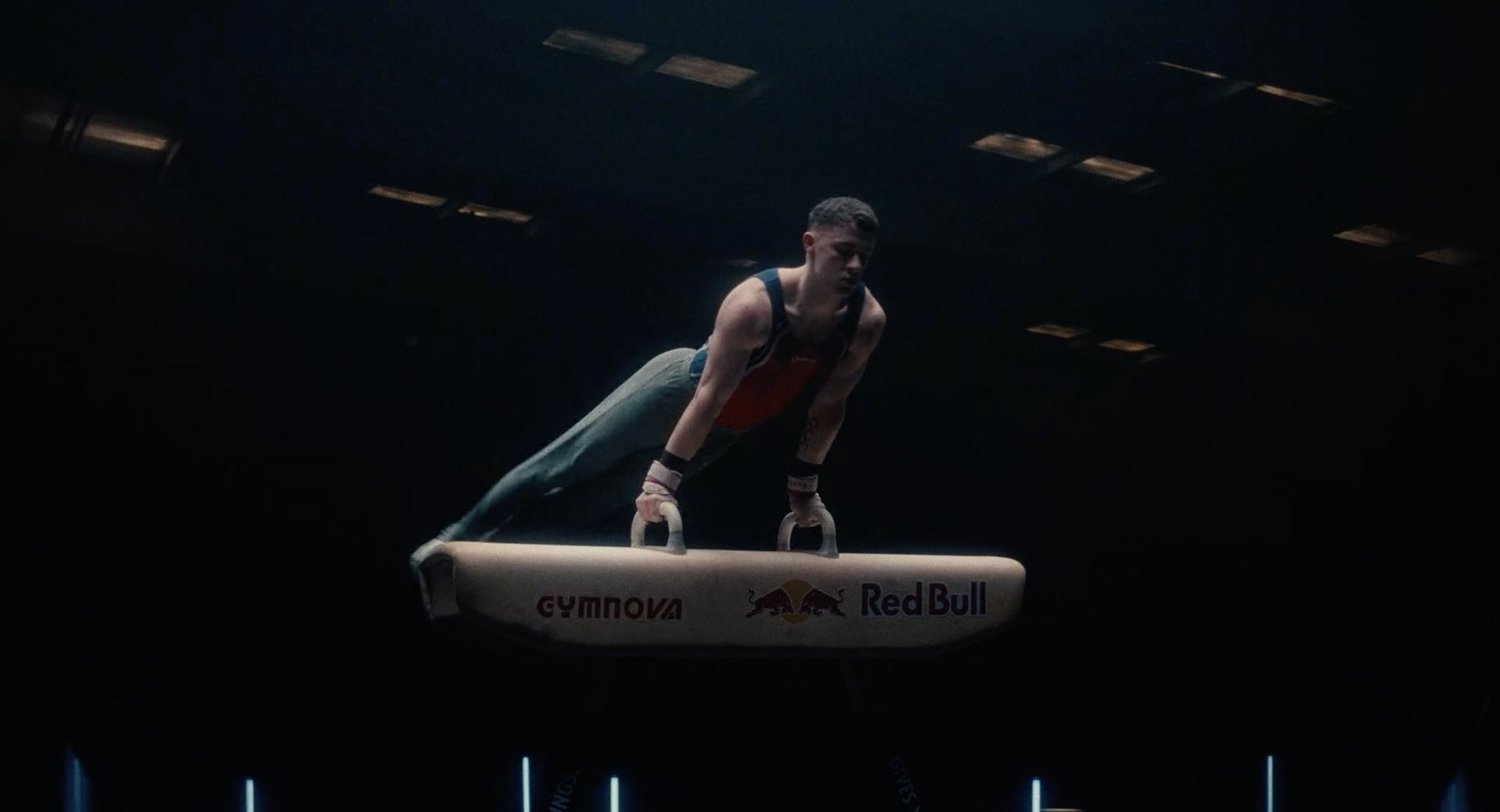
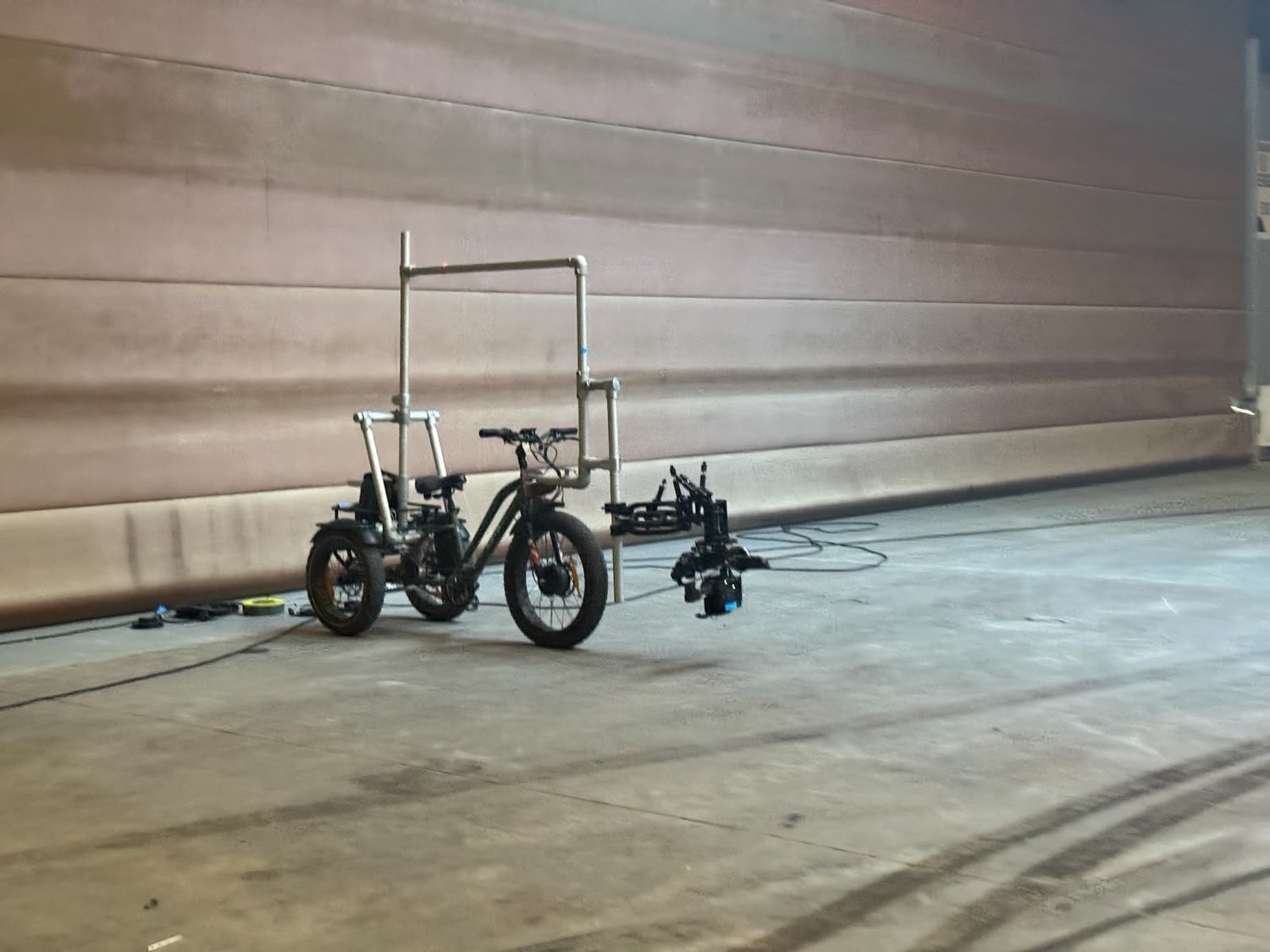
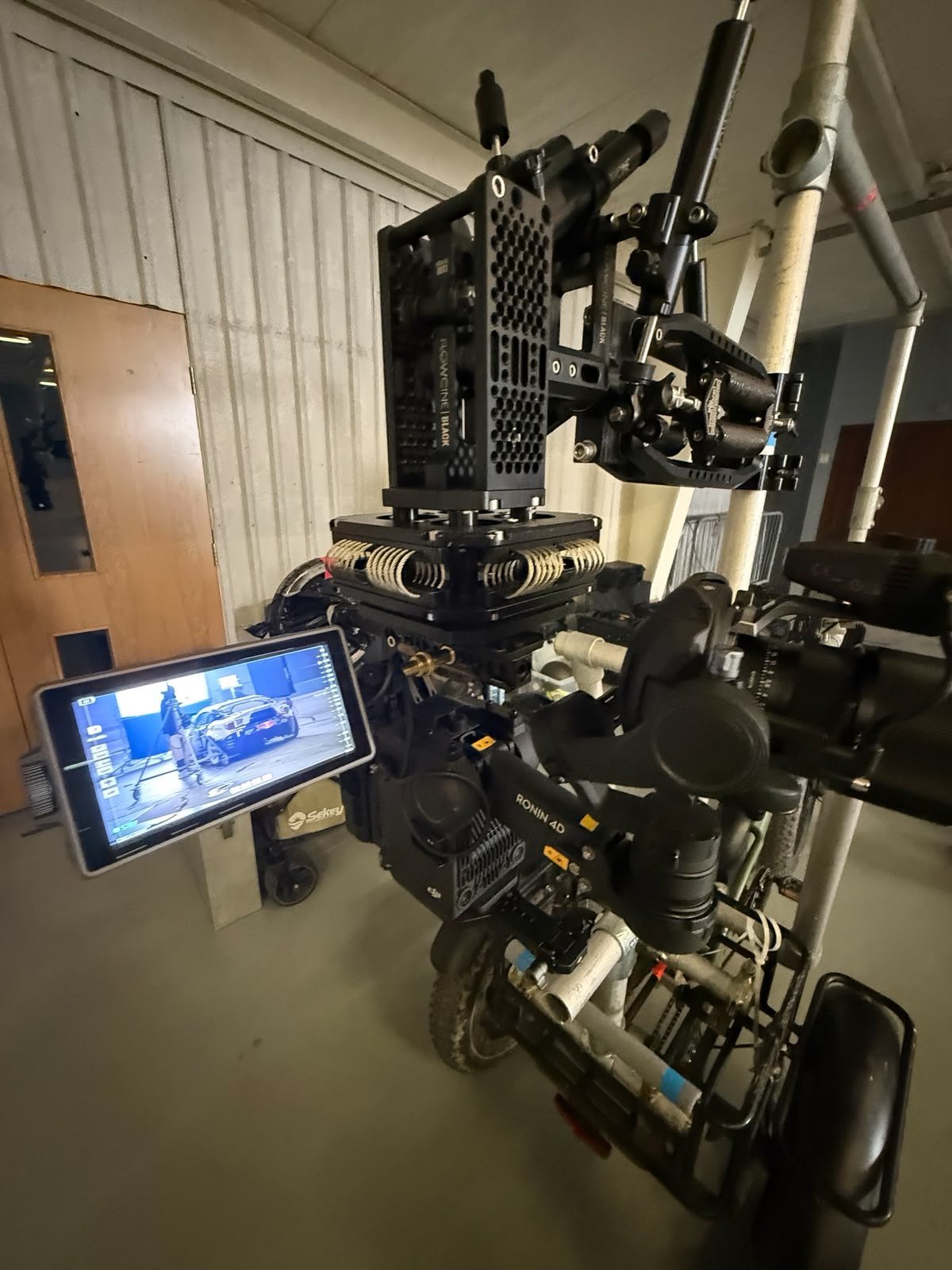
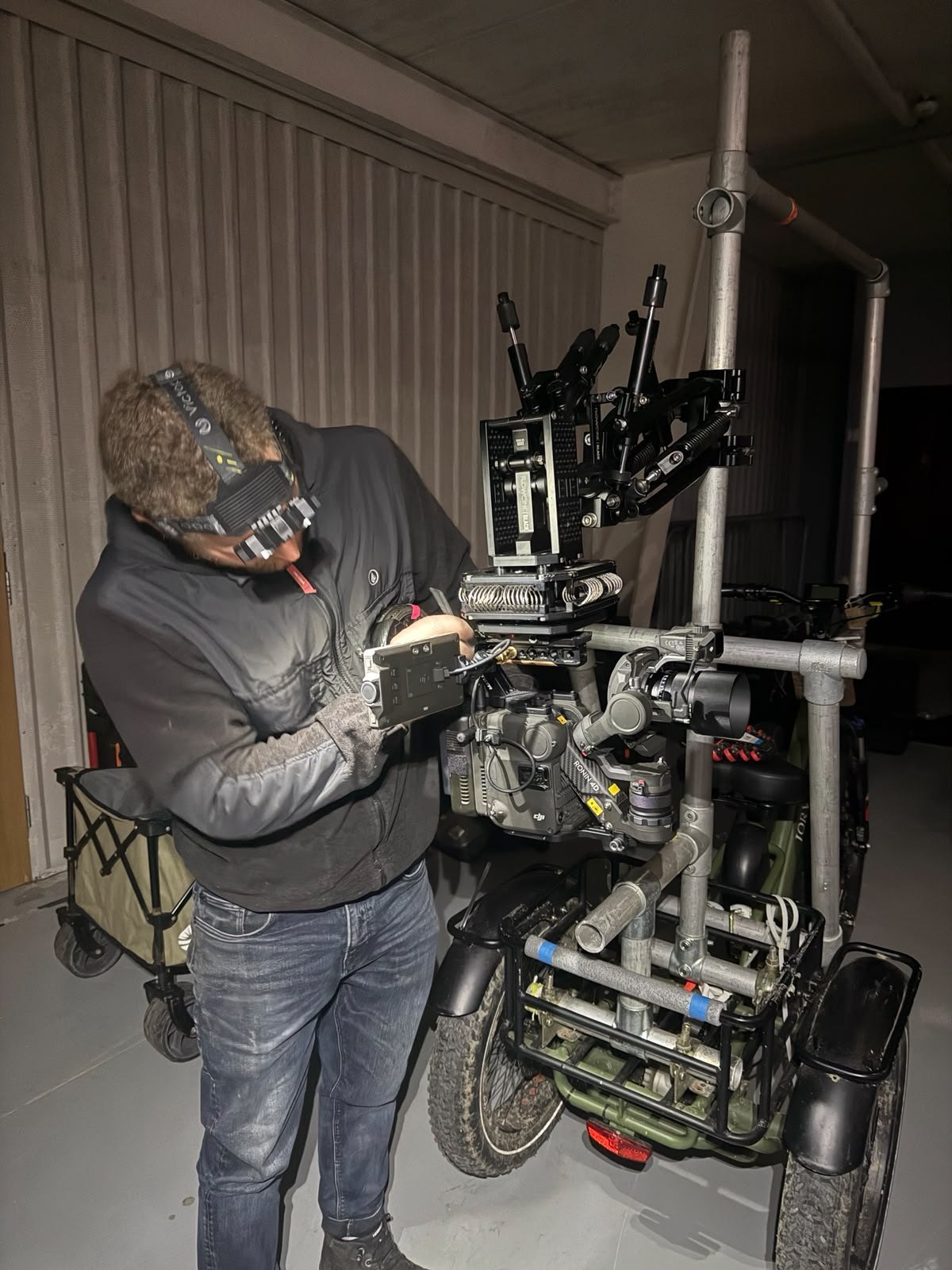
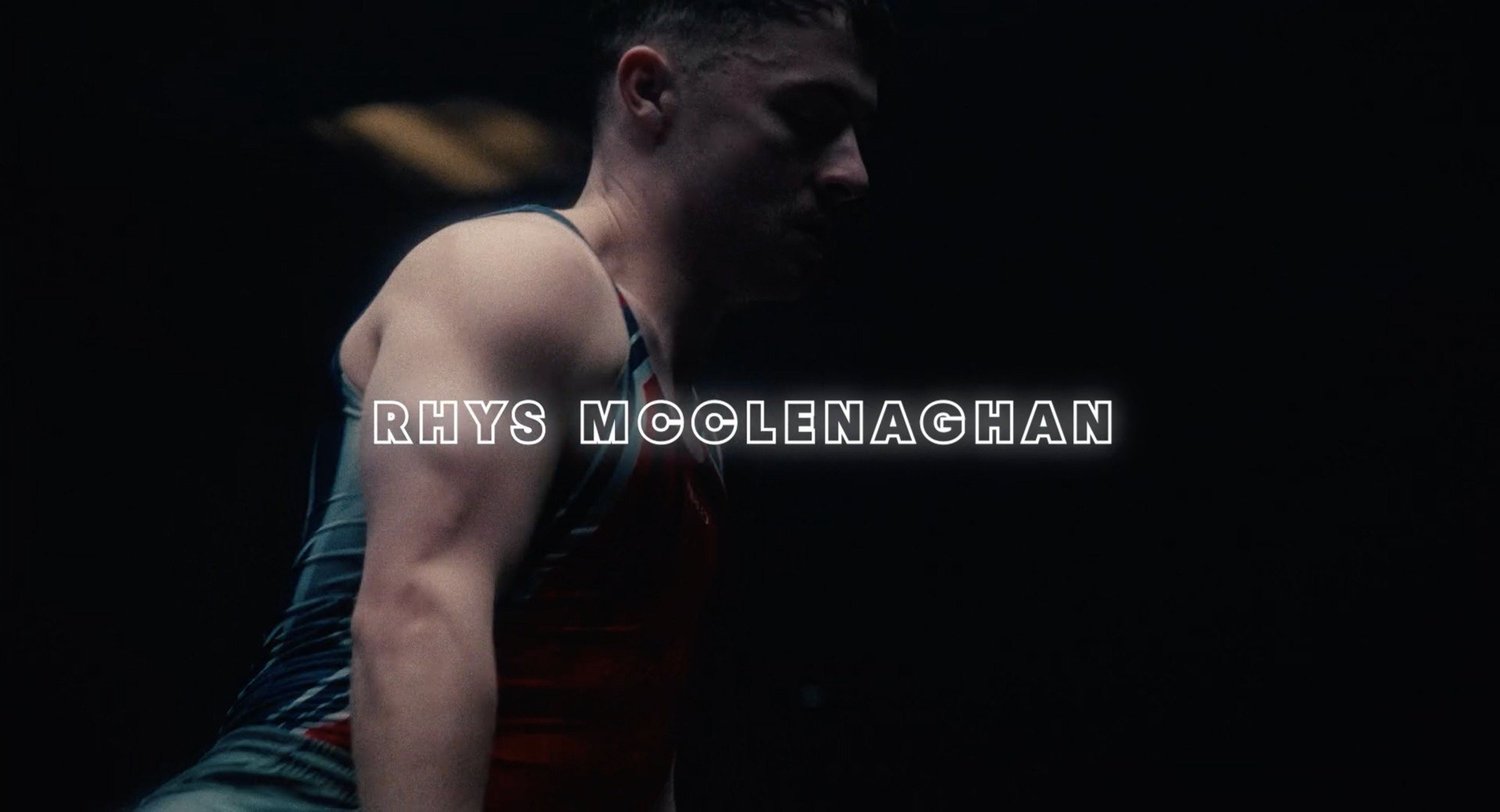
The Cine-Trike, Black Arm and Ronin 4D, and two of the shots they delivered.
For the tracking shots we ran our Cine-Trike: an electric, near-silent tracking vehicle carrying a Flowcine Black Arm and a DJI Ronin 4D. The Black Arm soaks up the bumps of the arena floor, and the Ronin 4D keeps the frame steady at speed.
Because the trike is small and electric, it can turn tight, get in close and keep up with fast action, with no engine noise or fumes on set. For this shoot, though, roaring engines and burning rubber were well and truly on the menu. Kyle Richardson rode as precision rider, with Tim Boydell operating the camera.
The trike is rigged with standard speed rail, and the rig design we created back in early 2021 has held up with no alterations required. It carries the Flowcine Black Arm, which we've adapted to carry the Ronin 4D with an easy-release system for quick docking and 'tracking to handheld' in one shot.
The Ronin 4D is naturally imbalanced at its central point and needs some back-weighting to push the body forward, as the camera head sticks up like a meerkat popping out of a burrow for a peek at the world. Without this adaptation, it could hit the Black Arm isolator.
The 4D is operated remotely via the DJI Transmission link back to the monitoring system, joysticks and focus control. We ran this from our Magliner, giving us a mobile video and control station. This was a requirement for the shoot, as the whole stunt might be shot as a wide, so we needed to be mobile.
The DJI Transmission worked flawlessly in an environment with two drone signals, two wireless focus signals, two camera HD links, two headsets in use across two teams, on-set radios, crash camera links and Wi-Fi. That's a lot of fizz across 5.8 GHz and 2.4 GHz, so we scanned the operating window and locked in what we could.
The 4D ran a set of Sigma C series primes, with an occasional 1/8 Pro-Mist. We shot from 35mm to 90mm around the action, using high frame rates for slow motion on the tighter shots of Rhys as he flexed over the pommel horse.
Inspire 3 aerials
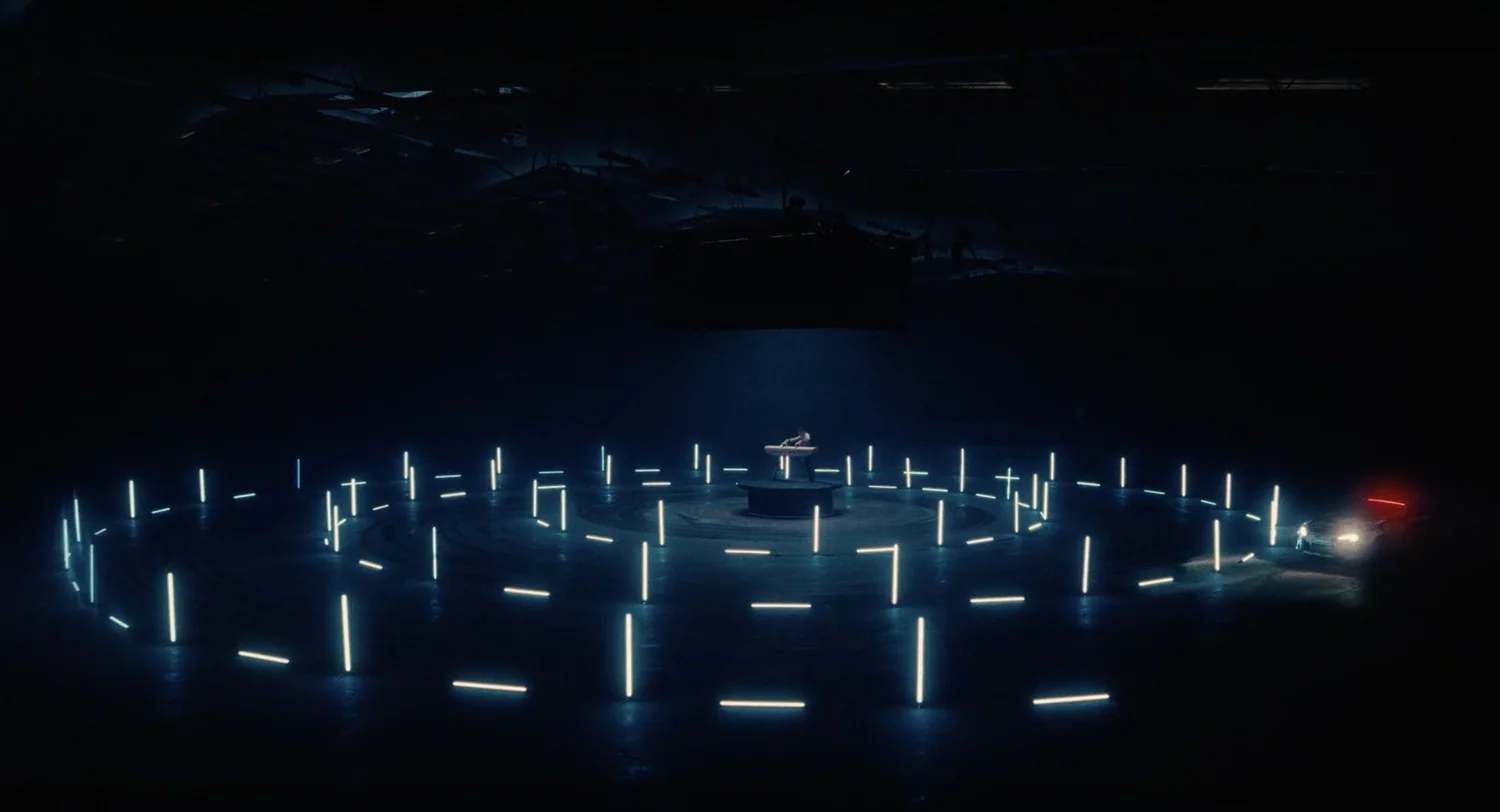
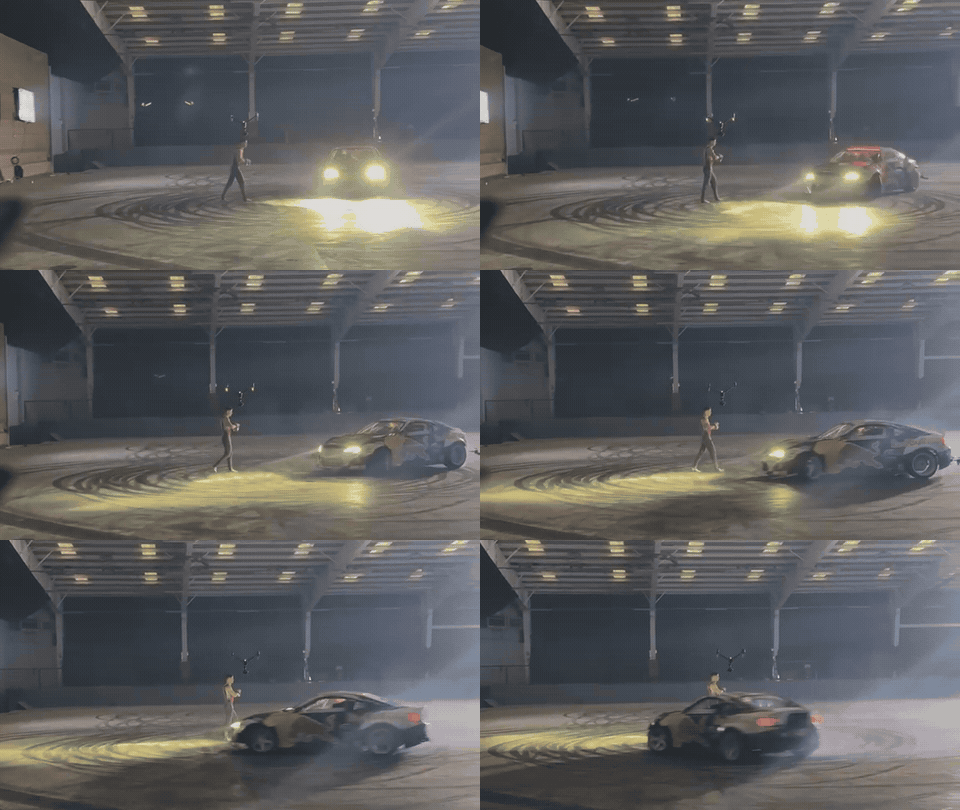
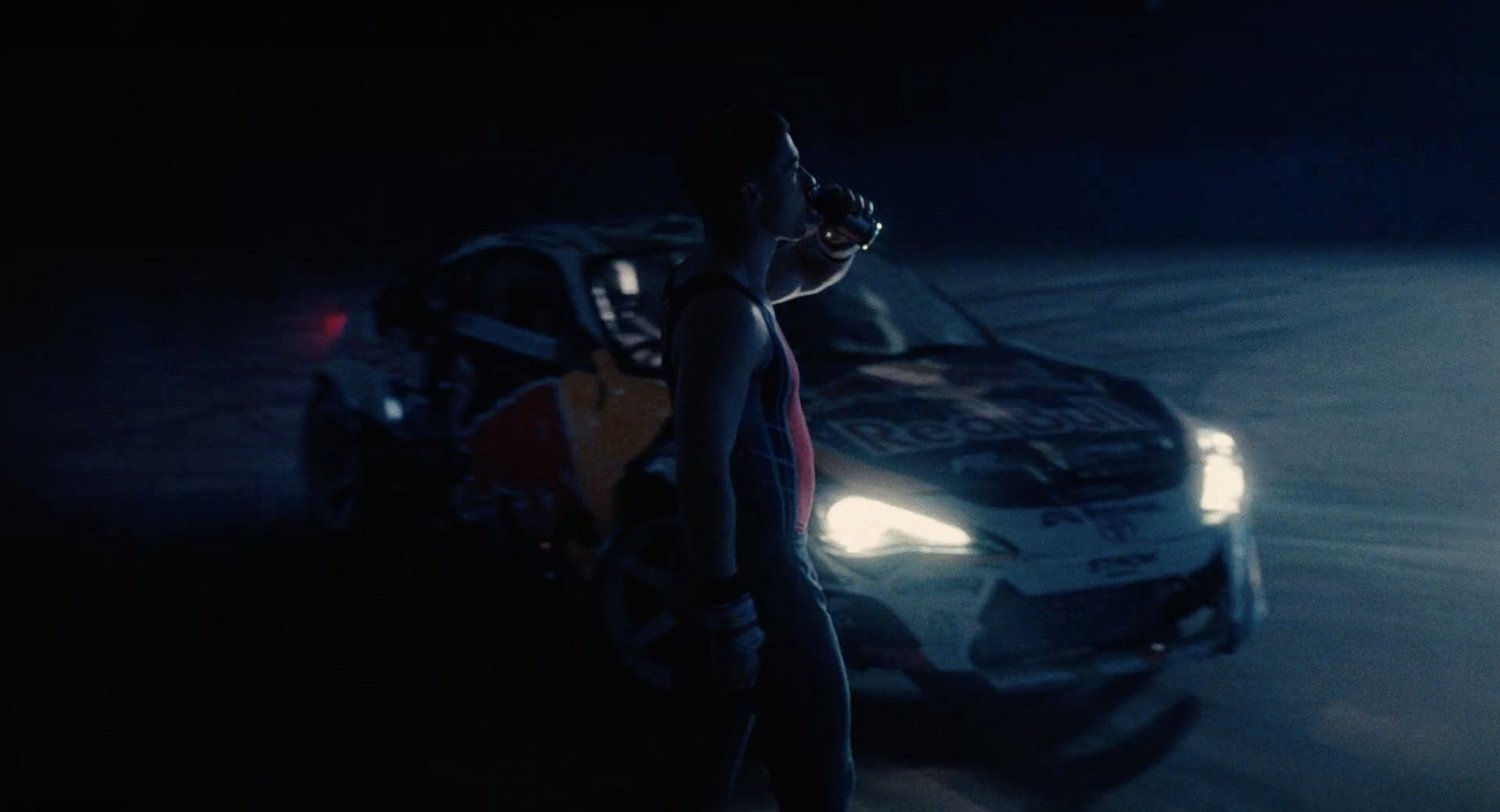
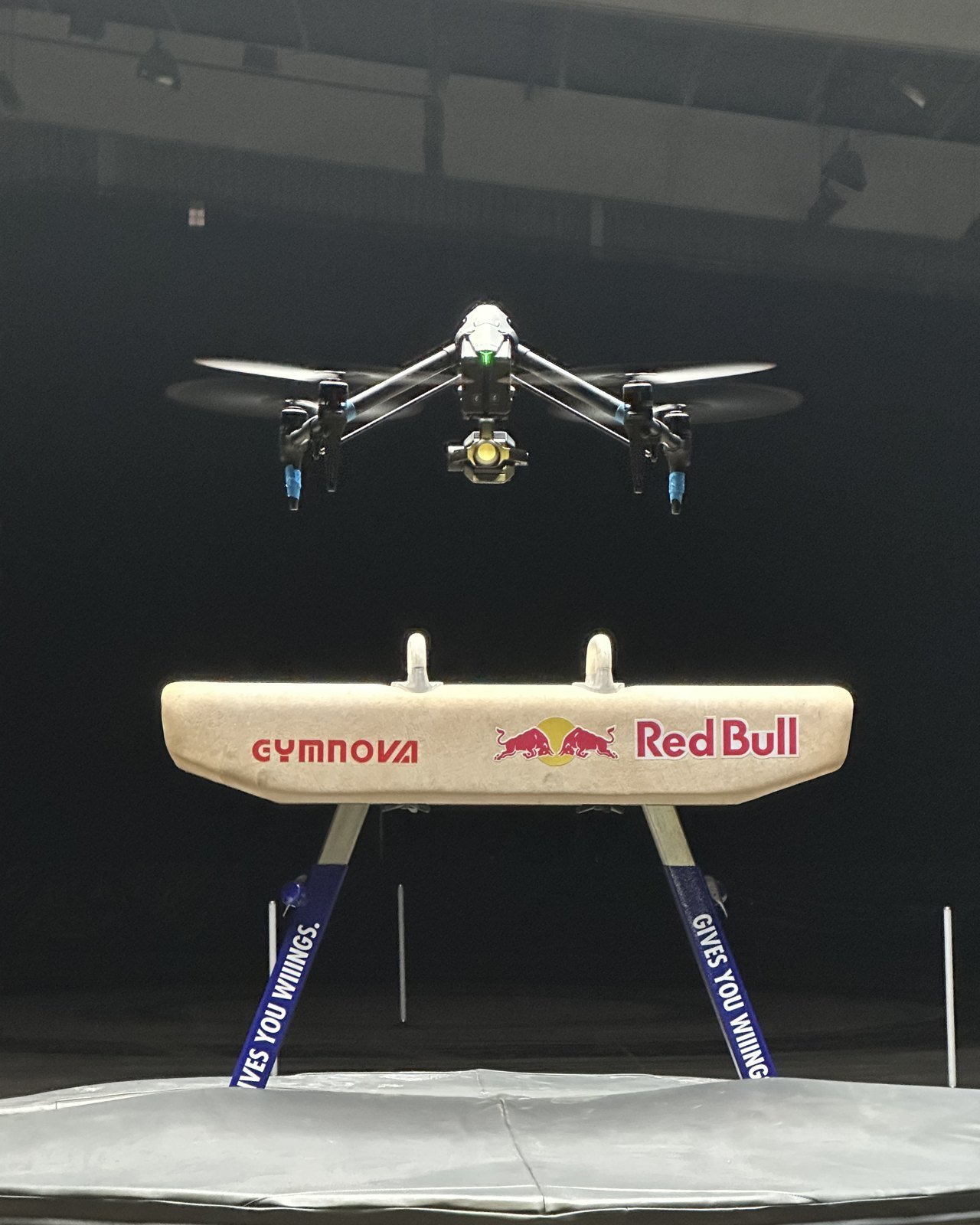
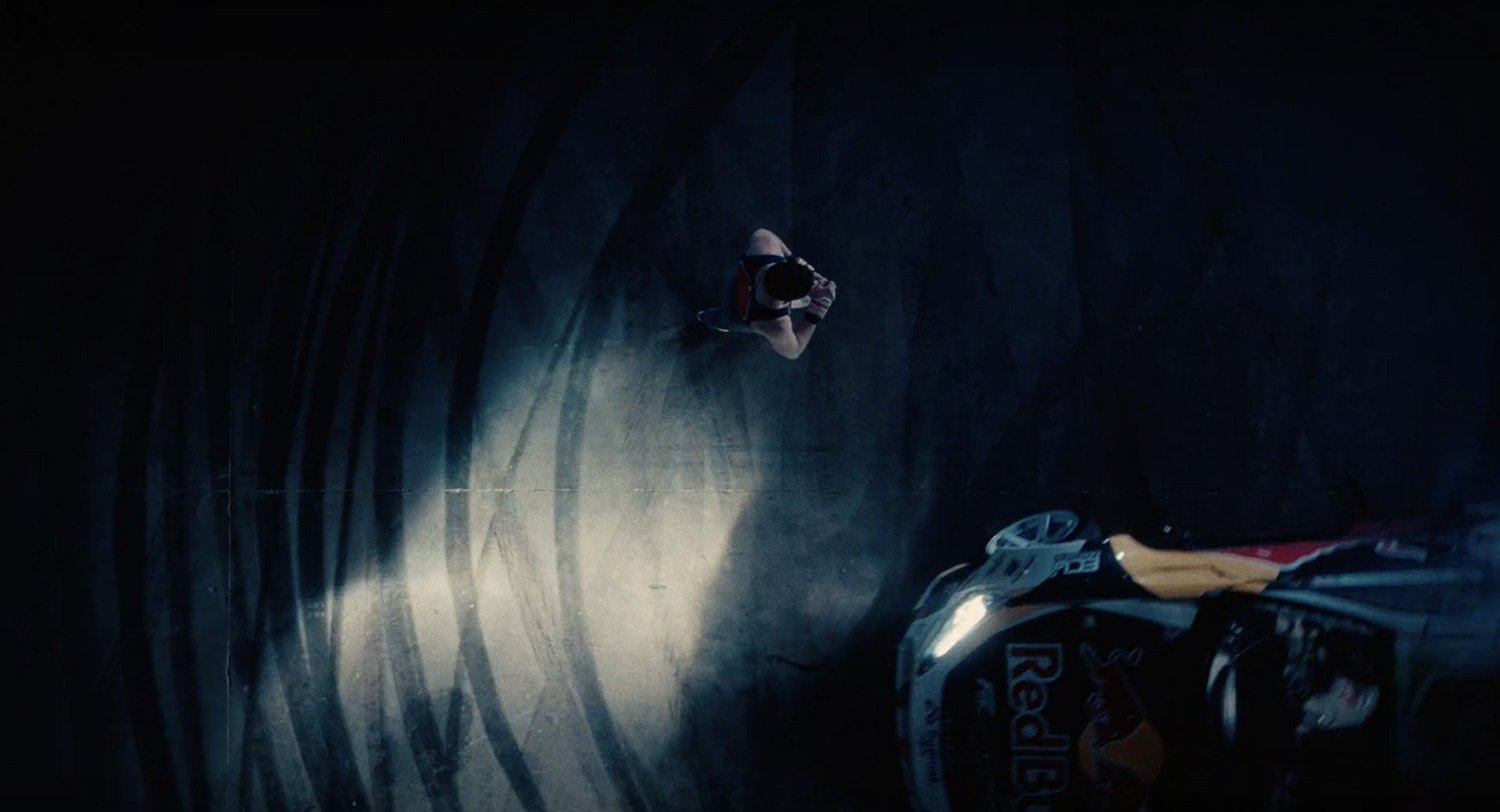
The Inspire 3 on set, and the aerials it put on screen.
From the air, our DJI Inspire 3 gave the film its sense of scale, from wide reveals of the arena to tracking moves that follow the action. We flew dual operator: Milford Killian Dawson piloted while Tim operated the camera. We set this up so Tim could jump from drone to tracking in seconds, with the team prepped over direct comms. Smooth teamwork, perfect timing, always ready. There were also some simple shots in single-operator mode, so we could run the trike and drone simultaneously. We often do this, offering more screen time to our clients and opening up more options to tell the story.
We ran the DJI DL lens set on the Inspire 3, mainly on the 35mm, with a 1/8 Pro-Mist.
Dual-operator FPV
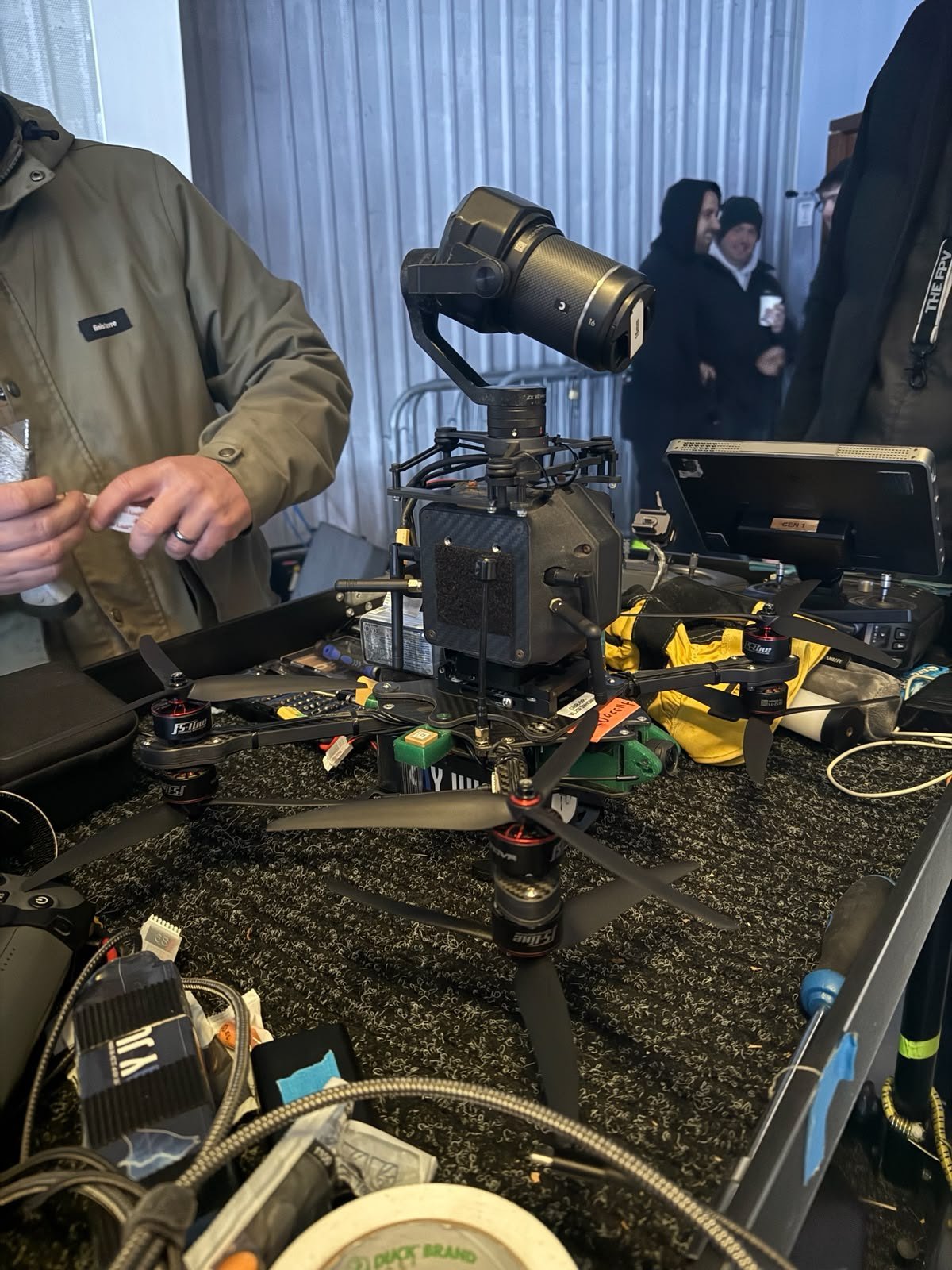
Pandora: our dual-operator FPV drone with a top-mounted DJI X7.
We also brought Pandora, our dual-operator FPV drone. It carries a DJI X7 camera in a top-loaded format, so the pilot flies the FPV line while a separate camera operator controls the frame. It runs four lenses and is built for chasing cars and threading through tight spaces, giving a production FPV energy with proper camera control. This covered the wider closer shots.
The X7 ran the DJI DL lens set, mainly the 24mm, also with a 1/8 Pro-Mist.
Onboard cameras
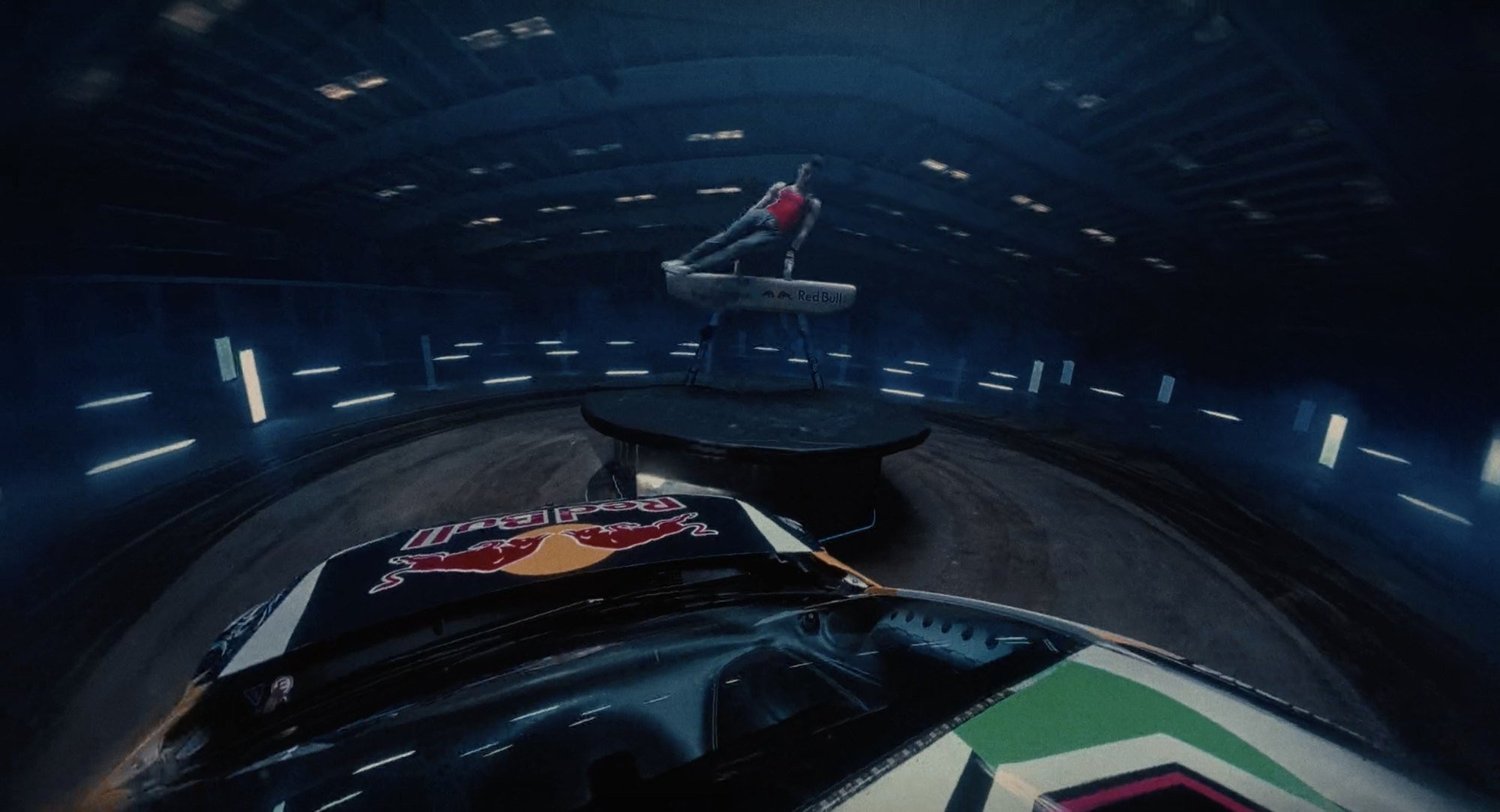
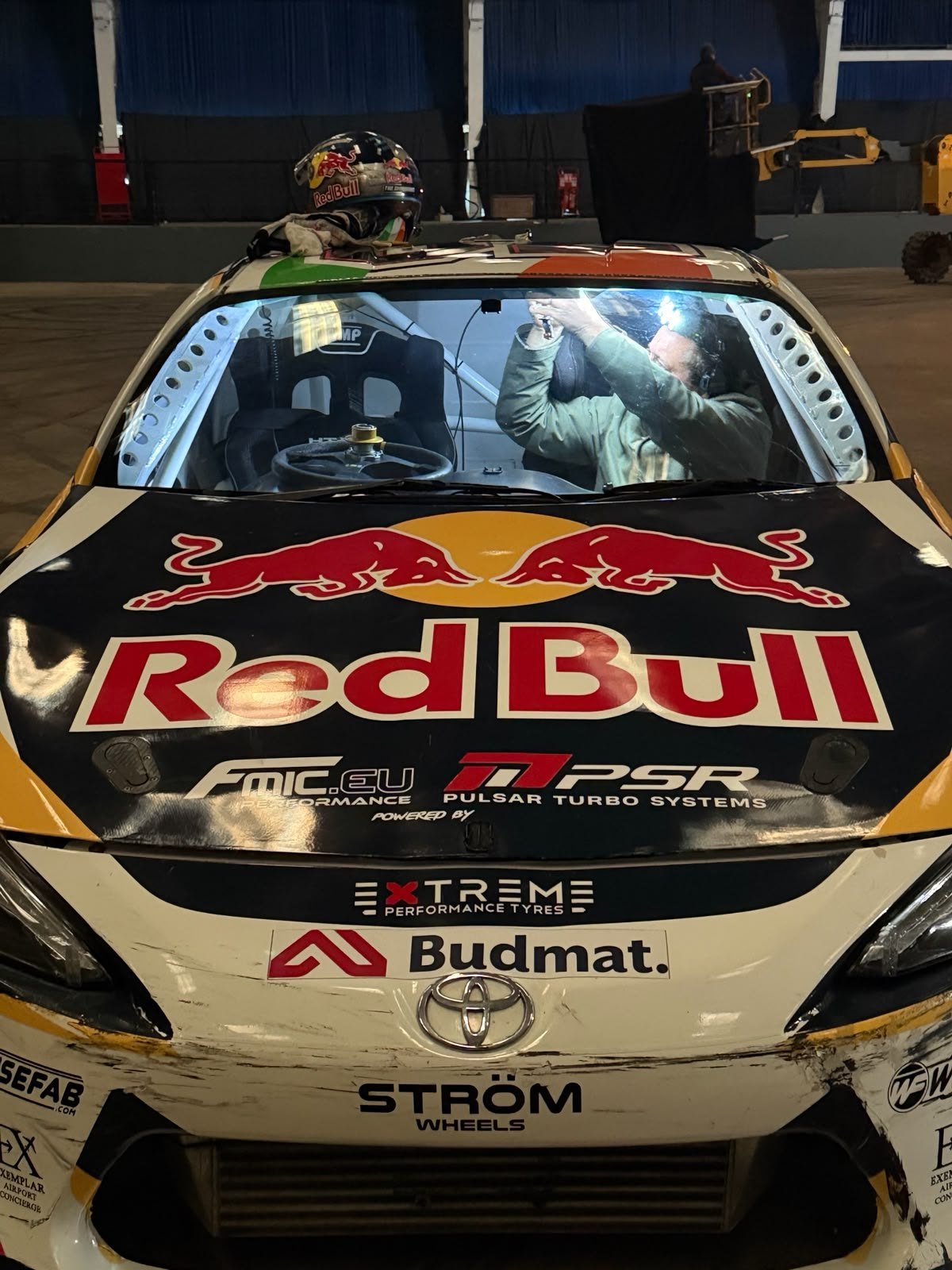
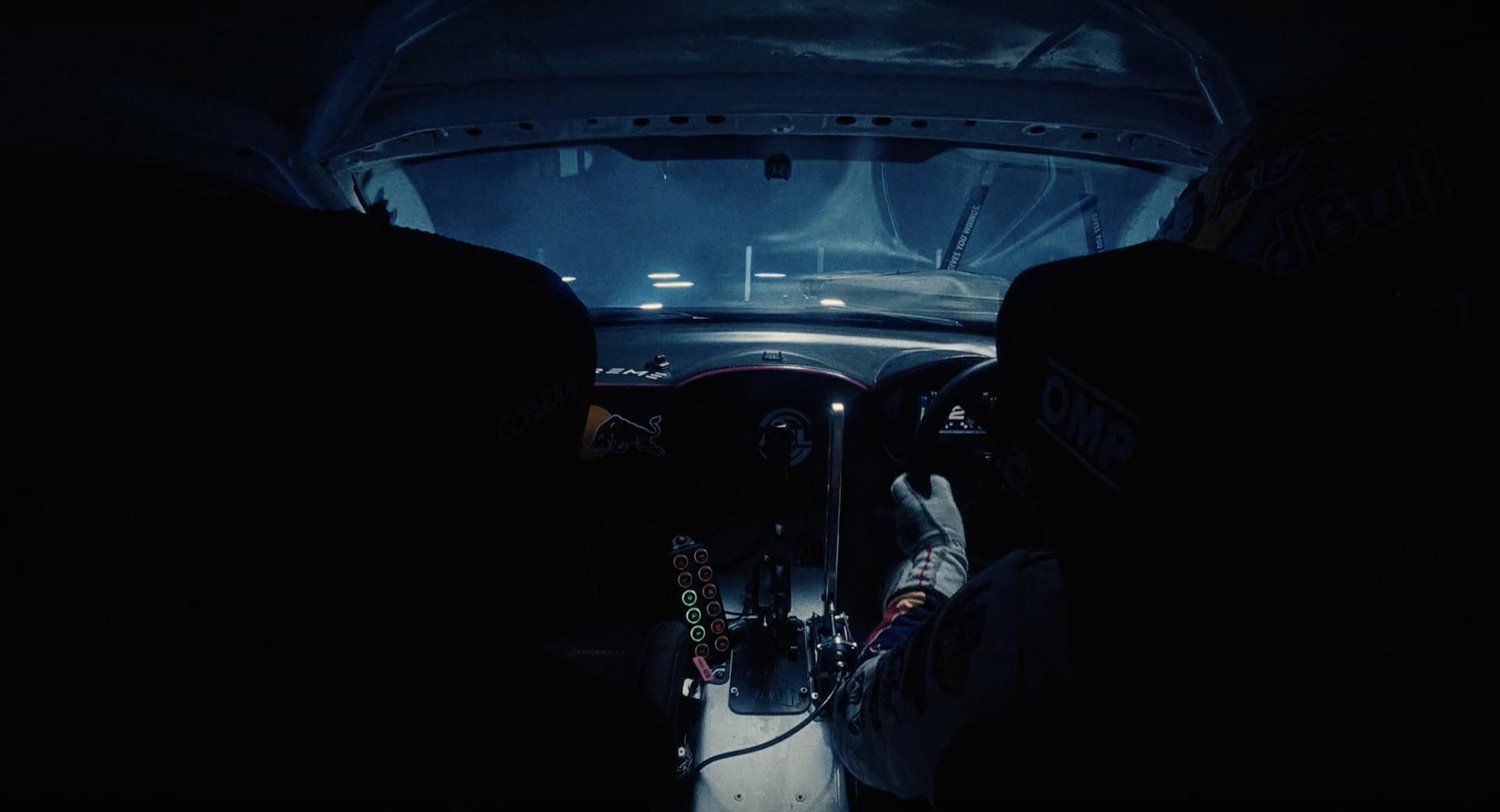
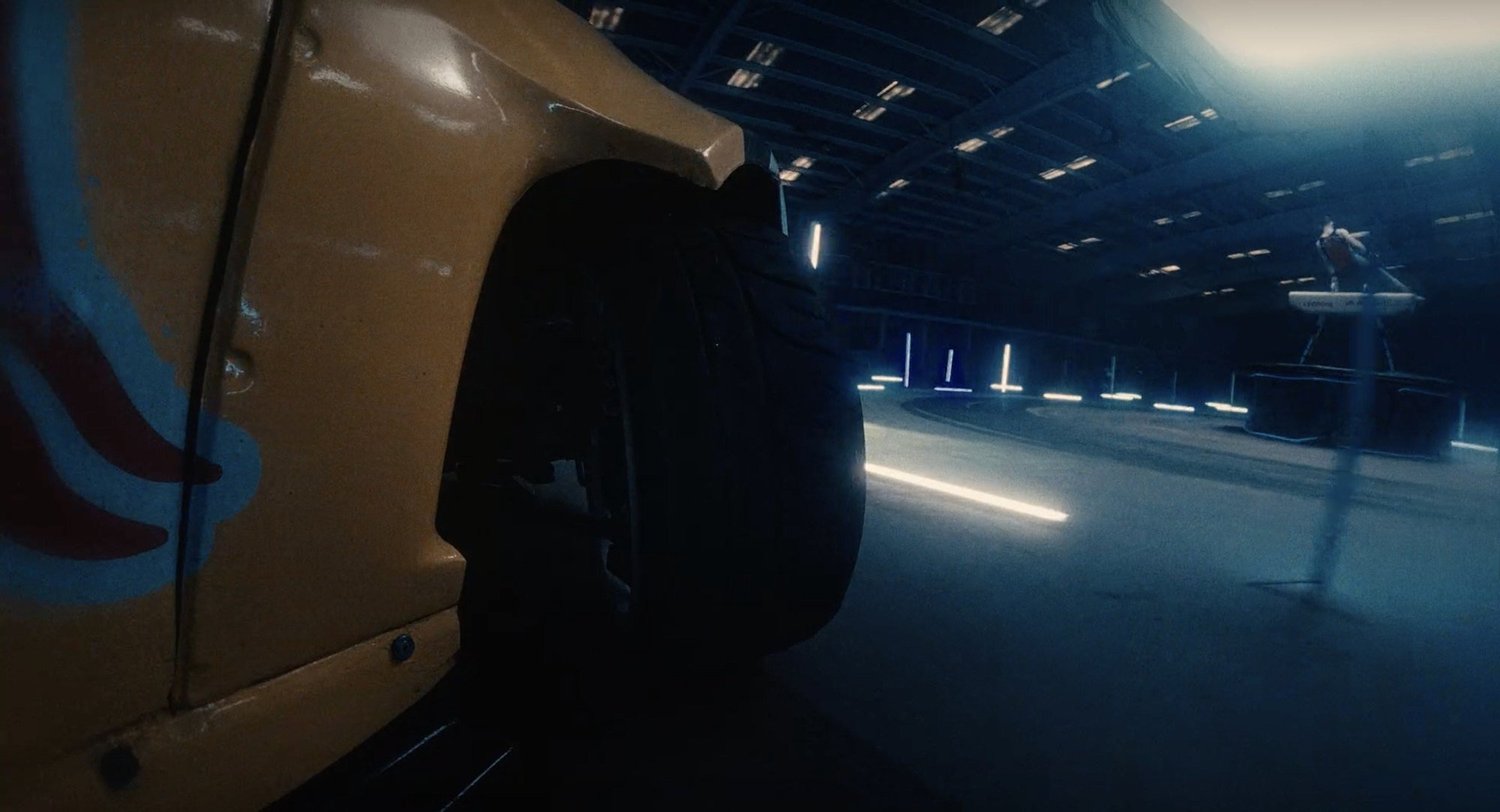
Rigging the onboard cameras, and the angles they gave the edit.
To put the audience right in the middle of it, we rigged small action cameras where a full camera can't go: a few GoPros, a few DJI Osmo Actions and Insta360 cameras. Each angle gives the edit something the main cameras can't, from point-of-view shots to angles that only make sense once you see them cut together.
The drift car was essentially plastic, floppy and made to bump into things and cause terrible damage. All pro drift cars are like this, which makes some mounting points really tricky and others really easy. Roll cages are always a win: clamps, solid connection. Plastic, bending wings, on the other hand, are very tricky. All while trying to keep the cameras out of view of the other cameras.
This is where the Insta360 X4 came in for interiors. Shooting 8K, with 16:9 crops to 4K super wide and 2.5K for tighter frames, it was the perfect tool for the job. We moved it to a new point in the car for each take, plus one bonnet-mounted angle.
We attached an Insta360 Nano to the steering wheel. With a drift car going sideways at speed between thousands of pounds' worth of lighting gear, the steering wheel is literally all that stands between precision perfection and damage. Safety was a priority.
More action cameras were mounted around the car for other cutaways, and on and around the pommel horse during the action.
One unit, three jobs
The same small team ran the trike, the drone and the onboard rigs, with Tim operating camera on both the trike and the Inspire 3. That's how we like to work: one specialist unit that covers several jobs, so productions get more shots from fewer people. It's been our niche for a decade, and we love the ever-changing environments, the creative challenges and the cross-department teamwork.
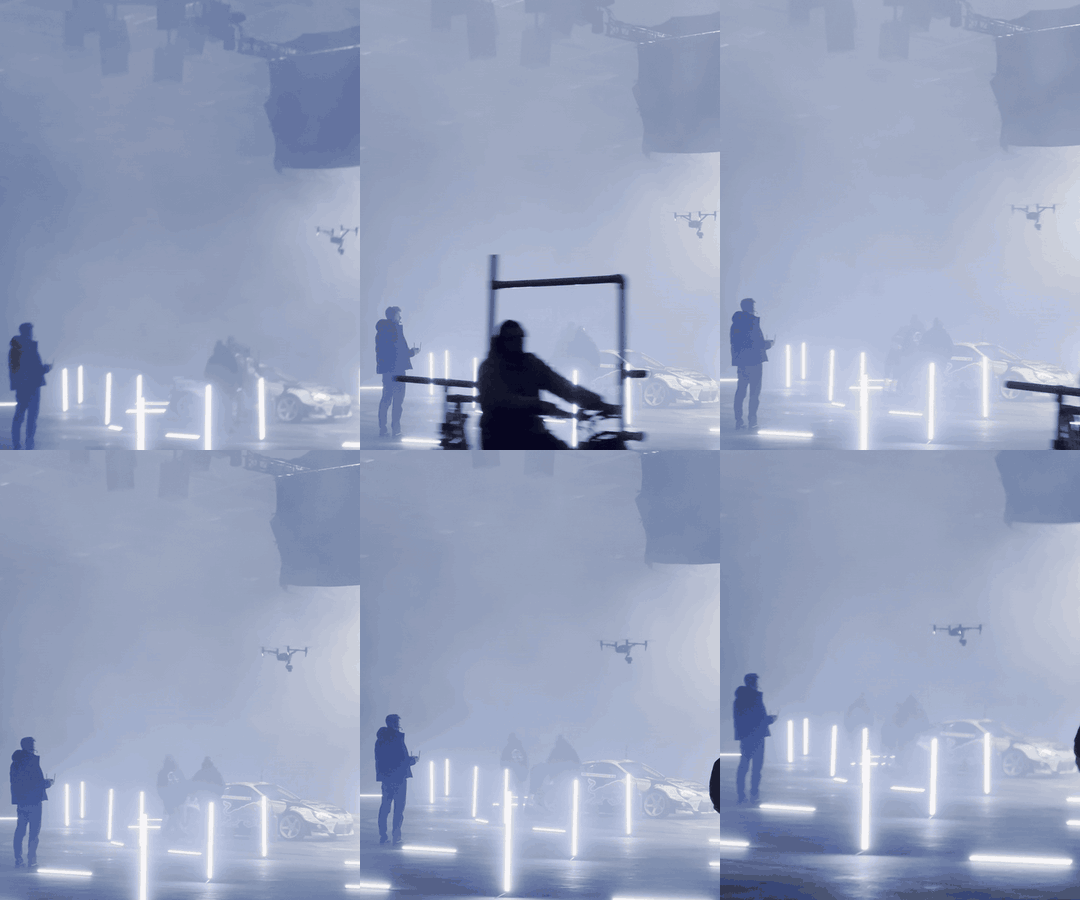
The Inspire 3 and the Cine-Trike working the same take.
Getting there
The shoot went off without a hitch. The same can't be said for our travel. Leaving time to spare before the shoot, we headed to the ferry to take our kit to Ireland. The tail end of Storm Bram had other ideas. With our 10pm ferry cancelled, and the next ferry unable to take our dangerous goods, we found the only available accommodation: a shed in a field, in December. Kyle and I cosied up for four hours before catching a 4am ferry. It was cold and the sea was rough! We slept in a cabin, although it felt more like a rodeo, before landing (relief!) in Ireland. A journey we won't forget in a hurry.
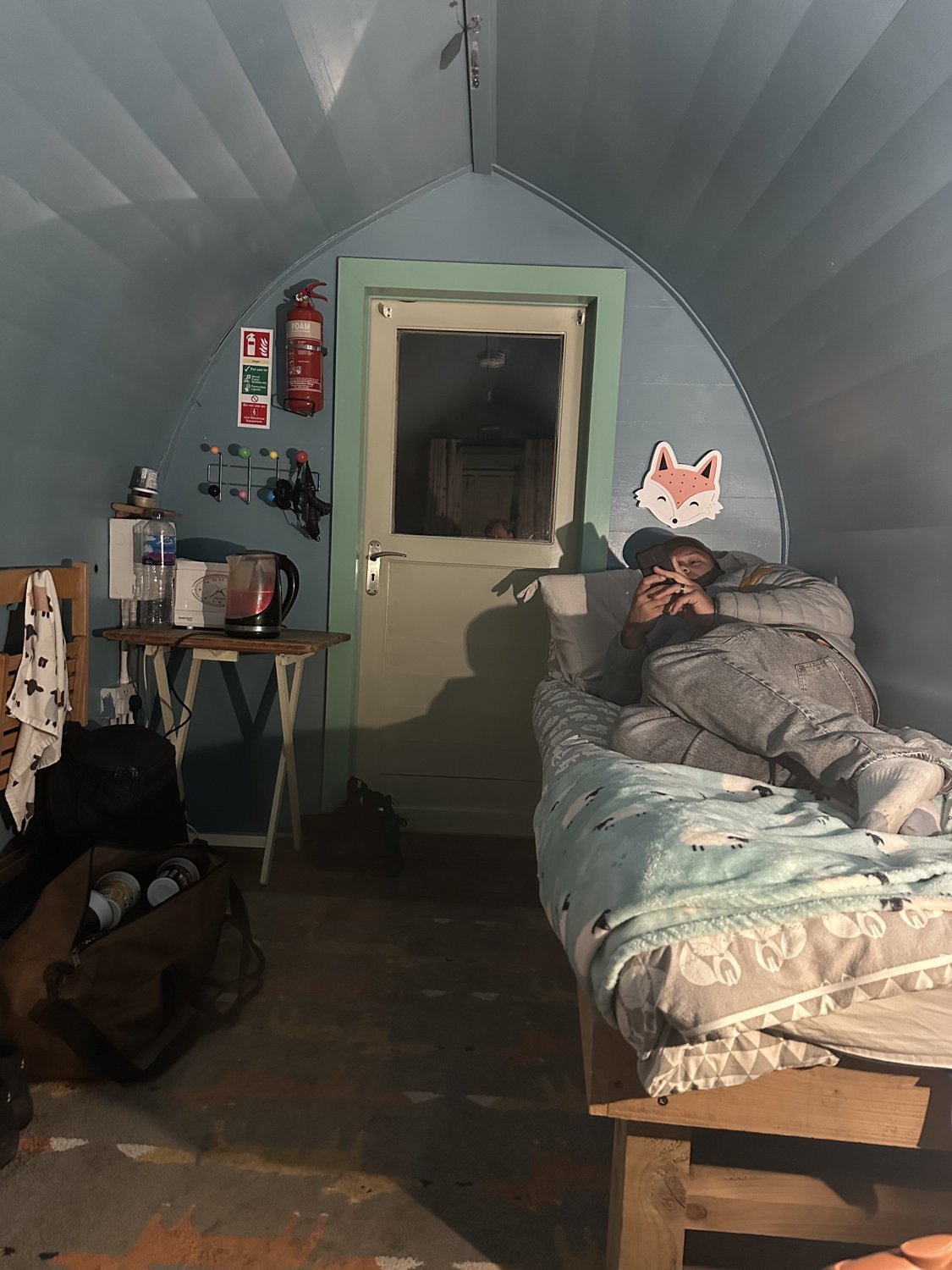
Storm Bram accommodation: the shed in a field.
Watch the film
Credits
A big thank you to Oisin and the whole team at Anotherland for having us, to DOP Ignas Laugalis, and to Rhys McClenaghan and Conor Shanahan, who made every frame worth shooting.
| Client | Red Bull Ireland |
| Agency | Richmond Marketing |
| Production company | Anotherland |
| Director and creative director | Oisin Tymon |
| Executive producer | Ross Killeen |
| Producer | Killian Connolly |
| Gymnast | Rhys McClenaghan |
| Drift driver | Conor Shanahan |
| Director of photography | Ignas Laugalis |
| Specialist camera unit | Light Colour Sound |
| Camera operator (Cine-Trike and Inspire 3) | Tim Boydell |
| Precision rider (Cine-Trike) | Kyle Richardson |
| Drone pilot | Milford Killian Dawson |
If you need tracking, aerials and onboard cameras covered by one unit, on a commercial, a sports film or a drama, we'd love to hear about it. We work across the UK and Europe.